New 'E-car' category could preserve margins on cheap cars, paving the way for a fun-sized Peugeot comeback
Peugeot could launch a new city car in the vein of the old 108 if the EU's new 'E-car' category is successful in making such models viable again.
Peugeot withdrew the 108 – closely related to the Toyota Aygo and Citroën C1 – from sale around four years ago and the larger 208 supermini has been the brand's entry model since then.Â
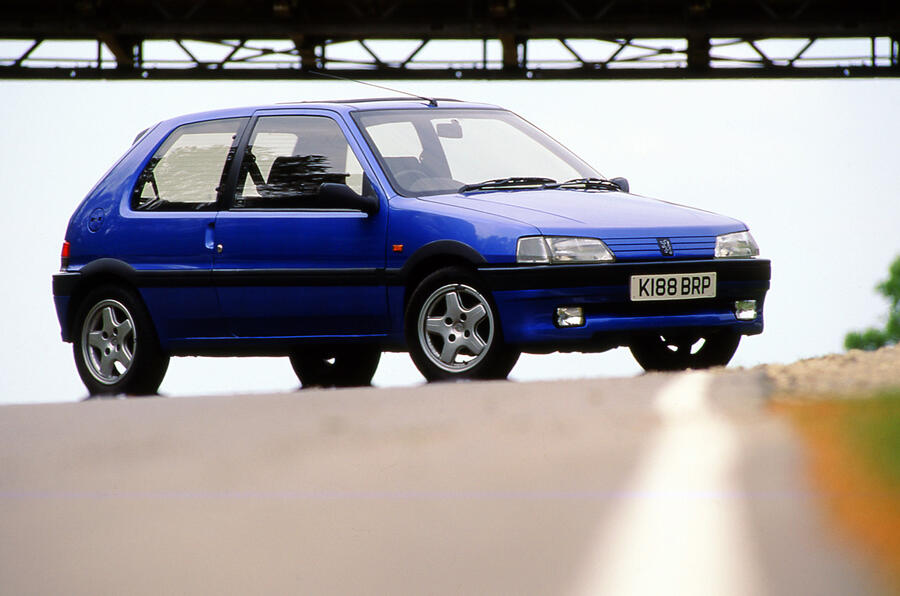
The 108's retirement brought an end to three decades of Peugeot city cars - a lineage that began with the 106 in 1991 – and came as part of a mass exodus from the 'A-segment', where increased regulation and production costs had strangled margins to the point of unviability. The related Citroën was also axed, and rivals including the Ford Ka, Vauxhall Viva and Skoda Citigo bowed out at around the same time.Â
But now, Peugeot CEO Alain Favey has given a strong indication that the company could return to the segment - if law makers sign off a new framework for small car regulation that helps manufacturers build them profitably.
Asked about the potential for a model smaller than the 208 in the future, Favey told Autocar: "There was a 108, there was a 107 and there was a 106 in the past. We've sold more than a million cars in the A-segment in the not so distant past. So definitely, if there is this new category that allows us to produce smaller cars at a profit, then obviously there will be a space for Peugeot in that area, as there was in the past."
Favey was referring to the mooted 'E-Car' category that the EU could introduce in a bid to incentivise car makers to return to ultra-compact, affordable models like the old 108.Â
Details have yet to be finalised, but the new framework would look to alleviate some of the costs of small car production by reducing the amount of legislation and mandatory technologies that must be factored in, so that more viable profit margins can be achieved from low list prices.
The move has been welcomed by the industry as a potential harbinger of a new age of affordable city cars, with manufacturers including Dacia and BYD hinting at plans to launch tiny new entry models in the region.Â
Peugeot sibling Citroën has also suggested that a more hospitable regulatory environment could pave the way for a successor to the 2CV – and it's likely that any Peugeot equivalent would be a close technical relation, as was the case with the 108 and C1.
But Favey emphasised that Peugeot would not consider re-entering the A-segment unless there was a new ruleset in place that meant it could make money.
"As long as there isn't, I would confirm what my predecessor [ex-Peugeot CEO Linda Jackson] said, which is: 'No, there is no space for an A-segment car today, as basically everybody is exiting that segment for the same reason, which is that there is no way to make such a car at such a low price profitable, as long as you have to put so much equipment on it'."
Favey acknowledged the importance and relevance of the EU's mandatory technologies and safety regulations but said they are incompatible with selling ultra-affordable cars.
"The safety features and driving assistance systems – of course, they all make sense but you need to be clear that people need to pay for them." he said. "So as long as people are ready to pay for them, it's fine, but then nobody should wonder why the European market is three million [cars per year] - lower than it was before Covid.Â
"If you have to keep putting on equipment that increases the price of cars, there comes a point when the cars become just too expensive for people to buy. And that's when you should really ask yourselves: does that all make sense, or is there not another way where – for a specific part of the market, like the entry accessible cars – you create different conditions to allow for better products?"