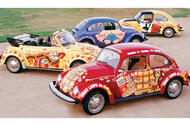
Beetleboards would pay for a sixth of a Bug's value to advertise on it – and Mini drivers could cash in too
Nobody bats an eye at vans and buses bearing adverts, but the idea of a private car as a mobile billboard seems absurd - yet in the 1970s this was very much a thing.
The idea came to youth-focused marketing man Charles E Bird in 1971. Visiting San Diego University to give a lecture, he spotted among the many Volkswagen Beetles on campus one adorned with flower stickers. 'Bugs' were popular with cash-strapped young Americans, while the student demographic was lucrative but often proved elusive to advertisers, so the potential for a symbiotic situation was obvious.
Bird founded Beetleboards that October and snagged Levi's jeans as its first client. He drove his first stickered Bug to the University of California campus in Los Angeles, and the "cat calls and high signs" received from his target audience confirmed he was onto something.
Enjoy full access to the complete Autocar archive at the magazineshop.com
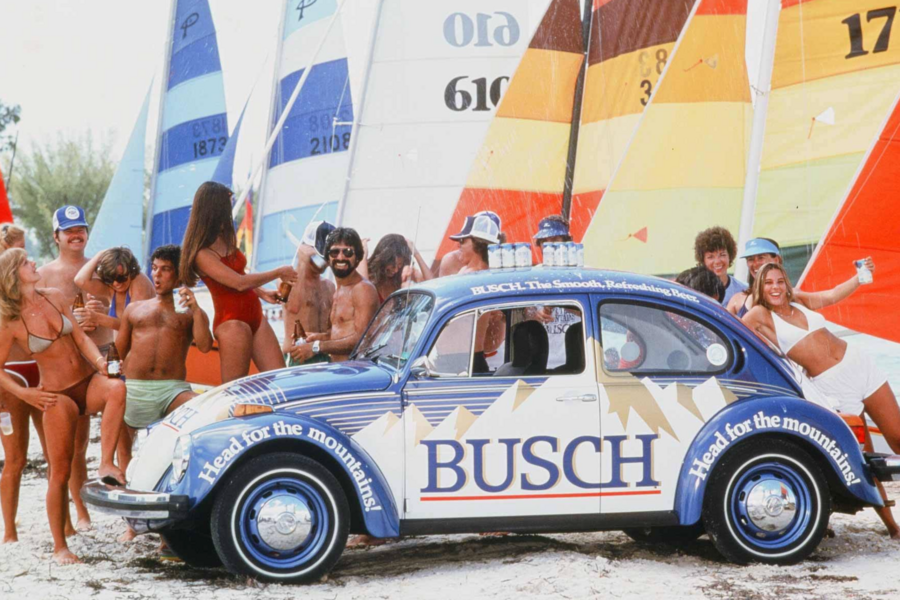
Within a year, Beetleboards was offering coverage at the 100 most populous US universities, thanks to an "exceptionally talented" team, comprised mostly of young women.
There was one snag, however, which was proving the effectiveness and good condition of these mobile billboards to clients. Beetleboards proposed monthly check-ups at VW dealers only to receive a threat of legal action from the car maker.
Its solution? Park a Levi's Bug outside the Volkswagen of America headquarters, where the enthused reaction of employees prompted the ad director to strike a deal with Bird to carry out the verifications and even contribute to recruitment - including selling stickered cars straight out of showrooms. At a time when a new Beetle cost about $3000, owners could get $480 in just two years from Beetleboards.
International expansion began in 1975, first over to Canada, then Puerto Rico and, in 1978, Britain. Over here the cars were Minis and the scheme was called Roller Posters, run by major outdoor advertising company Mills and Allen. As in the US, clients were mostly makers of consumer goods and cigarettes, but the Mini's manufacturer itself, British Leyland, also capitalised.
Mini owners would receive a free respray, £6 per month (around £30 in modern money) and "other cash bonuses" as compensation for being constantly stared at while driving.
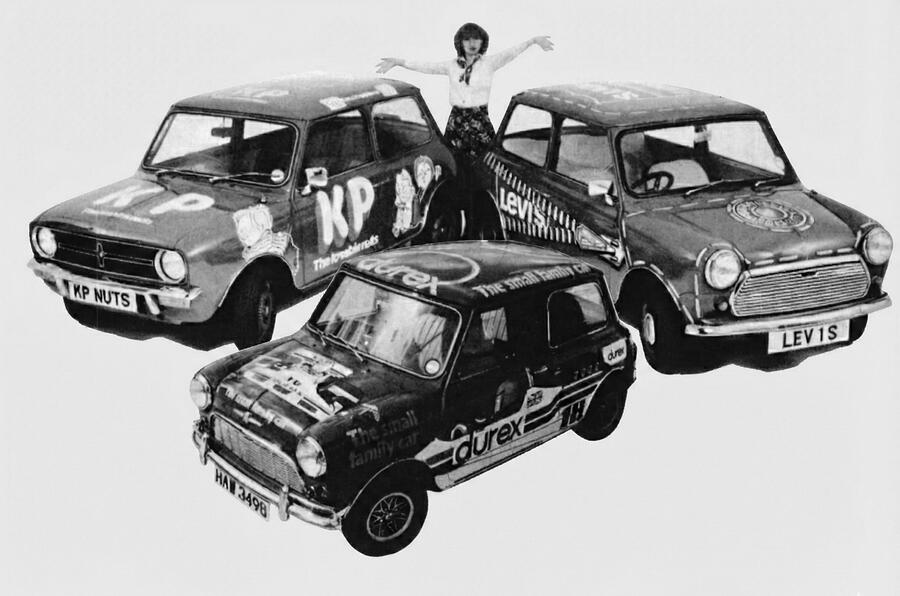
Around the same time, a copycat scheme, named Poster Motors, was initiated by Donnelley Marketforce, likewise targeting Mini owners and offering £6 per month. Advertisers could commit to a campaign lasting either three, six, nine or 12 months.
"While any scheme which gives the motorist a free respray and contributes to his running costs is to be welcomed as a tool to fight inflation, we wonder how much impact the scheme will have as the cars become a more and more familiar sight on the road, assuming the idea takes off," wrote Autocar.
"There is also conceivably a safety hazard in the way the cars are decorated. While the car is obviously eye-catching, and thus easy to spot on the road, the decoration could in some circumstances break up the outline of the car, making it difficult to, for example, judge distances and closing speeds at a quick glance."
Thankfully, it seems no crashes were caused but plenty of brands were boosted: a mass observation survey revealed that stickered cars were much more memorable than print or television advertising, with Levi's Minis achieving a strong 42% rate of spontaneous recall among adolescents and young adults.
Within a year, Poster Motors had 200 stickered-up cars across London, Birmingham, Liverpool and Manchester, advertising Levi's jeans, KP nuts and Durex condoms.
Autocar may have tugged its starched collar at that last one, but Poster Motors ensured that its applicants were carefully vetted.
"We don't just take anyone," managing director Brian Lane told the Nottingham Evening Post. "They must have the right attitude and lifestyle to be in keeping with the products. Levi's drivers are generally young people in trendy areas, while Durex drivers are of all ages and social groups, but morally responsible people."
It didn't last long, though. "As the company grew, so did the stress," recalls Bird in his upcoming book Those Amazing Beetleboards. "There were legal matters, financial issues, operational problems and a few too many disappointments." Thus 1984 would be the last year of Beetleboards, and it seems Poster Motors ended about the same time.