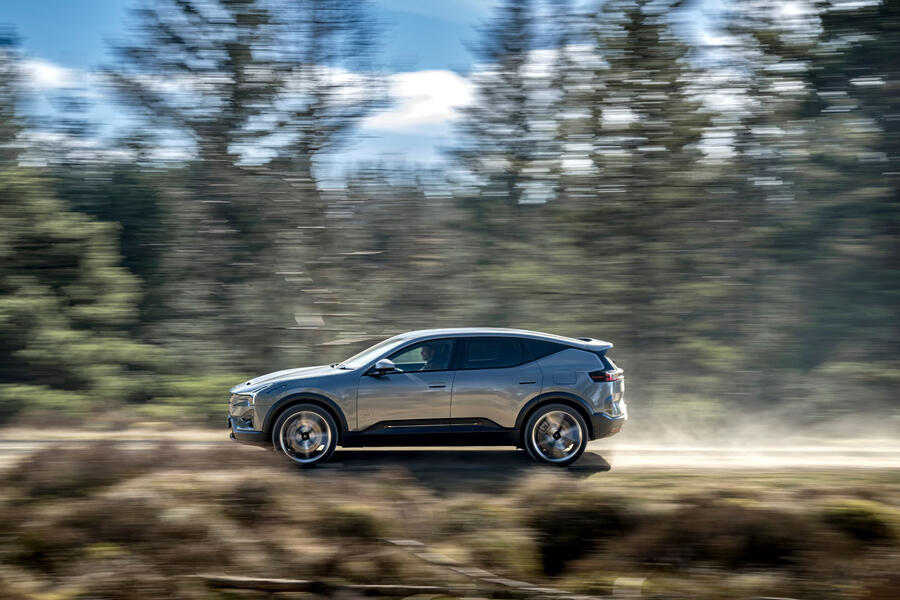
Under-the-skin upgrades for sweet-driving SUV boost charging speeds but dent dynamics
Some cars' characters are defined by a single component, for better or for worse.
Think of the Renault Clio 182 Trophy's remote-reservoir dampers; the Hyundai Ioniq 5 N's simulated gears; and the original Smart Fortwo's automated manual gearbox. The Polestar 3 was just such a car, with its torque-vectoring rear clutch pack that could chuck all of the drive from the rear motor to either wheel. It gave this big and heavy EV remarkable agility and a sense of playfulness.
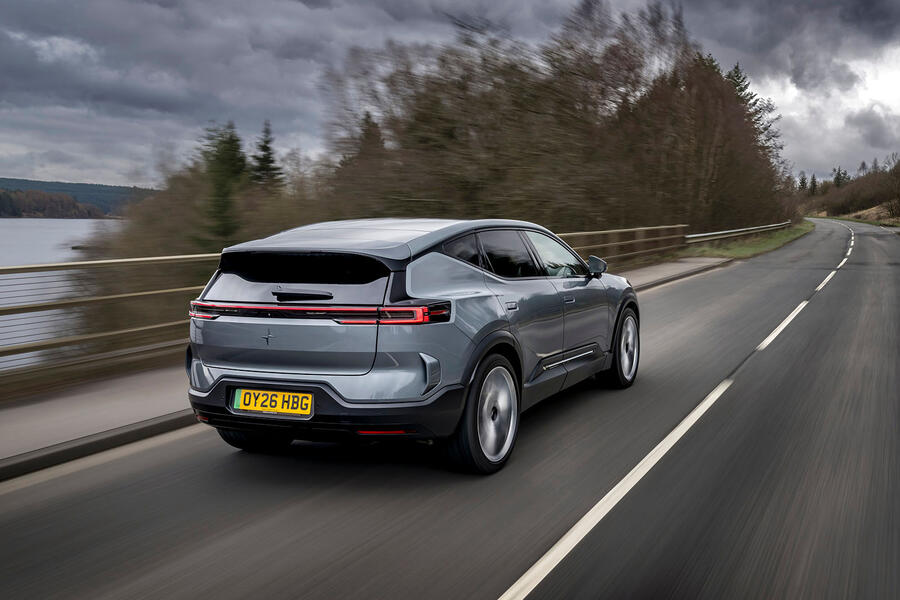
You'll note I'm using the past tense here, because the 3 has just had a big but rather confusing update, as part of which that clever differential has found itself out of a job. The update isn't really a facelift, because other than some new wheel designs and paint options, the 3 looks the same; the changes all take place under the skin. The headline facts here are a switch from 400V to 800V, which has boosted the maximum charging speed from 250kW to 350kW.
At the same time, the batteries have got smaller. Why? We didn't really get an answer, but on the Dual Motor and Performance models the difference isn't very significant: it goes from 107kWh to 103kWh (usable).
The Rear Motor, however, goes from the same 107kWh to just 90kWh – presumably to reposition it more clearly as the entry-level 3. The dual-motor versions actually gain a couple of miles of range (395 for the Dual Motor, 368 for the Performance), in each case because this is also an efficiency upgrade.
This is where the torque splitter comes in – and out. It was originally called into being because the 3 used permanent magnet synchronous motors on both axles. You only need one at a steady cruise, and a PMSM can sap power when it's idle, so the engineers specified a disconnect clutch. And if you're going to have a clutch pack, you might as well upgrade it to let it do something exciting, like vector torque, right? It's a nice way of giving one component a dual purpose.
For the 2026 update, the rear motor becomes more efficient and the front one is changed to an asynchronous unit, which is happy to idle at a cruise. That meant the rear torque splitter was no longer needed as a disconnect clutch, and to have it there just for the dynamics was seen as something of an extravagance, so it had to go. By way of compensation, the front suspension has been made softer to give the car more alacrity on turn-in, and the electric power steering has been recalibrated. Despite the loss of that key bit of technology, Polestar's engineers claim the updated 3 drives even better than before.
I have driven the new car in all three specs: Rear Motor, Dual Motor and Performance. No matter which one you go for, there's no doubt about it, the Polestar 3 remains one of the sharpest, most dynamic big electric cars you can buy. The grip, steering precision and turn-in response are all phenomenal, particularly for something that weighs 2.5 tonnes. The Performance is a notch above the others, although I'm not sure you could tell definitively without driving them back to back.
A highlight is still how natural it all feels. Neither the accelerator, nor the steering, nor the brakes are artificially heavy or overly eager just for the sake of feeling superficially sporty: you can mete out all 670bhp with total accuracy.
And yet the 3 has lost the bit of magic that the torque splitter used to impart, where it would gently yaw on the power like a Toyota GR86. That delectable adjustability out of corners has turned into plainer neutral behaviour, which is fine but just less fun; the Rear Motor never had the fancy differential. It feels a bit pointier and lighter on its feet than before but suffers from rather conservative stability control.
All of which draws the 3's ride quality issues into sharper focus. On the Dual Motor's air suspension it's quite choppy over bigger bumps and a touch wooden over the sharper stuff, and that only gets worse on the passive suspension of the rear-wheel-drive model. That can partly be excused by the handling, but the 3 is no longer head and shoulders above the rest. BMW's iX and iX3 are excellent to drive, and so is Porsche's Macan Electric in the right spec.
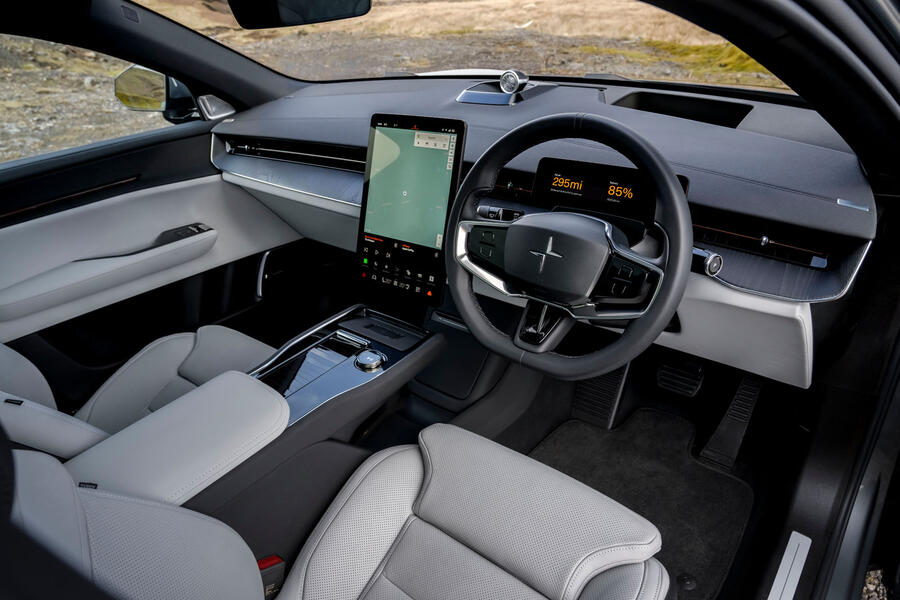
What also continues to mar the Polestar 3 experience are the assorted usability frustrations. Polestar has made a few smaller quality-of-life updates: The infotainment has a faster processor; the adaptive cruise control now lets you adjust the following distance (albeit in a touchscreen menu), and next year, the steering wheel will get clearer buttons. Those are all positive evolutions, but the 3 can still drive you up the wall: the touchscreen user interface hides settings in unusual places and behind several layers of menus; the column stalks feel cheap and don't work very well; there's still no proper key. The list goes on.
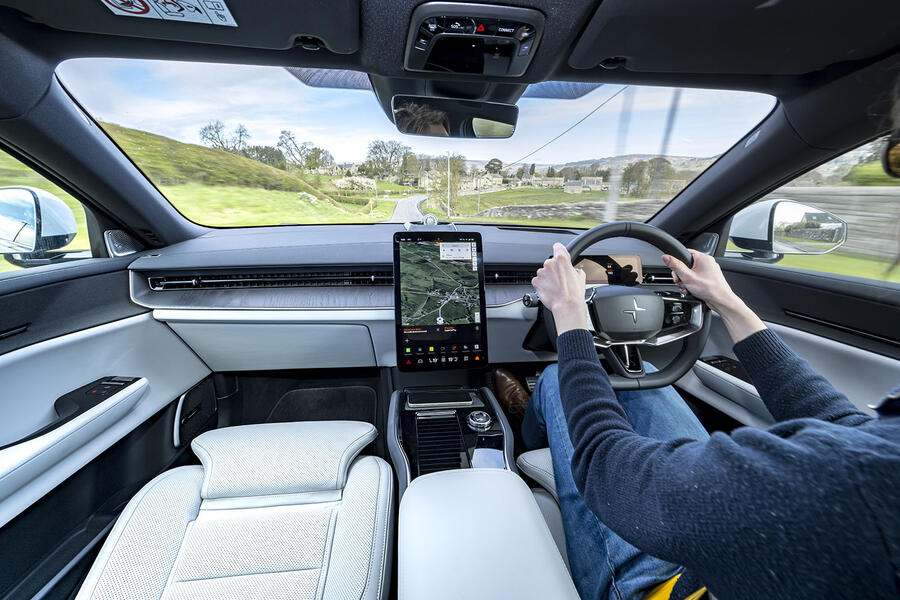
The interior is largely unchanged otherwise, which means most of it feels very high-quality and luxurious, if overly minimalist. There's loads of space in the back, but the boot is slightly smaller than that of the iX3.
The 800V upgrade is obviously very welcome. A DC charging peak of 350kW is very good, if not a class-leading figure, but WLTP efficiency is 3.0-3.3mpkWh, depending on the version, and that is not amazing.
The Polestar 3 is hard to position, being about the same size as an iX or Porsche Cayenne Electric but functionally no more practical than an iX3 or Macan Electric. Prices sit between the segments: £71,540 for the Rear Motor model, £79,540 for the Dual Motor and £87,040 for the Performance. Polestar often has good finance deals, but these are about as changeable as the weather.
The 3 remains appealing as a very driver-focused piece of design, but the loss of its defining feature doesn't do it any favours. With cars like the iX3 moving things on, it feels like Polestar is muddling around in the margins and still trying to compete with the previous generation of rivals.
Polestar 3 Dual Motor
Price £79,540 Motor Front asynchronous motor, rear PMSM Power 536bhp Torque 546lb ft Transmission single-speed reduction gearing; 4WD Drive battery Li-ion, NMC, prismatic, 106/103kWh (total/usable) Kerb weight 2490kg 0-62mph 4.5sec Top speed 140mph Energy efficiency 3.3mpkWh Electric range 395 miles Max charging rate 350kW Rivals BMW iX3, Porsche Macan 4S