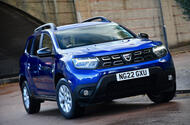
When the Mk2 Dacia Duster reached our shores in 2018, we were mightily impressed.
The original had won hordes of UK fans for its ruggedness and affordability, but it was this later iteration that really made Romania's SUV a genuine mainstream disruptor.
While underneath it was just a heavily updated Mk1, it had come on so far in terms of refinement and build quality that we gave it four road test stars and the class crown.
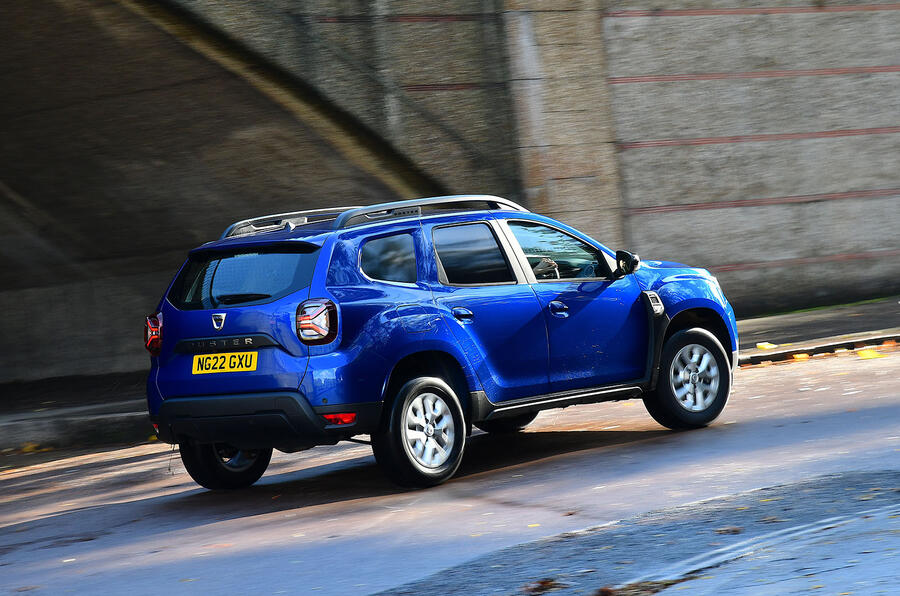
This is a properly dependable workhorse that also does the whole daily-driver thing far better than you might think - and if that doesn't convince you, then consider the fact that it even tempted our own Steve Cropley out of his legendary Citroën Berlingo after 19 years. "The Duster never disappoints, whatever you've been in beforehand," he says. It's pretty astounding, then, that you can pick one up for just £5000 now - and you don't even have to give much up in return. If you're upgrading from a Mk1, you will be particularly impressed: better insulation halved the amount of road and wind noise, according to Dacia (although it's still only about average for the class) and the ride quality improved too.
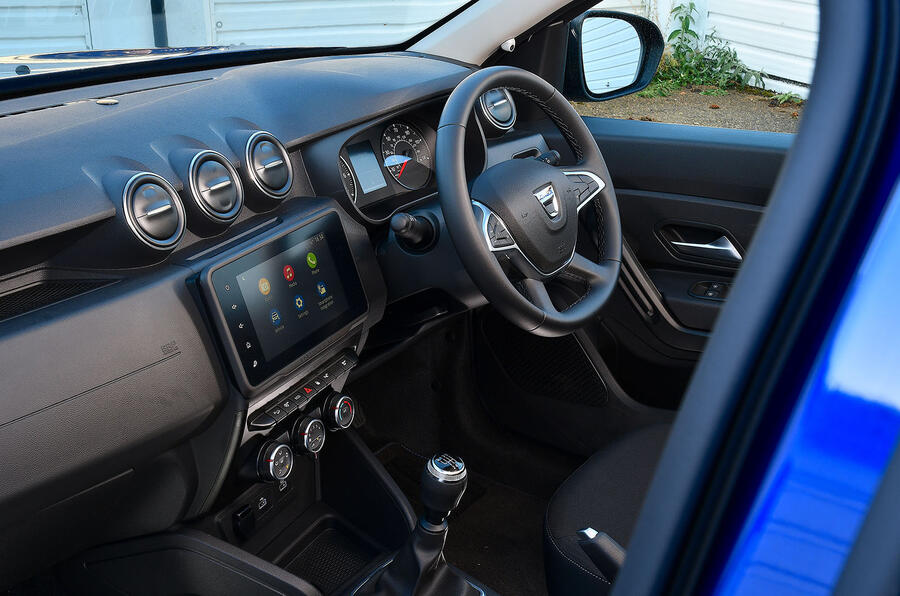
The Duster grew into a do-it-all kind of car, being comfortable and quiet, with perfectly adequate B-road handling; light, precise steering for urban duties; excellent visibility; class-leading off-road performance with 210mm of ground clearance; and deceptively compact dimensions (it's barely any larger than a Volkswagen Golf). Inside there's a lot of hard, scratchy plastics, but it's all well screwed together. Meanwhile, the seats are comfy enough, there's plenty of head and knee room, the dashboard is well laid out and the boot is a useful 445 litres (slightly smaller in four-wheel-drive versions).
It's hard to believe prices opened at a mere £9995 when it was new. Okay, so that was for an Access, which didn't even get hubcaps (and therefore sold in very small numbers), but the Essential (air-con, DAB radio, Bluetooth) started at only £11,595. Comfort was the next trim up, adding sat-nav, Apple CarPlay, Android Auto, cruise control and a rear parking camera and sensors, and Prestige rounded things off with climate control, keyless entry, a 360deg parking camera and blindspot monitoring.
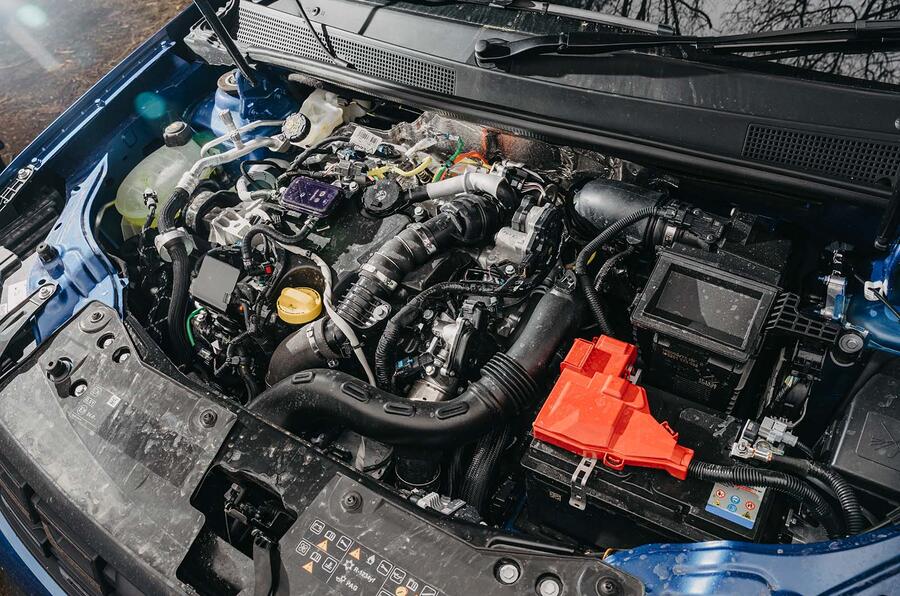
In late 2021, there was a light facelift that introduced some fresh LED light designs and an automatic gearbox for the first time. The Duster's engine range is quite straightforward: a 114bhp 1.5-litre four-cylinder turbo diesel engine was available throughout with a six-speed manual and optional four-wheel drive. Capable of 60mpg and decently torquey, it's our pick of the line-up, even if petrols are more common. Initially the green-pump offering was a 114bhp atmospheric 1.6-litre four with a five-speed manual, but it was wheezy and felt like it was missing a gear.
The 1.3-litre turbo four with 128bhp (plus a six-speed manual and the option of four-wheel drive) or 148bhp (a six-speed dual-clutch automatic) is more up to the job and should get more than 40mpg. The final option was a five- speed 0.9-litre turbo petrol triple. Although a little underpowered, it was available in Bi-Fuel form, meaning it could run not just on petrol but also LPG, which can be cheap to buy and extends the combined range beyond 700 miles.
What to look out for
Petrol engines: It may be the best petrol option from a performance and fuel economy standpoint, but some owners have had problems with the 1.3 TCe. Excessive coolant use will probably be due to a failing water pump, while an oil leak might signal the death knell of the turbo. The 'EDC' six-speed automatic gearbox with which it is sometimes paired can overheat in intensive stop-start traffic. Coolant leaks can occur on the 0.9 TCe around the thermostat housing, due to a leaking gasket. Timing chains can stretch and fail after 100,000 miles. More regular oil changes than Dacia suggests will help prevent problems.
Diesel engines: AdBlue and diesel particulate filter problems can occur in the diesels but are generally rare unless the car is repeatedly used for very short journeys.
Gearbox: In manual cars, some owners have experienced judder from the clutch in first gear (even at very low mileages) or heaviness. These can be annoying but don't seem to cause problems.
Electrics: Owners have reported slow and unresponsive electric windows, crashy infotainment systems and warning lights with minds of their own. You should therefore check all electrical functions before buying, although dodgy fuses are often the simple cause of issues.
Also worth knowingÂ
The Duster was a bargain when new but as a used purchase it's not a lot cheaper than rivals, owing to very strong residuals, yet it's still easy to recommend and should hold its value well. A Bi-Fuel model could save you hundreds if there's an LPG pump near you (unlikely now) but aren't allowed in the Channel Tunnel.
All Mk2 Dusters are ULEZ- compliant and just £200 to tax annually, with insurance groups beginning as low as nine. Various special editions like the Extreme, Journey, SE Twenty and Techroad added colours and trim otherwise missing from the Duster's rather staid spec. They successfully turn it into a surprisingly stylish proposition.
How much to spend
£5000-£7499 We found a 170,000-mile diesel for even less, which demonstrates the Duster's toughness. There are plenty in this bracket with fewer than 100,000 miles, although most are quite low-spec.
£7500-£10,999 Lots of sub-50,000-mile, good- spec Comfort and Prestige cars and a choice of petrol or diesel power. The 4x4s are rare and command a premium.
£11,000 and above Mainly post-facelift cars with few miles - some below 10,000.
An owner's view
Steve Cropley: "My 30,000-mile, 71-plate Duster diesel 4x4 has just passed its second MOT test in my ownership. I was expecting it to fly through, because it has always been completely reliable, but it failed initially this time because the front brake discs had corroded so badly that they needed replacement - a £450 job that my Dacia dealer was able to do on the spot before giving it a clean test certificate. "Apart from that, the car is perfect and I have full confidence in it. The engine is sweet and delivers 60mpg. The car needed two new front tyres at 25,000 miles but the rears are still going strong. The body and interior seem perfect to me and, despite the arrival of newer models, it still feels good to drive."