
Recent Updates
07/22/2026 12:00 PM
Dutch courage: Driving the 592bhp lightweight coming to UK roads
07/22/2026 12:00 PM
Driven: Lotus Emira 420 Sport is lighter, faster, £105k track weapon
07/22/2026 12:00 AM
Official: New Range Rover GT is brand's most saloon-like model yet
07/21/2026 12:00 PM
Petrol-powered Peugeot 208 to remain on sale past 2030
07/21/2026 12:00 PM
MPs weigh 20mph limit for England as motoring groups hit back
07/21/2026 12:00 PM
Is Genesis a success? It depends how you judge a premium brand
07/21/2026 12:00 PM
Screen Star Cars: Which were real, and which were fake?
07/21/2026 12:00 PM
Screen Star Cars: Which were real, and which were fake?
07/21/2026 12:00 PM
Future classics that will climb in value
07/21/2026 12:00 PM
Treasures of the official Volkswagen museum
EV, Hybrid, Hydrogen, Solar & more 21st century mobility!
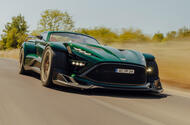 Donkervoort has fascinated enthusiasts with its Lotus Seven spin-offs – now it’s building RHD cars for UK sale
If you’ve heard the 16th-century English-language idiom of ‘carrying coal to Newcastle’, apparently still used to describe any kind of pointless and fruitless act, you’re one up on me.
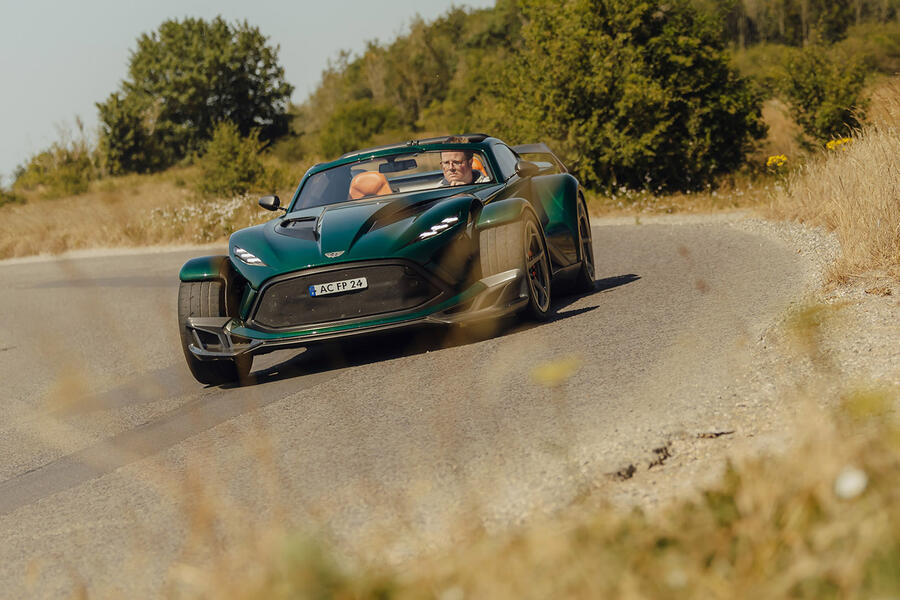
The enticingly low, superbly outlandish-looking new Donkervoort P24 RS happens to have a 298-litre boot in which you could carry a few bags of the black stuff. It’s a bigger boot, actually, than you would imagine finding in a car of this kind – which speaks to the car’s particular priorities rather eloquently. And sure, you could easily drive one from its native Netherlands to the north-east of England, even if I won’t be quite that ambitious today.
Just as Newcastle has (or rather had) coal mines, you see, Britain has (or rather… actually, let’s not go there) makers of lightweight sports cars. It’s thanks to one of them, Lotus, that Donkervoort exists at all, because company founder Joop Donkervoort wanted to import and sell Lotus Seven kit cars in the 1970s but ended up having to make so many modifications to them in order to make them legal for use on Dutch roads that it was more sensible to sell them under his own brand name (which he did with the permission of Hethel).
Now Donkervoort’s global expansion has brought it full circle, sort of. Half a century after Joop set up shop, it will build and deliver its first right-hand-drive car to a UK customer in early 2027. However, its people are clearly concerned that we will judge its entry into the British market – Lightweight Sports Car Central, as the world still sees it – somewhat harshly. Parochially, even. Which explains the coal-carrying reference in their otherwise suitably triumphant press release.
At any rate, supercar dealer Premier GT, of Washington, West Sussex, has been appointed Donkervoort’s sole UK retail outlet. And today I’m getting an advance taste of what ownership of one of these unusual, high-end, lightweight sports cars over here might actually be like.Â
One of Donkervoort’s display cars from the Goodwood Festival of Speed has been lent to me for the day; to depart in from the South Downs, howl north and west in along a mix of trunk roads, and end up on some well-known A- and B-roads on Salisbury Plain.Â
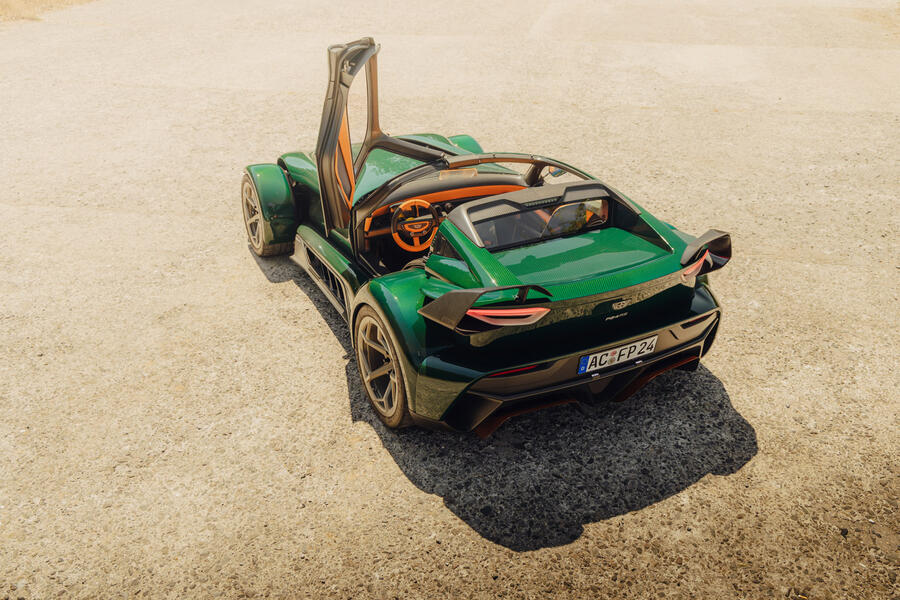
It’s a German-registered left-hooker, as you might have noticed, but let’s call that an inconvenient detail. This will be our first drive full stop in a car that is now an awfully long way from a Lotus Seven, and which British enthusiasts will soon have a much better chance of getting to know first hand.
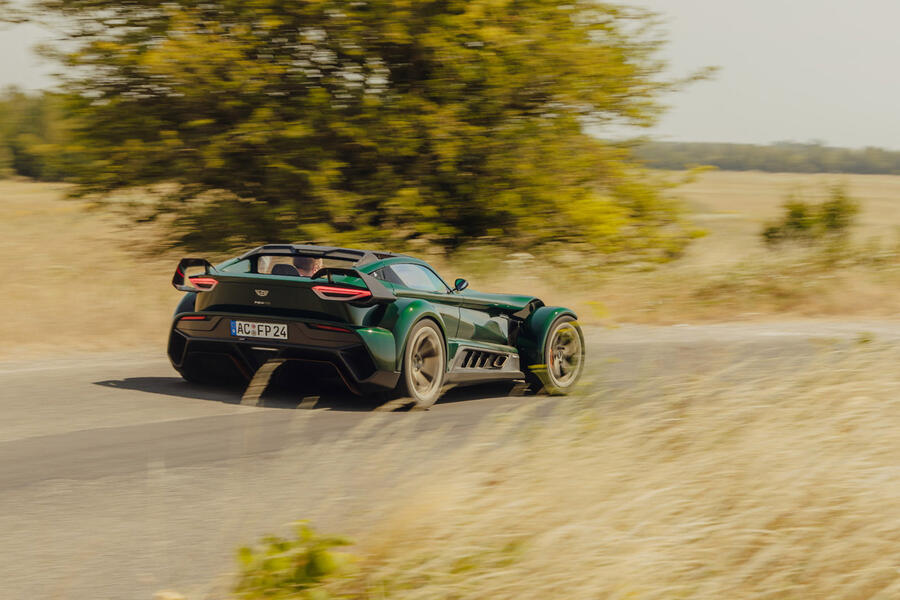
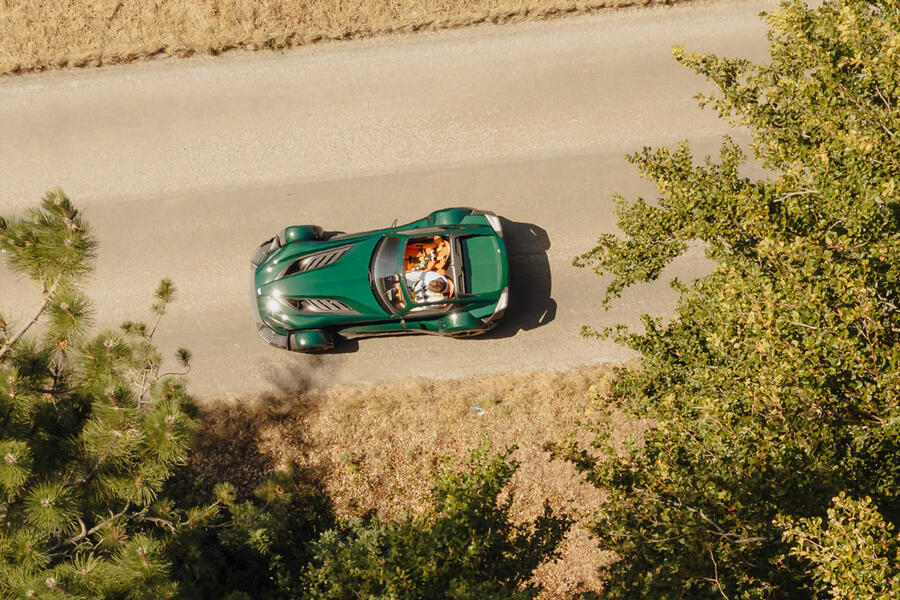
The P24 RS is about 20% longer than a Lotus or Caterham Seven and a good foot wider. It’s the inheritor of a line of cars that was actually pretty quick to grow beyond the footprint of the original Seven: first with the S8 of 1983, then again with the D8 of 1993, then again with the D8 GT of 2007 and so on. We can probably thank the celebrated physical height of the Dutch for that. If you’ve ever felt a size too big and tall for a Seven-style car (insufficiently Chapman-esque in stature, if you prefer), you might be particularly grateful for that, as I am.
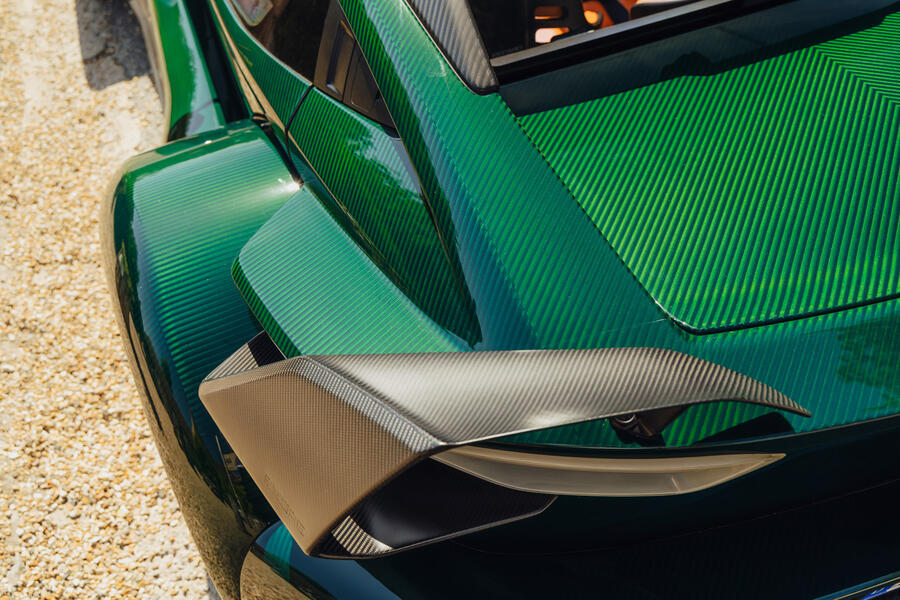
Then again, the P24 RS isn’t actually any bigger than the F22 of 2022 – Donkervoort’s last really big technical development. The company has long sought to adopt lightweight materials in order to offset the influence of any additional mass that its slightly inflated Seven-style cars might otherwise bring. With the F22, however, this philosophy hit another gear, with its own ‘Ex-Core’ carbonfibre parts comprising big sections of a chassis ‘hybrid’ made of alloy spaceframe tube and stressed carbonfibre sandwich mouldings. That chassis delivered double the torsional rigidity of a D8-generation Donkervoort and yet still brought the car in at a dry weight of 750kg.
The P24 RS, introduced earlier this year, adds to that total a little bit, but with a distinguishing justification. The previous car’s blown five-cylinder Audi engine has been dispensed with, and in its place comes a special version of the 3.5-litre V6 that powered the latest Ford GT, using parallel-twin, ball-bearing turbochargers from Dutch Formula 1 supplier Van der Lee.
Overall output has taken a big hike over where it was with the F22 - from 493bhp to 592bhp - and, unlike the Audi lump, the Ford one mounts entirely symmetrically ‘north-south’ within the long, insectile snout of the car. It’s that last fact that opened up the necessary space to move the car’s steering system across the frontal package, which means Donkervoort can offer it in either left - or right-hand-drive.
Elsewhere, some parts of the P24 RS are innovative and technically interesting, others deliberately not so much. Because Donkervoort likes to keep some things analogue and traditional, it uses a Tremec TKX five-speed manual gearbox; and it passes up electronically controlled active torque-vectoring across its driven rear axle in favour of a Torsen mechanical torque-biasing differential. With nearly 600bhp at its disposal, Donkervoort recognises the need for electronic traction control here - but there’s no electronic stability control. Anti-lock brakes and electromechanical power steering are options; this test car has the latter but not the former.
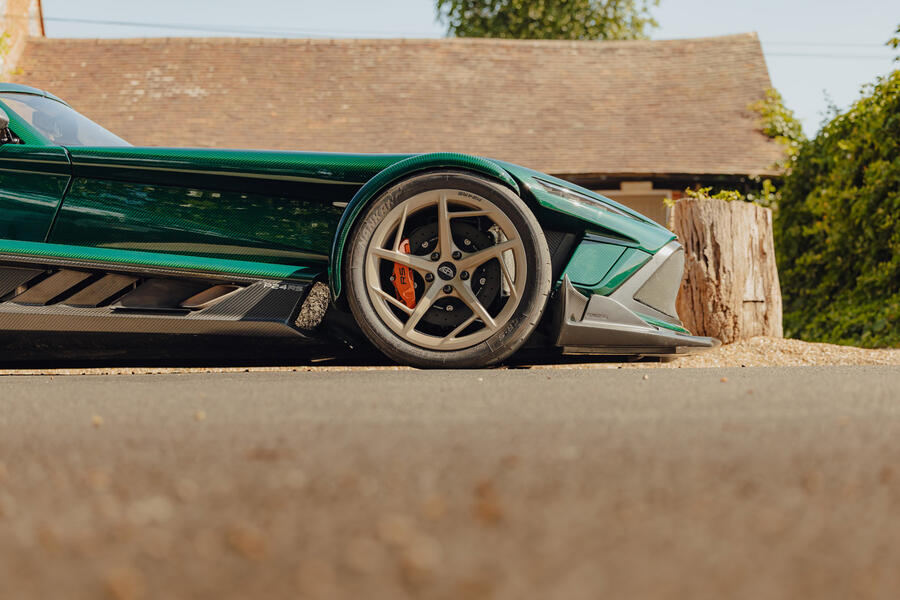
The P24 RS does use a semi-active suspension system, however, with 35mm of hydraulic ride-height adjustment. Its six-stage adaptive dampers have sufficient roll-cancelling functionality to negate the need for conventional anti-roll bars. That sounds interesting.
I depart the village of Charlton, just north of Goodwood Racecourse, with the heat of a sweltering July day building. I’m unexpectedly comfortable, albeit rather warm.Â
One of the systems left off this Donkervoort demonstrator for the sake of weight-saving, the man from Donkervoort tells me as I turn the key in the ignition barrel, was air conditioning. Oh good. With the targa roof stowed and lots of glossy carbonfibre around the cabin to reflect the heat, it feels a little bit like I’m a chicken breast in an air fryer when I come to a stop at traffic lights. The heat from the engine compartment slowly floods over my feet, there’s suddenly no passing air to cool me down. I expect I’ll need about fifteen minutes of this, at what feels something like Gas Mark Four, to be ready to eat.
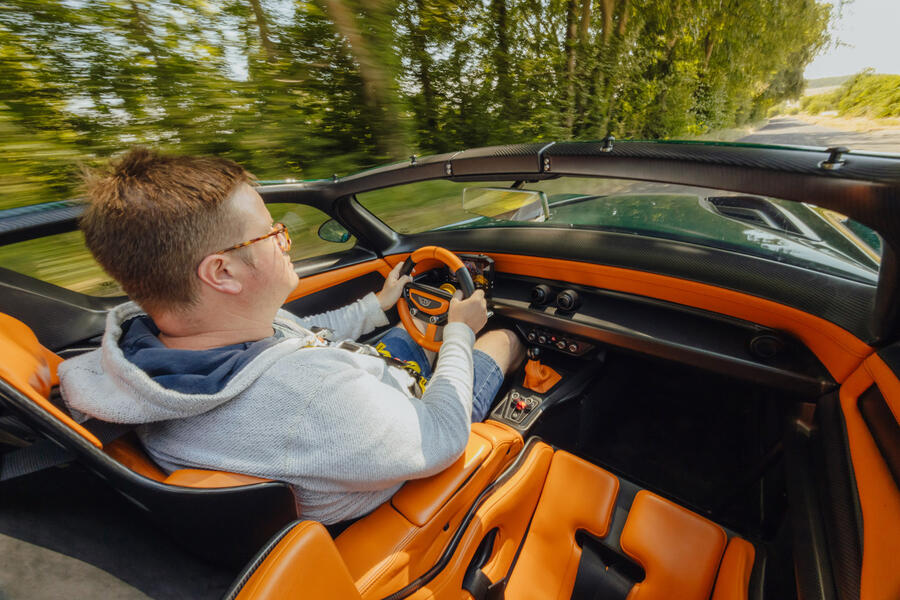
Buying advice item number one would seem to be ‘have the air conditioning’, then. But it’s an impressive cabin. There’s plenty of room at the wheel, even for all 6ft 3in and rather too many stones of yours truly. The seat runners afford plenty of adjustment and loads of leg room. The steering wheel is removable to help you on your way past the dihedral-style doors and into the seat. The bucket seat itself is surprisingly wide and comfortable and can be set lower, even, than it was in this test car, for those who like a bit more shelter from the wind. Elsewhere, the shape of the interior door panels makes outboard elbow room just a little bit tight, although that really is the only way in which the driving position in this four-metre-long sports car feels at all squeezed in.
On the move, you get an intriguing mix of signals from the P24 RS. Twiddle the small, knurled metallic damping control knob down to zero and the suspension slackens off fully. Then push the top of the same knob and the hydraulic struts raise the ride height up to ‘High’, which Donkervoort advises you use for road driving.Â
Thus set, the car is unexpectedly easy work to drive. The steering is remarkably light and manageable (provided you have that optional electromechanical power assistance). The ride is flat but quite buoyant and not at all tetchy or firm – until bigger, sharper inputs test the limits of the travel, at least. At normal speeds, there’s an appealing, albeit not entirely abiding, Lotus-like flow about the way the car travels along, and enough body movement that you can easily judge how hard the tyres are working and what the road surface is doing. It’s nicely charismatic in that front-engined, rear-driven, classic-roadster vein.
The powertrain, however, is a different case entirely. The manual gearbox is needy: the shift action is heavy, short-throw, notchy and mechanical-feeling, the clutch pedal is long and medium-heavy and the whole thing is sensitive to good shift timing, rev-matching and general mechanical sympathy. Honestly, it’s deliciously anachronistic for 2026 – and quite wonderful for it.
The ratios feel hilariously long. First is very much for driving, not manoeuvring. Second will take you well beyond town speeds. And you won’t need fourth until you’re cruising on a motorway. Beyond that, the ratios are set so that the engine hits 6000rpm in fifth at its claimed top speed: 186mph (whereas most modern, two-pedal automatic sports cars run out of revs in fifth somewhere between 135- and 150mph).Â
That all takes a little bit of mental processing. There’s loads of torque and a boosty sort of delivery in the feistier driving modes, so you just pick a ratio, stick with it, hold on tight and let the engine slug it out. The last manual sports car I drove with ratios that felt this long but which still felt anything like as fast might have been a Corvette Z06; before that, probably a TVR Tuscan. They don’t come along often.
A drivetrain like that ought to make the P24 RS’s engine the headline act in its driving experience, of course. Is the V6 quite that good? I’m not sure. It’s potent, without doubt, and not backwards coming forwards - but it doesn’t quite have the bristling, histrionic intent you expect in a car as mad as this. It can sound a bit flat at times, as V6s tend to. Otherwise, well, it’s just not the fast-revving straight six or gargling muscle-car V8 that I can’t help thinking this car deserves.
Later in the day, on those testing Salisbury Plain roads we know well and where we can push the P24 RS at least a little bit closer to its dynamic limits, one or two other ‘works in progress’ emerge. In High ride mode, at least, that light steering I mentioned earlier can make the car a bit of an act of faith to commit to a corner – although it does get a little easier and more intuitive as you wind up the adaptive dampers.Â
Having done that, though, the formerly fluent ride becomes a little unyielding, the dampers struggling to deal with bigger, sharper intrusions without sending shocks and clatters through the suspension top mounts; and tending to ‘freeze’ when loaded up with cornering forces and then asked to deal with vertical inputs simultaneously.
With niche sports cars like this, customers are willing to overlook the odd dynamic quirk and wrinkle. They don’t expect immaculately reproduced, homologated perfection, and the P24 RS will give them an over-abundance of character and rawness.
Bottom line: if it were my £302,400, I would want dynamic limitations plain enough to become apparent over a few hours at the wheel to be addressed, I think. But I would also give Donkervoort enough credit to imagine them well capable of ironing out those wrinkles. There’s certainly still time for that sort of thing: and small, agile companies like Donkervoort tend to listen to their customers, and can refine and improve their products quickly.Â
Clearly Donkervoort still has a little fine-tuning to finish in order to best adapt its cars to British roads, and meet the requirements of British customers, then. As of right now, however, conversations can properly be had; and what an utterly singular product there is to kick them off.Â
Really, the Donkervoort P24 RS is like absolutely no other sports you might buy - in right-hand-drive, left-hand-drive, or anything else. We look forward to checking back in with it some time in 2027, with a view from the correct side of the bonnet, to discover exactly where the anglicisation of this wonderfully exotic sports car has taken it.
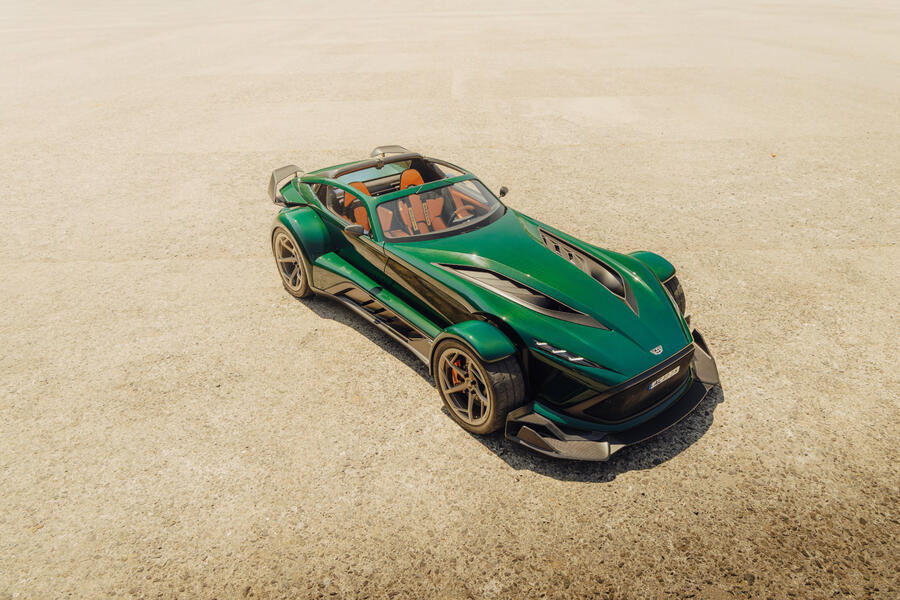
Donkervoort P24 RS
Verdict: Wild-looking, and very fast; and surprisingly usable; but also really analogue, involving and evocative, with quite a traditional old 'classic roadster' soul.Â
| Specification | Value |
|---|---|
| Model | Donkervoort P24 RS |
| Price | £302,400 |
| Engine | V6, 3496cc, twin-turbocharged, petrol |
| Power | 592bhp at 5500rpm |
| Torque | 590lb ft at 4500rpm |
| Gearbox | 5-spd manual; RWD via Torsen LSD |
| Kerb weight | 840kg |
| 0-62mph | tbc |
| Top speed | 186mph 'plus' |
| Economy | 28.4mpg |
| CO2, tax band | na |
| Rivals | Ariel Atom 4RR, Noble M500 |