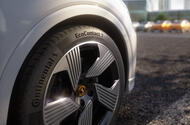
We marvel at thermal efficiency and hybrid tech, yet overlook the basics of tyres
The amount of technology being thrown at cars to make them more energy-efficient almost beggars belief. However, one vital contributor to economy and efficiency that's arguably still overlooked at consumer level is something that no road vehicle can do without: the tyres it runs on.
Rolling resistance is an area of tyre performance that manufacturers are committing considerable resources to. Continental says rolling resistance accounts for 20-30% of a vehicle's fuel consumption and Michelin says a 30% rise in rolling resistance increases fuel consumption by 3-5%.
For EVs, just as with ICE and hybrid cars, the effect of rolling resistance is directly linked to range and the amount of energy consumed. Energy is energy, whether it's carried as liquid or electricity.
Under EU law, rolling resistance is included in the tyre labelling system and reflected in the efficiency rating that each tyre gets. But what makes tackling the energy-sapping problem more complicated is that it doesn't necessarily happen in isolation. For instance, changing the compound is one way to improve rolling resistance but other aspects of the tyre's performance, such as grip, are also affected.
The same is true in other areas of tyre construction, such as the tread design, which impacts both grip and rolling resistance. Continental has said: "Reducing rolling resistance without sacrificing grip is one of the greatest challenges of tyre engineering." In pursuit of that goal, it is working on advanced materials, innovative rubber compounds and optimised tread design - and the same is happening throughout the industry.
Rolling resistance is a 'parasitic loss' because it draws power and energy from a car without contributing anything to moving it. Failure to keep tyres properly inflated is one cause but rolling resistance is also rooted in the design and chemistry of the tyre.
Fillers, carbon black and silicas account for a little under a third of a tyre's compound. The introduction of silicas in the 1990s had a profound effect on stopping distances (a 50% reduction, according to Continental).
Hysteresis, the energy consumed and lost as heat when a tyre flexes on meeting the road surface before recovering its shape, accounts for 85-90% of total rolling resistance. Replacing carbon black with silica reduces heat build-up in the compound and with it energy consumption.
The tyre's construction, flexibility of casings and tread design also play a part and ongoing research into this complex subject should continue to reduce rolling resistance, emissions and running costs even more in the future.