Consultation on ZEV mandate will hear arguments from both sides, but the need for change is clear – and urgent
Much of the confusion that surrounds the controversy over whether or not the government should ease the terms of the ZEV mandate stems from the fact that the arguments are very convincing, and extremely well rehearsed, on either side.
Car makers and importers cite several years of severe financial pain, amounting to billions, that have resulted from providing the incentives a sluggish EV car market has needed even to get close to meeting the mandate’s required volume of sales.
Providers of charging infrastructure, frequently criticised for tardiness and unreliability as they struggle to turn their investment into profit, are alarmed at the prospect that their flow of customers, and the prices these customers pay, might now be held back by changes they hadn’t expected.
Autocar believes government action is urgently needed – and is perfectly possible – to benefit both sides. First, our legislators must urgently ease the gradient at which EV sales are required to rise. Buyers simply aren’t available in the numbers mandated for our industry to continue coping. It seems obvious that for the overall benefit of our country and its economy, car makers that comprise one of its key industries need help.Â
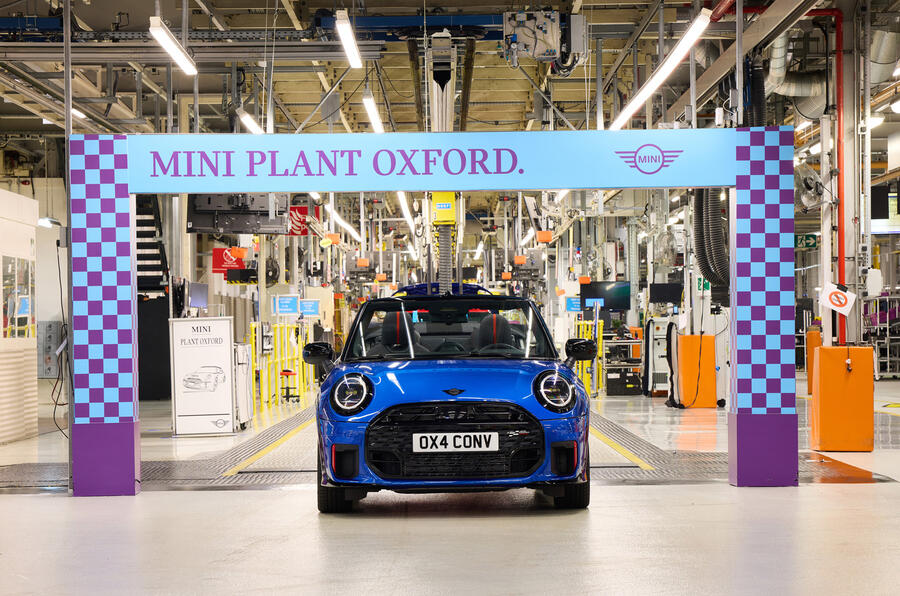
We need to be reassured that the electric Mini can be viably made at Plant Oxford. We must be sure that Nissan’s Sunderland plant can continue to set high global standards for making EVs (and not just those of an arriving Chinese partner). We need to know that because of strong demand and containable costs, JLR can keep the manufacture of most forthcoming electric Jaguars and Land Rovers in the UK, rather than wholly exporting projects as it did with the pioneering I-Pace EV, built in Austria.
It’s not as if the industry is anti-progress: its representative body, the SMMT, continues to state in the first line of every utterance that its members firmly embrace a net-zero target for transportation.
Infrastructure providers, especially those who specialise in public chargers, must be encouraged by a dramatic VAT reduction. The massive cost difference between public and home charging – an unfair and undeserved penalty on those who live where home charging isn’t possible – has emerged as one of the most glaring anomalies of modern motoring.
However, the mammoth change that would benefit all sides would be a permanent, substantial cut in the price of electric energy in the UK.
According to The Economist, energy costs here last year were 50-100% greater than those in the prominent countries of mainland Europe, and three times those of the US. The reason? Gas is expensive and sets the ruling power prices; our vaunted renewable sources (though increasing in volume and declining in cost) still can’t provide a steady supply. When there’s a glut in renewables, we’re rubbish at storing it.Â
The current government came to power promising cheap energy as a top priority. It doesn’t even look like providing it. For the sake of our struggling (and declining) UK motor industry, it needs to do what it promised.