We’re moving away from heat engines with the transition from ICE cars to EVs, but heat still plays a big part in the performance and wellbeing of all electric cars.
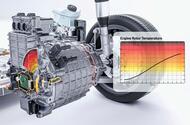
With that in mind, Continental has developed a device called an e-Motor Rotor Temperature Sensor (eRTS), which monitors temperature more accurately than software-based simulation and should reduce the amount of rare-earth material used in permanent magnet synchronous motors.
Batteries, motors and inverters all generate heat due to the power they are handling and the majority of them use liquid cooling.
Most EVs also use permanent magnet motors that have rare-earth magnets embedded in the rotors. Although some manufacturers have chosen to substitute permanent magnets for electromagnetic windings in the rotor, rare-earth permanent magnets have traditionally been the go-to solution to achieve high power and efficiency.
However, the environmental impact of extracting and processing them is significant. The current geopolitical turmoil is also raising concerns over supply and most of them come from China, so alternatives – like asynchronous magnet-free motors – or using less of them are advantageous.
Permanent magnets also have a vulnerability: overheating. If magnetised material reaches a certain temperature known as the Curie point, which varies depending on the material, it can become demagnetised. If that happens to the magnets in an EV motor, then the performance will at least diminish and at worst the motor will fail.
The heat of rotors today is not measured directly but calculated by algorithms developed through simulation and based on temperatures recorded by a sensor on the stator (the windings surrounding the rotor that don’t move).
Because the temperature is calculated rather than directly measured, manufacturers leave a fairly large margin of error on the figure calculated by the algorithms of 15deg C. The temperature of an EV rotor can rise to around 150deg C, so to protect magnets from demagnetisation, enough rare-earth elements must be used to cover the entire tolerance range and ensure the magnets don’t overheat.Â
Using a temperature sensor is much more precise. It reduces that margin to only 3deg C and enables the use of less rare-earth material.
The eRTS is a clever device in other ways, too, and can generate its own power. It’s in two parts. One is a mote sensor (mote means small particle) embedded in the rotor, which senses the temperature of the magnets.
The second is a transducer (which converts one kind of energy into another) sitting outside the motor casing. Through piezo ultrasound, the mote can generate the tiny amount of power it needs wirelessly, as well as transmitting the temperature data.
Sometimes the smallest things can have great significance.