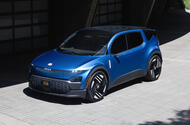
Family hatchback is due with a host of unique features in 2025; high performance variant due
Fisker has signed off the design and engineering of its crucial new entry-level EV, the Pear, as it ramps up towards putting the innovative six-seat hatchback into production on both sides of the Atlantic.
The Pear is the American company’s second model, following the Ocean SUV that was launched recently in the UK, and has been designed with a rigid focus on keeping costs as low as possible to preserve a targeted price of €32,900 (about £28,000) when it is launched in 2025.
At that price, the Pear would comfortably undercut not just similar-size crossovers, such as the Peugeot e-3008 and Nissan Ariya, but also popular contenders from the class below, like the Peugeot e-208 and Vauxhall Corsa Electric.
Crucial to profitably selling the Pear at that price, as company founder and CEO Henrik Fisker explained to Autocar, is its highly cost-effective bespoke architecture, which is unrelated to the aluminium skateboard underpinning the Ocean.
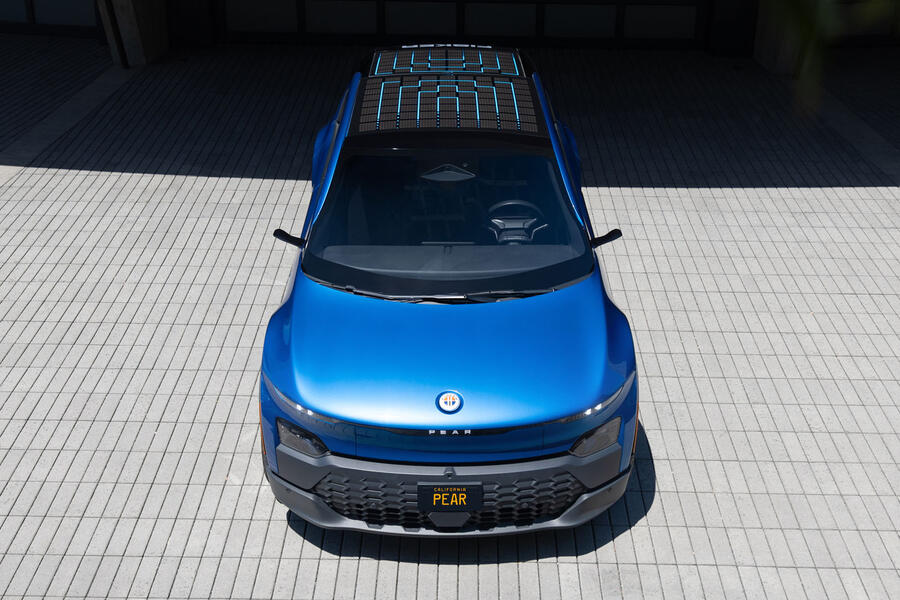
“You couldn’t take all the cost out of that to get to that price point, so we had to redo it as fully steel. We call it Steel Plus Plus,†he said, outlining a development process that has focused heavily on removing costs from all aspects of the car’s construction.
“When we started the Pear, I told the engineers to take out 25% of all parts. Just eliminate them. Find a way. It was excruciating. We had meetings every second day for many months, and they were able to take out 35% of all parts in the car.â€
Fisker is even claiming to have developed its own cost-effective electronic architecture for the Pear, using just two computers to run the entire car. “It’s very fast but uses 25% less power,†explained Fisker.
Some manufacturers, most notably Tesla and Toyota, have recently turned to ‘gigacasting’ key components in a bid to minimise costs and increase modularity, but Fisker said this method would have made the Pear too costly to repair in the event of an accident.
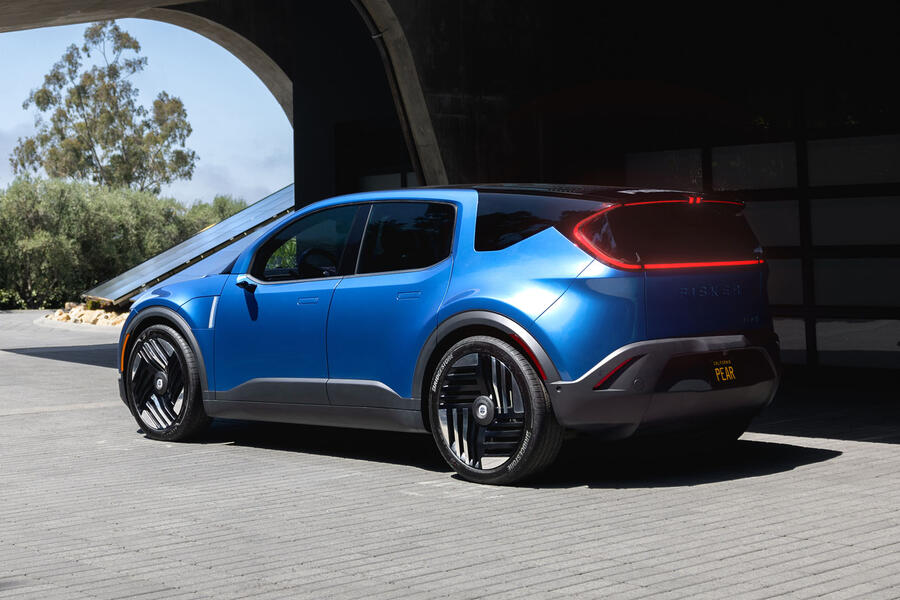
It is this commitment to the Pear’s affordability that also makes European production so appealing, he explained.
“You would add a couple of thousand bucks in import duty and shipping,†he said, if Europe-bound cars were to be produced in the US alongside local-market cars.
He revealed that talks are under way to find a production partner but stopped short of confirming whether Magna Steyr, which builds the Ocean in Austria, is in the frame. US production is planned to be handled by Taiwan’s Foxconn.
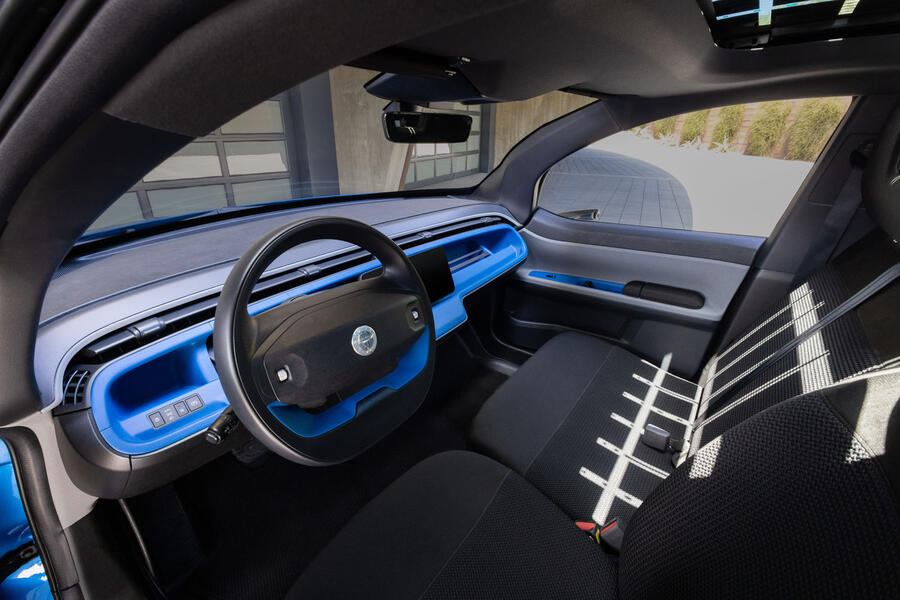
Pear prototypes are planned to hit the road later this year, ahead of the first customer cars being handed over at the “very end†of 2025, said Fisker, pledging to retain the raft of design and packaging innovations demonstrated on a show car last year.
These include its two-row, six-seat layout, an insulated front drawer (rather than a conventional ‘frunk’) that keeps food warm and smells out of the cabin, a ‘Houdini’ boot lid that rolls down into the body to improve luggage access in tight spaces and a Lounge mode that turns the seats into beds.
All of these things are key to boosting the brand’s appeal in a busy market, said Fisker: “We’re not launching any vehicle from Fisker unless we have at least four unique features. If I was just making another electric car that was the size of a Volkswagen Polo, you could forget me, because why would you buy this car?â€