Recent Updates
12/08/2025 12:00 PM
Exclusive: Hyundai to resurrect petrol-powered i30 N
12/08/2025 12:00 PM
Ciao, belter: why I'm selling my Lancia Delta Integrale after 24 years
12/08/2025 12:00 PM
Smart #6 unveiled as plug-in hybrid saloon to rival BMW 3 Series
12/08/2025 12:00 PM
Lotus Eletre PHEV set for huge power output and 220-mile EV range
12/08/2025 12:00 AM
Younger enthusiasts needed to reverse classic market slowdown
12/08/2025 12:00 AM
Can E-rallying in an Alpine live up to the Monte Carlo dream?
12/08/2025 12:00 AM
New seven-seat Mercedes GLB brings ICE and 392-mile EV
12/07/2025 12:00 PM
My £40k Humvee has a 6.5-litre diesel V8 - and it's a fine city car
12/07/2025 12:00 AM
Beware the green T: This new sticker signals a doubtful driver
12/06/2025 12:00 PM
Listen: Peugeot CEO's plan to return to the GTi glory days
EV, Hybrid, Hydrogen, Solar & more 21st century mobility!
After 24 years of ownership, Richard Webber is parting ways with his Delta Integrale EvoWhy we become so emotionally attached to our cars – and how to say goodbye
In opening my garage for a recent visitor, he reacted with a frenzied wonder that suggested the electric door had risen to reveal a live tiger. What lay within was merely 10 cubic metres of metals, plastics, paints, fabrics and leather.
But those materials were cast, stamped, welded, moulded, sprayed, crimped and stitched into the form of a Lancia Delta HF Integrale Evo, and the sum of those parts meant more to him than an object logically should. And his delight is matched by my despair at having to let it go.
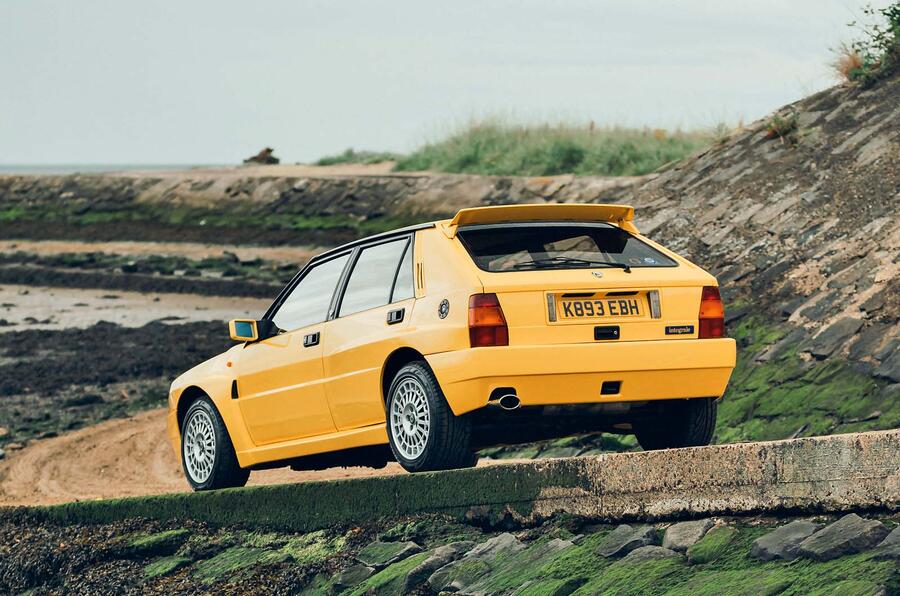
I had lusted after an Integrale since its world-beating Group A rallying zenith that bridged the 1980s and 1990s, and the upgraded Evo version’s bullish form, intensive engineering and knack for devouring blacktop put it firmly atop my wish list. I’d set my sights on an Evo 1, the final Integrale to be homologated for racing by the FIA.
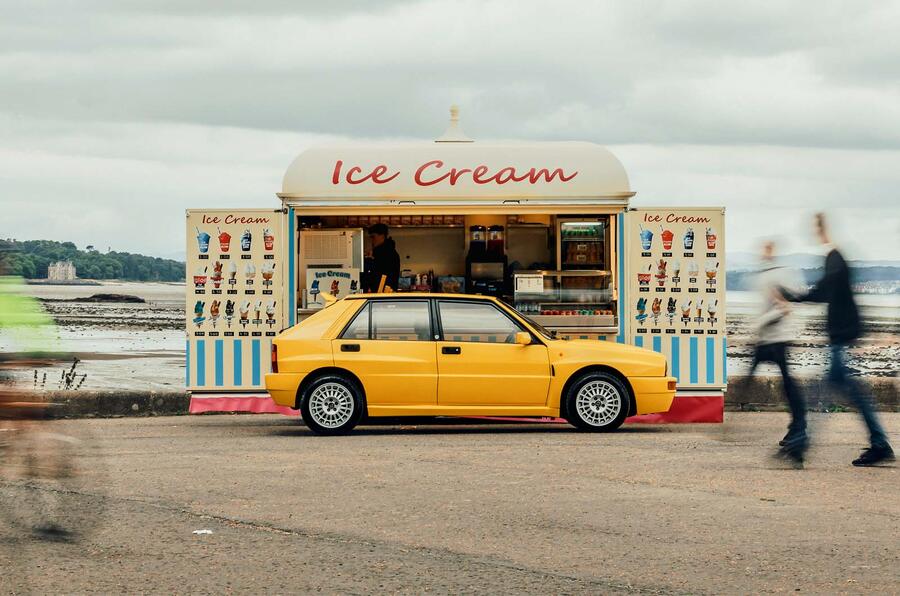
The £25,000 they cost new in 1992 had shrunk to barely five figures on the Italian market by the turn of the millennium, which led me to an unfeasibly glamorous test drive along the shores of Lake Como in a radiant Giallo Ferrari edition example in June 2001. Within a couple of months, I met it at Dover and drove it home to Edinburgh, where it became my daily.
And what a treat that is when your commute runs through the motorway-free, lightly trafficked haven of the Scottish Borders, rarely more than spitting distance from an RAC Rally special stage of yesteryear.
Six years later, I scribbled about it for an Autocar writing competition for budding journalists. The then editor’s response remains lost in the post, but in 2009 I travelled south to pester the magazine into giving me work experience and, eventually, actual work – marooning the Integrale north of the border for several years.
Since that time the Lancia has covered barely 9000 miles. I’m back in Scotland now, but the car largely remains an exhibit because I now have two young kids, and because a function of the Delta’s rarity and provenance means it’s now worth proper money.
In 2017, a mint, 4000-mile Giallo Ferrari sold in New York for £142,000, and a British 17,000-miler made £105,000 in 2022. My car is tidy enough but leggier at 87,000 miles, so it has been estimated at five grand either side of £60,000: a welcome windfall for a growing family – unlike the cost of continued maintenance for a car I now barely drive.
One of the regular comments people make about the car is ‘don’t ever sell it’. I’ve always replied by saying I won’t unless I have to. Well, that time has come. And I’m not finding it easy. I’ve literally lost sleep over selling other cars and motorbikes, but this is a particular torment.
I know it’s not logical and, to some, will seem more than a bit silly. Of course, I’m fortunate to have owned a special car such as this and that the Delta has become valuable. But countering a matter of the heart with a matter of the head is like squaring a circle.
To try to make sense of why the likes of you and I feel so strongly about our cars, and maybe to help negotiate the emotional trauma of disposing of mine, I’ve called upon psychologist Dr Christian Jarrett, editor of digital magazine Psyche.
In clinical terms, I’m grappling with ‘object attachment’, and some of Jarrett’s writing on the subject (for The Psychologist magazine) strikes a chord. Possessions can become so entwined with our personality as to become extensions of the self.
This could be down to wiring – in our medial prefrontal cortex, if you’re interested. Jarrett cites a study by fellow psychologist Kyungmi Kim that concluded: “Areas of the brain that are known to be involved in thinking about the self also appear to be involved when we create associations between external things and ourselves through ownership.â€
It begins at an early age: studies show children as young as six apportion extra significance to objects merely by dint of it being ‘theirs’. Even babies fly into a rage when dispossessed of a favourite toy. “It’s as if the children believed their special object had a unique essence, a form of magical thinking that reappears in adulthood in our treatment of heirlooms, celebrity memorabilia and artwork,†wrote Jarrett.
I ask him: how can we become so attached to our cars? “Psychologists have long recognised that our relationship to belongings is emotional, rather than rational and logical,†he says. “The value we place in something increases as soon as we call it our own – known as the ‘endowment effect’. It is as if our things become infused with our identity, and it’s very easy for us to become sentimental about them.
“There is plenty of scope for cars to become deeply entwined with many of our important autobiographical memories – such as cherished holidays or as markers of particular chapters in our lives. This might contribute to them feeling more like a fellow traveller.
A car’s smells and sounds could enrichen these associations further and help give different cars their own unique character. First cars, in particular, might be bound up with the transition to adulthood. And with so many varied brands, and the long cultural histories of many models, there is also great opportunity to use one’s car as a way to signal a sense of belonging and identity.â€
And what would be a psychologist’s counter-argument to those who say ‘it’s just a car’? Jarrett says: “Of course, it is possible to downplay the value of any physical object, as compared with the sanctity of living things.
However, objects often acquire a meaning to us far beyond their physical function. People who lose their homes in natural disasters or suffer the loss of a cherished heirloom in a robbery often describe experiencing a kind of grief, as if they have lost part of themselves.
This emotional attachment could easily apply to a car, and to derogate it as a mere physical thing is to underestimate the deep connections we can form to our personal belongings.†(I look forward to repeating this verbatim to my car-agnostic other half.)
Finally, I ask for tips to help mentally process selling the car. “Borrow ideas from how people manage and express their grief for loved ones,†he suggests. “You could make an effort to cherish your memories of the car, such as by creating a photo album of places you’ve been in it, writing a story about your experiences in it or taking it for one last treasured journey.â€
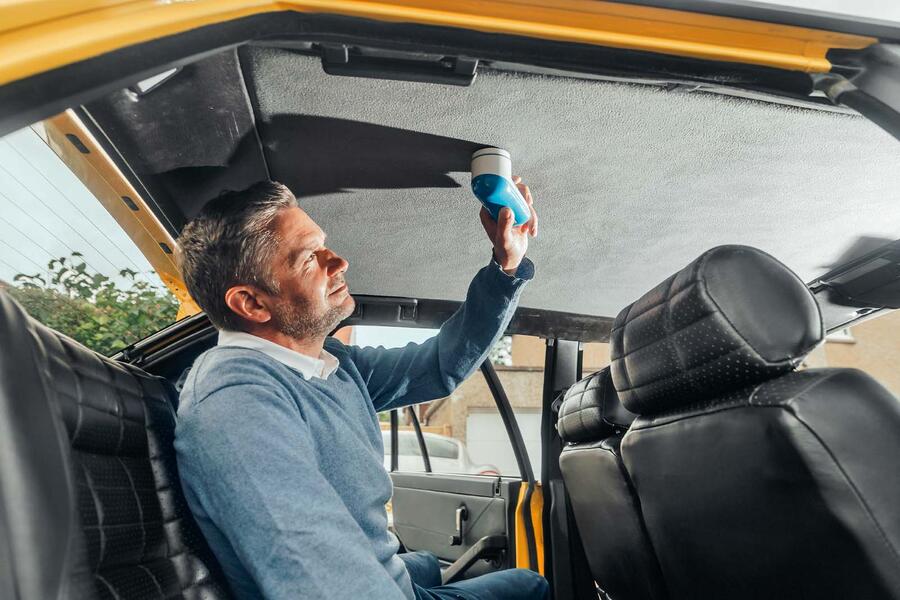
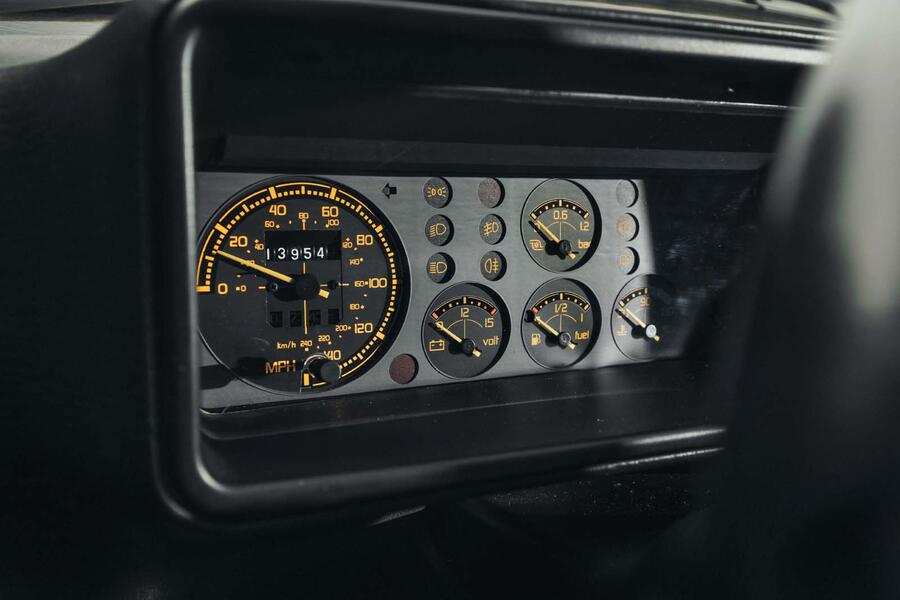
It is, therefore, strictly on doctor’s orders that I liberate the Delta from its protective Carcoon bubble for one final summer’s evening raid. I feel a Pavlovian response to holding the slim, fobless keys in my hand, the chunky thunk of the central locking, tapping the transponder on the aftermarket immobiliser (Thatcham-approved, naturally), the resistance of the ignition barrel and the resulting start-up that brings an expectant whirr from the engine above the exhaust’s bass note.
All eight diagnostic panel LEDs extinguish (always a nervy moment for Integrale owners), and we’re off.
It’s not far from my Edinburgh home to a particular favourite B-road: smooth and twisty, it climbs and falls over wild hills, with arrow-like straights through the valleys. There is no traffic and, importantly, I have no passengers: this is a private communion on medical advice, a consolidation of personal memories.
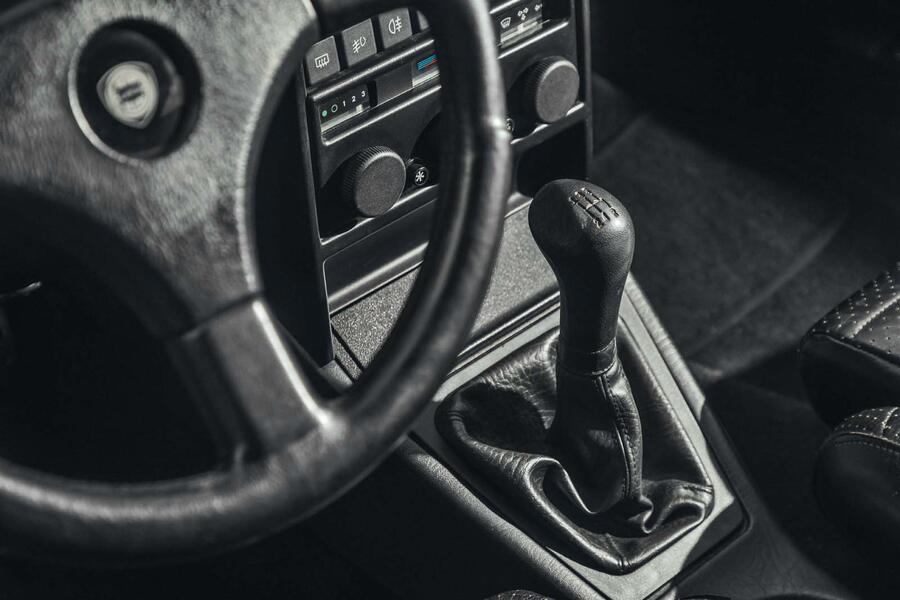
Peering over the bulging, tabletop bonnet, I’m gently slotting the rubbery gearstick between second, third and fourth and keeping the 210bhp, 220lb ft inline four on a simmer, but there’s still lots of lag until the Garrett T3 turbocharger gathers its faculties and stuffs a bar of pressure into the engine. It responds in a frenzy of acceleration: with just 1300kg to move, the 33-year-old Evo still shifts.
It’s in combining that shove with the sublimely intuitive and progressive steering, the lavish suspension travel and the unwavering grip offered by the mechanical four-wheel drive system that adds up to the Integrale’s distinctive dynamic character. The contact patches are tacked down as it swallows back-road undulations and mid-corner lumps whole, with neither the skittishness nor the bucking of many modern counterparts.
And then there are the looks: brilliantly brawny, epically quadrate. All of which brings me an intense and immediate happiness like few things in life can. Ultimately, it is the impending cessation of this that is leaving me down in the mouth.
Yes, I have lots of magnificent and vivid recollections associated with this car. But for most of them, the car wasn’t incidental to the memory – it was the memory. How it felt on that sun-kissed recce by Lake Como; the day-long charge home from Dover; or the thrash across The String on the Isle of Arran. Even the countless, rain-sodden countryside commutes of those early days are immutable memories.
Indeed, while people might associate a treasured thing with a particular experience – say, a nicknack from a favourite holiday, a photo of a family gathering, or a wedding ring – for the likes of us with an automotive affliction, a car can be both the thing and the experience. But not every car.
I hold a great deal of affection for our crusty family hack, a 2009 Volkswagen Tiguan. But at the risk of making things weird, that’s a platonic relationship. I could (but won’t) harry it around the Green Hell to the best of my ability without risk of it marking my soul. It makes my life easier but not richer.
Unlike the Delta. And that is in spite of its numerous flaws: the symphony of scuttle shake, the heaving body roll and the suspension’s wincing sensitivity to sharp edges. Not to mention the occasionally eye-watering cost of maintenance and preservation. Yet, as with all of life’s rose-tinted recollections, I will remember the thrills more than the bills.
When it comes to parting ways, I resolve to begin that mental ordeal when the auction listing goes live (see box, right). It becomes more real when the new owner sends the proceeds and absolute when I catch a final glimpse of the brilliant, 225-code Giallo Ferrari paintwork as the flatbed leaves my street. That’s it, then: the old heave-ho for the old Evo.
But the expected weapons-grade moping hasn’t materialised. Like a first day at school, the reality has been less distressing than the anticipation. I’ve concluded – with frankly unprecedented rationality – that since I was too busy to drive the car, I’m also too busy to miss it.
Which has offered some sort of relief. I’d kill for another Delta one day but, in the meantime, I’ll take my fix where I can get it. Even if that means an everyday bimble in the Tiguan.
As the song goes, if you can’t be with the one you love, love the one you’re with.Â