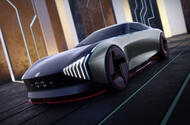
As firm expands into Europe and UK, a halo car – possibly a rakish GT – could help to build awareness
Chinese manufacturer Changan, which recently entered the UK market, is considering a “dream machine†to help build its brand in Europe.
The state-backed firm traces its roots back to arms manufacturing in the 1860s. It began building Jeeps under licence in the 1950s before developing its own models in the 1980s, and it has had an R&D centre in the UK since 2010.
It's currently in the process of launching in the UK retail market with the Deepal S07 electric crossover, soon to be followed by the smaller Deepal S05.
Speaking to Autocar, Changan design boss Klaus Zyciora – who at Volkswagen oversaw the creation of the ID 3, ID 4, ID 5 and ID Buzz – said: “Cars are freedom machines and dream machines, and how great is that? Let’s celebrate that.â€
Asked whether Changan wanted to build a “dream machine†of its own, he replied: “Yes. Wait and see.â€
Zyciora wouldn't be drawn on specifics, but it's possible that the new car could draw on the VIIA concept of 2023. A rakish three-seat GT, this is the most overtly sporting model yet shown by Changan, and a two-to-three-year development cycle would roughly align with the pace of development in the Chinese industry.
Zyciora also provided several hints about the direction that Changan could follow. Discussing the company’s three sub-brands (Avatr, Deepal and Nevo), he highlighted Deepal as “attracting younger customers†with a “performance approachâ€. These attributes would naturally lend themselves to a brand-builder such as a sports car.
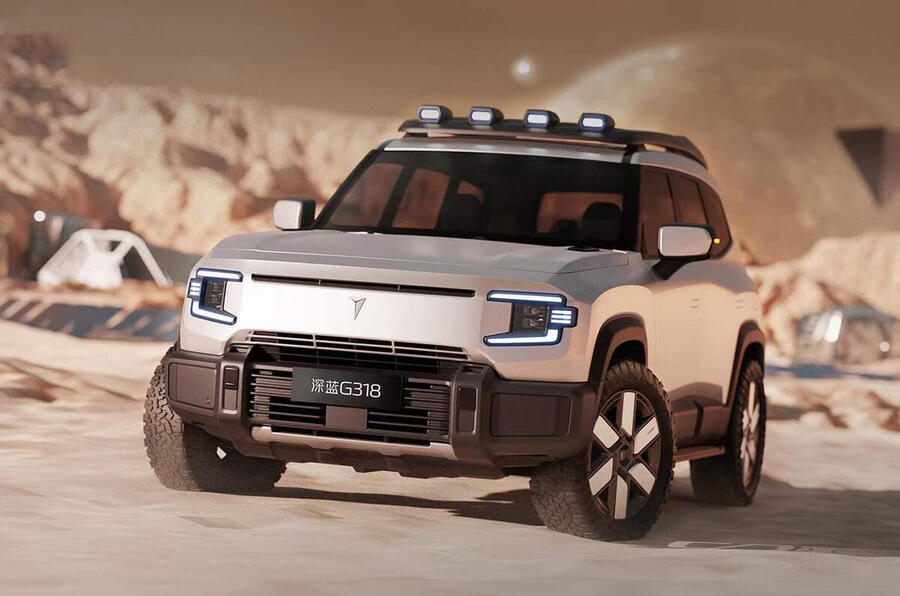
Thus far, Deepal has launched five models globally: the S05, S07 and S09, which fall in line with European crossover conventions, the L07 saloon and the G318, a more traditional 4x4 (pictured below).
“Going forward," though, said Zycoria, "there’s so much more to come that I think we're going to find a great community of customers.â€
He suggested that Changan is looking to “find the balance†between striking, innovative forms and remaining acceptable to global buyers.
"If you’re weird, that’s the difference between being unique and attractive or weird and strange; that’s a very narrow thing," he said. "In the end, it always comes to attractiveness, based on great proportions, on design elements that are seen as beautiful and attractive in the sense that you consider it valuable. If you follow that house rule, you de-risk already.
“If you say ‘I want to break every rule, I want to step out of the comfort zone, I want to crush the mould’, you might be very brave. There is a chance that you create an outstanding, iconic product, but the risk is higher, and we have seen that in industry quite a bit.â€
Referring specifically to “dream machinesâ€, Zycoria added: “In these decisive moments, especially in larger groups, you need to make sure as a designer that you aren't misguiding a company into oblivion, because in the end it’s all messed up. That shouldn’t happen.â€