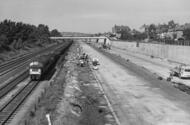
From the 1960s, campaigners claimed buses operating on new motorways would be far more efficient than trains
"The death knell of British railways" is commonly held to have been rung by Dr Beeching in 1963 but, surprisingly, at least one writer heard it as early as 1912, claiming that "motor cars must supplant them" – despite there then being only about 150,000 slow motorised vehicles using often indirect roads.
Even the ardent automobilists at Autocar, while recognising that "the railway services are capable of vast improvement", regarded this declaration premature.
We countered that "while the motor car is undoubtedly a rival of the railway, we still think the best results to the country at large would be obtained by a well-devised system of co-operation between the two".
Railway companies certainly perceived the rise of self-propelled road vehicles as an existential threat. "Ninety per cent of the motor cars on the roads today are unnecessary and ought not to exist," said 83-year-old LNER director Sir Hugh Bell in 1927, and five years later we even accused rail lobbyists of waging war.
Enjoy full access to the complete Autocar archive at the magazineshop.com
"The first campaign was directed against the motor bus and coach, and the present restrictions and enterprise-killing regulations are the fruits of it," wrote Autocar. "This year we have an offensive against the motor haulage contractor, who is to be harried and irritated by such things as periodical inspection, licences to operate within areas and so on. The ancillary motor user (he who employs vans and lorries for the delivery of the goods he makes or sells) is the next logical victim. Then would come our turn."
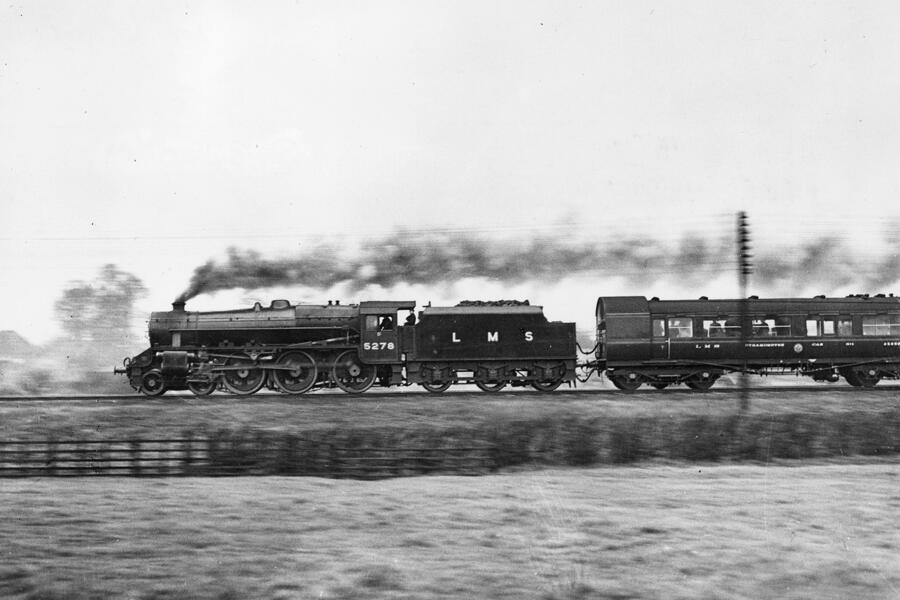
The railways were nationalised after World War II – and quickly sank into the red. By 1955, British Rail (BR) was losing £2m-£3m every week, and so Autocar, ahem, railed: "The Englishman's affection for railway trains is in fact a burden on the country's economy; if this did not exist, an enquiry would have been held long ago into the British railway system and an unbiased verdict given as to whether or not its survival was worth while. This question needs answering before more money is poured down the nationalised drain."
An army engineer, Thomas Ifan Lloyd, promptly answered our plea with a report on the potentiality of converting the nations' railways into a "reserved roadway system", concluding that it offered benefits in terms of capacity, costs for both passengers and freight, manpower, safety, engineering and strategy.
Supposedly the work of the railways' 1.242 million transport units could be done by 10,300 fully laden lorries and buses working eight hours a day, six days a week, with those buses consigning waiting crowds to history.
Lloyd's research inspired the creation of the Railway Conversion League, which claimed that ripping up the rails would yield 20,000 miles of motorway (14-40ft wide) at a cost of £30,000 per mile.
We found it persuasive, writing in 1958: "There can be little doubt that there are endless minor or branch lines which would be all the better for a coat of Tarmac."
But a reader, GL Palmer, wisely warned in response: "I personally should not be unduly surprised if the number of vehicles required should prove to be more than sufficient to fill the newly converted permanent ways to capacity. If this should be the case, any gain is rather problematical."
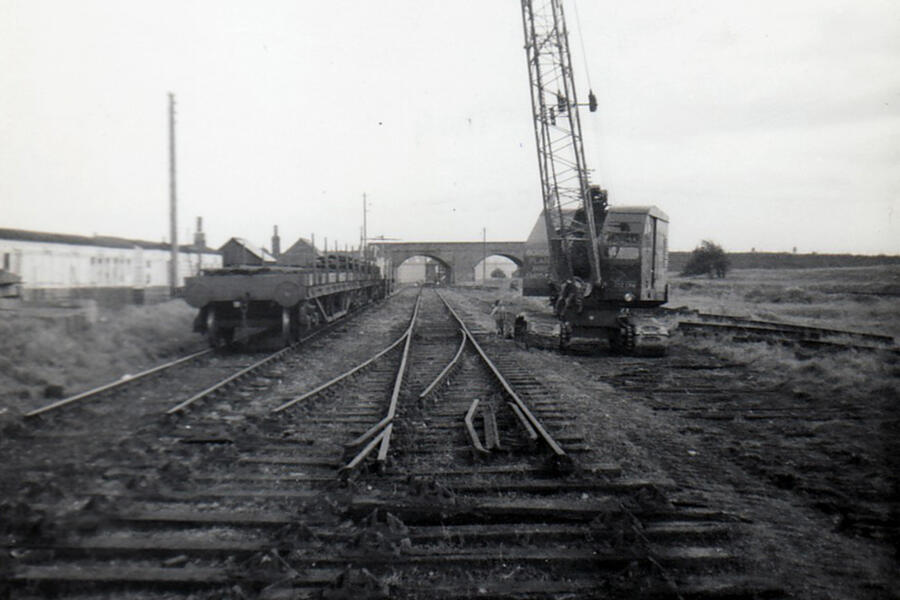
Yet transport minister Ernest Marples was convinced that "there must be a purposeful, continuing slimming down of the railways". By the time Beeching published his 1963 report on The Reshaping of British Railways, recommending that some 6000 of the total 18,000 miles be ripped up, many underutilised lines had already been closed and the nation had started building its first eight motorways.
By 1970, the 'Beeching axe' had decimated the railway network and more than 30 road conversion schemes had been completed, with a further 100 or so being planned.
By the 1980s, BR had sunk to its nadir, providing just 7% of all transport and still losing money – prompting the government to commission the Serpell Report into its future. One contributor even suggested converting lines into four-lane, one-way 'super-highways'.
Autocar backed this idea, but the possibility of a second 'axe' caused public uproar, and ultimately none of Serpell's proposals were adopted.
How things change: nowadays, plans for building a new motorway would surely be considered less acceptable than a new railway, despite the HS2 debacle.