
Recent Updates
06/11/2026 12:00 PM
How a fragmenting world is shattering the global car industry
06/11/2026 12:00 PM
Fiat's resurgence: inside the brand's long road to a rapid recovery
06/11/2026 12:00 PM
Britain's Best Driver's Car 2026: Porsche 911 GT3 Touring
06/11/2026 12:00 PM
BYD Dolphin G
06/11/2026 12:00 PM
MG to preview new small EV at Goodwood Festival of Speed
06/11/2026 12:00 AM
Skoda Kodiaq: 5 ways it delivers serious value for families
06/11/2026 12:00 AM
BYD Dolphin G: PHEV hatchback to offer 65-mile electric range
06/10/2026 12:00 PM
"We're not selling mobility": How Stephan Winkelmann transformed Lamborghini
06/10/2026 12:00 PM
Why we finally made the Mazda MX-5 a five-star car
06/10/2026 12:00 AM
Bold Mk3 Audi Q7 revealed with striking new look and punchy diesel
EV, Hybrid, Hydrogen, Solar & more 21st century mobility!
 Fiat is finally back on the up – thanks to ideas its CEO had wanted to pursue since 2011
Were it not for several big misunderstandings and a few close brushes with the axe, Olivier François would never have become Fiat's CEO.
The Frenchman, now renowned for his marketing expertise, admits he knew little about the subject when he first got into the car business. Nor did he really understand cars themselves. His first love was music: he is married to Italian pop star Arianna Bergamaschi; is close friends with reggae legend Shaggy; and holds the distinction of having helped organise the first-ever concert in the Vatican City. And although he once hid it from his bosses, François now admits that he has even published his own poetry book.
But through sheer willpower and a scarcely believable knack for making the best of a bad lot, he has clawed his way right to the very top of the car business.
Bloomberg once called François "Chrysler's Don Draper"; today he is the winner of Autocar's 2026 Editors' Award - given to an individual who has had the greatest impact on success in their company - for bringing Fiat back to rude health after decades on the brink.
The Italian brand is finally on the path back to growth in Europe, with its strongest product line up in decades. The Grande Panda is tantamount to making wine from water, transforming the austere Vauxhall Frontera into something wholly more desirable. The 500 finally has its much-needed petrol engine back. And waiting in the wings is a pair of clever new Panda-inspired family cars, named Grizzly, to replace the drab Tipo.
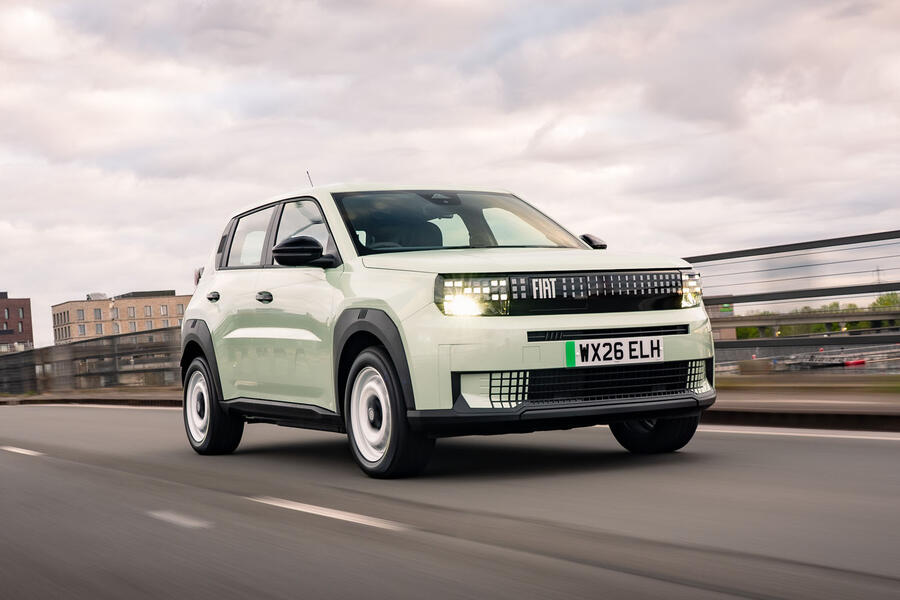
Yet Fiat's phoenix-like return to prominence isn't the sudden about-turn it may seem. François was appointed CEO of the brand back in 2011, at the behest of Sergio Marchionne.
François recalls a slide deck that he presented to the legendarily stern future FCA boss in those first few weeks at the helm: "I said to Sergio: 'I don't think we should do that car, we should do this and that.' A whole line-up is still on my old computer. One was like the Grande Panda 15 years ago. You would say: 'A-ha!'" But it wasn't until FCA merged with PSA to form Stellantis in 2021 that he actually got the resources to put these plans into action.
François' first steps into the car industry most certainly weren't stable. His rise began in 2001, having landed a job in charge of Citroën Italy.
The contemporary C2 and C3 had unfulfilled potential and he was charged with realising it. So he set to work on what he now does most effectively - but which he admits he then had little clue about - developing bespoke marketing campaigns for the Italian market.
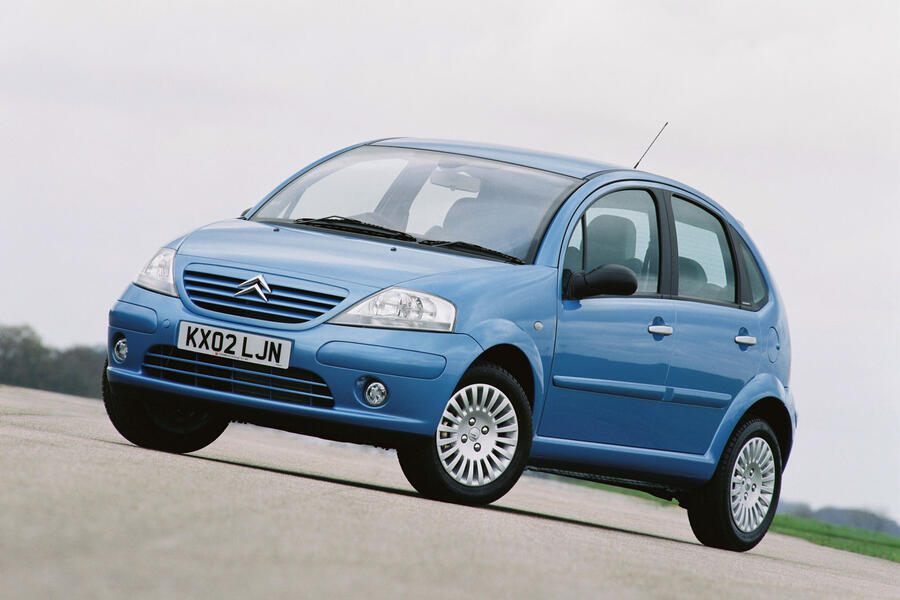
His bosses were dumbfounded and, nine months in, summoned him to Paris as Citroën's market share failed to cross the 3% target they had set. Only timing salvaged his first brush with the axe: "That same month I was at 3.1%, so the conversation never took place."
François' work in getting Citroën to a "crazy" Italian market share of 7.4% earned him the attention of Fiat Group bosses. He says: "I had two big [fears]: one, maybe they want to remove a problem, to exfiltrate me from where I am. Two, Fiat wasn't a good company to work with, because they were in bad shape. It doesn't sound politically correct today, but it was the truth. It was a very dark period."
Enter Marchionne: "Sergio called me. I didn't know who he was, and I would probably never have gone to the interview, except that he called me for a very unexpected reason. He told me: 'You're a great guy, but let's speak poetry.' I thought that if my bosses in France had known about that, I would have lost the credibility I had left. But he found out and he loved it, and that's how he convinced me."
François was placed in charge of the Lancia brand, but it wasn't an easy gig: "Lancia was supposed to be shut down, and [Marchionne's] point was 'let's see what this crazy, artistically minded guy with some marketing competencies can do to change my mind.'"
François explains that you can assess the robustness of a car maker on how many models it can afford to get wrong: "Sometimes you mess up one car, you're dead; sometimes two cars; sometimes three cars.
"The weakness of [the Fiat Group] was that, a few years earlier, it was two cars away and then the Lancia Thesis was one of these two cars. Fiat was two cars away from disaster and a Lancia was one of them. In that moment, when you become the CEO of Lancia, you are not the most popular guy. You come to the boardroom with an investment proposal and they look at you like: 'Are you kidding?'"
François burnt himself almost immediately: "I came in saying: 'We're going to do the new Delta Integrale, the new Stratos, and I'll show you how.'" His bosses were unimpressed.
Yet he looks back on yet another brush with the axe with a smile: "Any brand CEO has to be a bullshitter, because you are the advocate of your brand; you need to show your brand in a positive light. You can't totally fool your audience, because they are good at business as well. So I was advocating for some things that were objectively risky. That went really badly."
The ensuing rethink birthed the Lancia we have known for the past decade, with its range of chic, rebodied Fiats (the 500-based Ypsilon and Bravo-based Delta) plus, following the creation of FCA, a few rebadged Chryslers to boot. Sure, Lancia has lost the lustre it had through the 20th century, but it still exists.
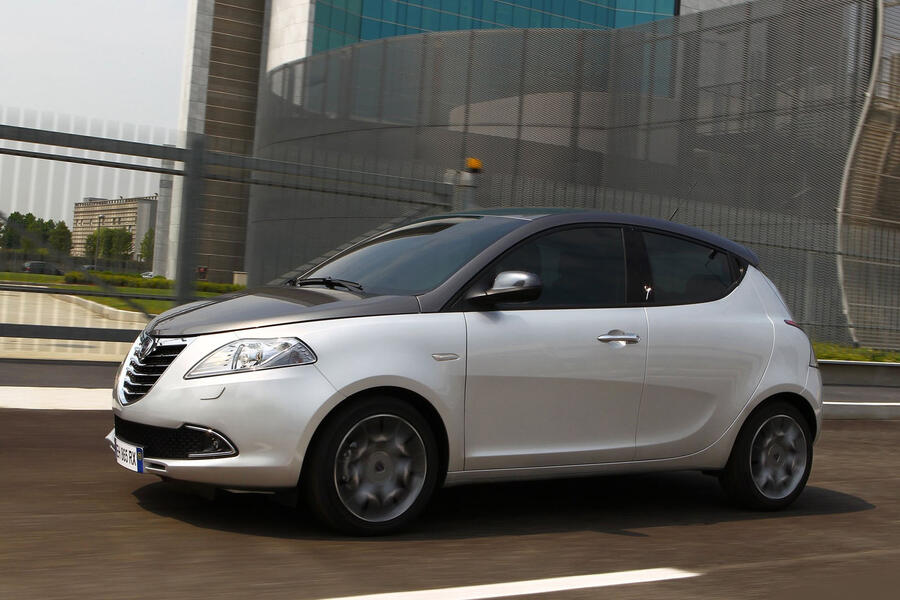
"It was a misunderstanding," says François, "because I thought that Sergio wanted me to be the one relaunching Lancia in all its glory, spending billions and so on. I will never go into posterity as a guy who revived the Stratos and the Delta Integrale. You never receive an award for killing a brand: if you lead a brand, the minimum thing you do is to not [kill it]. But in my case, it was meant to disappear."
With Lancia saved, Marchionne set François to work on salvaging Chrysler - with only the aged Sebring left in the line-up. The Crossfire had just been killed, the PT Cruiser was on its way out, the Aspen (a big SUV with a forward-thinking hybrid powertrain) was "totally dead" and the 300C was about to go on hiatus.
With just $64 million in the bank, "I put $20m on a Super Bowl commercial and $44m on fixing the Sebring's looks", renaming it the 200. The result was a sales increase of 6000% - yes, six thousand - between the last year of the Sebring and the first year of the 200. Meanwhile, the ad starring rapper Eminem won an Emmy Award.
With two FCA hits on his hands, François finally got the nod to lead the Fiat brand - the "cash cow" - in 2011. He immediately set to work on a plan: "I showed Sergio the equivalent of the Stratos and Delta, but one of the first things [I did] was to stop the next Punto. There was a new one in the works and it was not very good-looking; it was not interesting.
"The people [were furious], saying 'this guy comes out of nowhere and it was a year away from launch'. But when people tell me 'I will do the new X, Y and Z', I always ask them why. What is its unique purpose? If that car didn't exist, why should it be invented? If you're not able to answer that question, don't do it."
And so the foundation of the new Fiat was laid, with a range of cute yet purposeful city slickers. But you know what they say about the best-laid plans: although François had a clear vision in his head of what the brand needed, "by the time I presented my projects, it was always a Jeep, a Dodge, a Ram that needed funding [within FCA]. Rightfully so, but every time Sergio said no I was heartbroken. We just spent it on a new Pacifica, a new Compass, a new whatever. Fiat had to wait and wait and wait. I've been waiting."
You get a sense from talking to François that the 2010s were something of a lost decade for Fiat. The Panda and 500 kept the brand ticking over, while the assortment of Punto-based offshoots - 500X, 500L and Tipo - found occasional, if limited, success. His ambition was ultimately limited by how few cars FCA could afford to get wrong.
The momentum began to shift upon the formation of Stellantis. "I've been educated in starving", he says, but now he can see "an oasis - and I'm making the most of it".
François gives much credit to Carlos Tavares, the ousted founding CEO of Stellantis, in finally making his vision for Fiat a reality: "My babies from 2011 have matured with new platforms - Smart Car - and new engines, but they have been enabled by the Stellantis merger. Everything you see today has been blessed by Carlos."
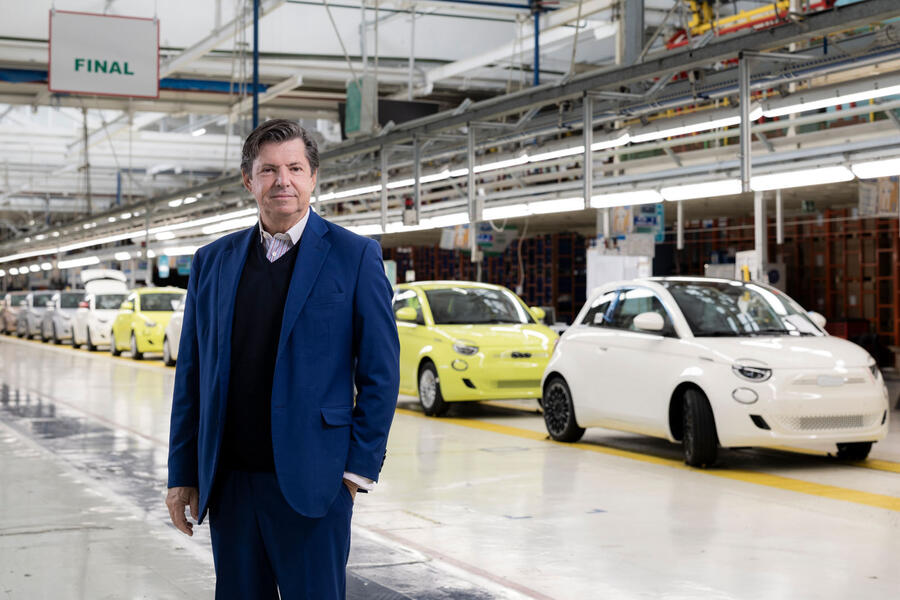
François admits to a couple of missteps along the way: "We presented the 600 too early, we presented the Topolino too early, even the Grande Panda, and then you say: 'Where are they?'"
Meanwhile, the electric 500e wasn't the true replacement for the enormously popular 500 that Fiat had hoped, but it did provide a platform on which to build a new and vastly more modern petrol model. And François' "baby", the Grande Panda, is at last in showrooms around the world.
With those foundations laid, François excitedly awaits the return to prosperity that he has long envisioned for Fiat: "I turn 65 in October. The question of 'could I go, could I retire?' crosses my mind, but the real reason [I'm still here] is I still have all the energy and I've been patiently waiting for this moment. Most people can't see it coming, but it is coming. Let me enjoy it."