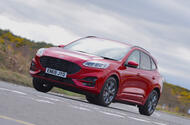
A Kuga should be on the hit list for those hunting for an affordable family SUV
Kuga is now a familiar name within the Ford stable.
The current model has been around since 2020, when it replaced the hugely popular Mk2 with a spread of new powertrains to suit almost any buyer, plus a slicker new design and a more spacious interior. It has aged well and, with early examples now available from just £8000, it's increasingly attractive as a do-it-all family hauler for those on a budget.
If you're coming from a Mk2 Kuga, you will notice the increase in size: it's almost 100mm longer and 50mm wider, although also 20mm lower to aid aerodynamics and 90kg lighter in the name of efficiency.
The biggest benefit of the size increase is class-leading rear space. The 60/40-split folding bench also slides 150mm fore and aft so you can choose from limo-like leg room, an enormous (645-litre) boot or indeed a pleasing compromise.
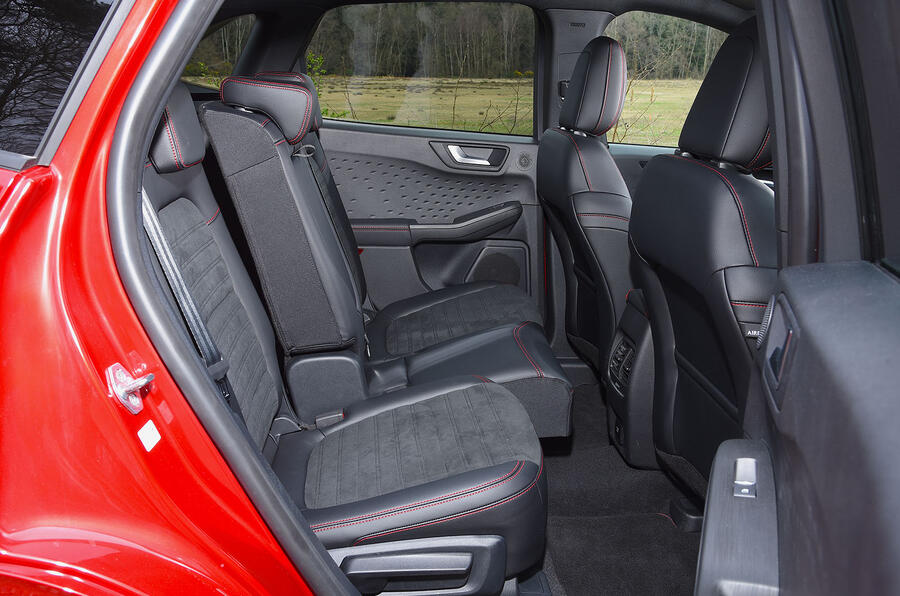
The interior feels a little low-rent in places, but there are some nice squidgy materials too, and the seats are comfortable and supportive.
From launch, the Kuga ran Ford's Sync 3 infotainment system through an 8.0in touchscreen prominently positioned atop the dashboard. Its resolution and speed are poor by current standards, but then these cars also feature lots of physical switchgear, so quick adjustments are easy on the move.
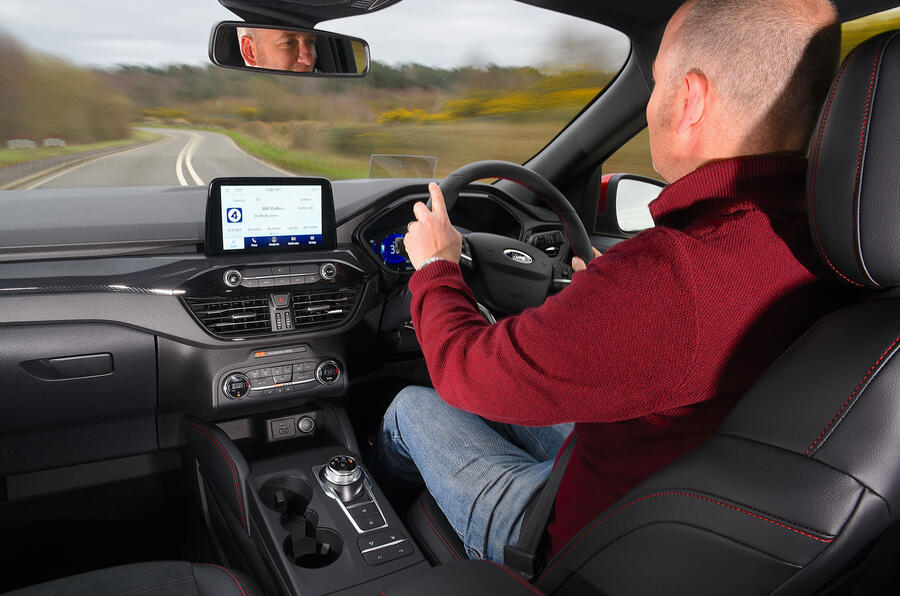
A facelift in 2024 brought a larger (13.2in) and slicker screen, which made the infotainment much easier to use but unfortunately also wiped out most of the physical controls.
Apple CarPlay and Android Auto are standard, while an excellent Bang & Olufsen stereo features on Titanium trim and above.
There's also a lot to like about the Kuga on the road. It rides and handles very nicely for the most part: typical of Fords are the pliant ride, secure body control and direct steering. If you're coming out of a Focus, you might miss the outright sense of agility that can be exploited in corners, but it has most other mid-sized SUVs beat for poise and responsiveness.
That said, the plug-in hybrid powertrain adds another third to the kerb weight, which translates to a stodgier dynamic character and a more fidgety ride (the springs are firmer to cope with the extra weight). It's just about acceptable, though, except when paired with the yet stiffer springs and larger wheels of sporty ST-Line trim.
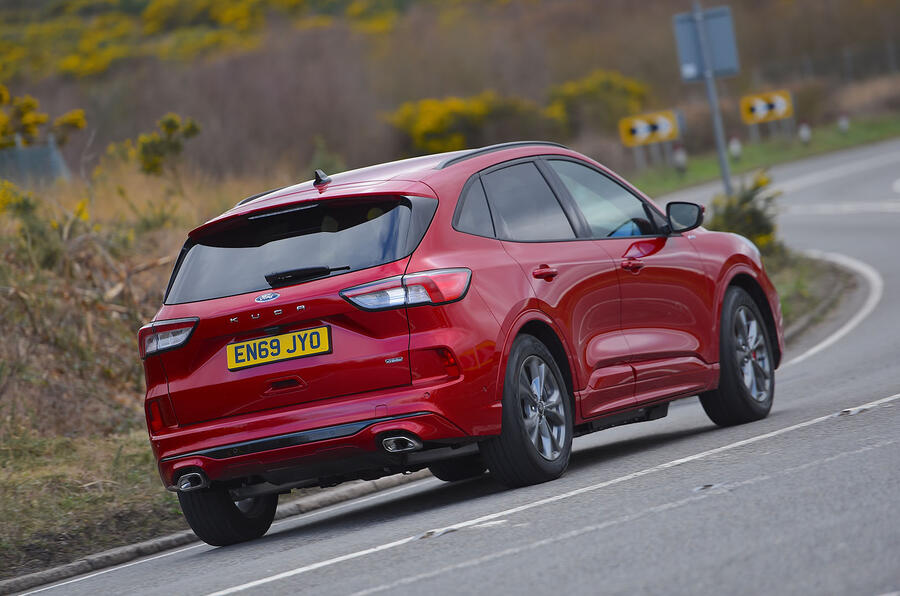
The PHEV is a popular option, however, offering about 30 miles of real-world electric range. It doesn't command much of a premium over other versions, so it's worth a look if you can charge at home.
If you can't, there's also a full hybrid with the same Atkinson-cycle 2.5-litre petrol four, although it's down on power (188bhp versus 222bhp) and won't achieve the same economy highs (although 50mpg is doable in mixed, mostly urban, use).
Both types of hybrid are let down by the use of a CVT, which induces engine mooing and makes them feel slower than you would expect.
Thankfully you can get a regular automatic gearbox by opting for the 187bhp 2.0-litre four-cylinder diesel. Curiously, if you want a manual shift, you must sacrifice 39bhp and accept mild-hybrid tech. Either version should hit 60mpg in mixed use, and the same goes for the 118bhp 1.5-litre diesel manual.
If petrol power is your preferred choice, there's a 1.5-litre turbo four in two states of tune. The 118bhp version lacks punch but the 148bhp one makes a good all-rounder. Both are capable of 45mpg and paired exclusively with a manual gearbox.
What to look out for
Timing belt: The 2.0-litre EcoBlue diesel engine has a wet belt, which can fail unpredictably and is expensive to replace routinely. Regular servicing - yearly or every 10,000 miles - should slow degradation, at least.
PHEV powertrain: Shortly after launching the PHEV, Ford found that contamination in the battery cells could cause a short circuit and potentially a fire. Owners were asked not to charge their cars and drive only in EV Auto mode. Ford eventually replaced the battery of affected PHEVs; check this has been done.
12V battery: A 12V battery drain can leave the car dead after sitting for just a few days. The culprit is often the telematics modem or FordPass phone app, which prevents the car from entering 'deep sleep' mode. Some owners have a higher-capacity AGM battery fitted under warranty. You can check the voltage by holding the 'OK' button on the steering wheel while firing the ignition.
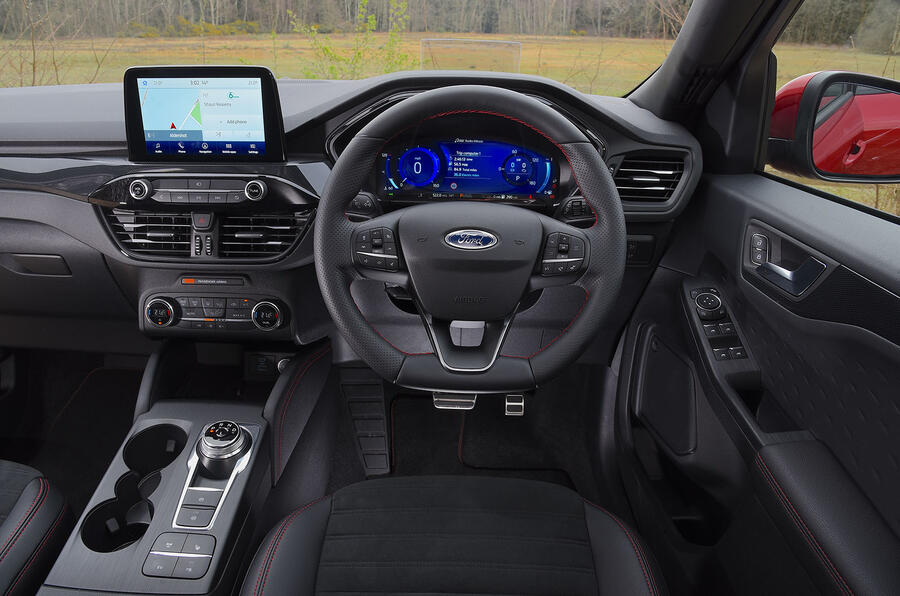
Interior: Door rattles are a persistent complaint. The door cards, particularly on ST-Line models with the Bang & Olufsen sound system, are prone to buzzing. Press your elbow against the door card during the test drive: if it creaks excessively, it could drive you mad on the motorway. The rotary gearshifter has been known to get stuck or fail to engage park properly, leading to 'shift system fault' warnings.
Wheels and tyres: PHEVs ride firmly, but sticking to the standard 18in wheels can mitigate this. PHEVs also chew through front tyres with their additional weight and power.
Also worth knowing
Four-wheel drive is available on the full hybrid and standard on the punchier 2.0-litre diesel. All other Kugas are front-driven.
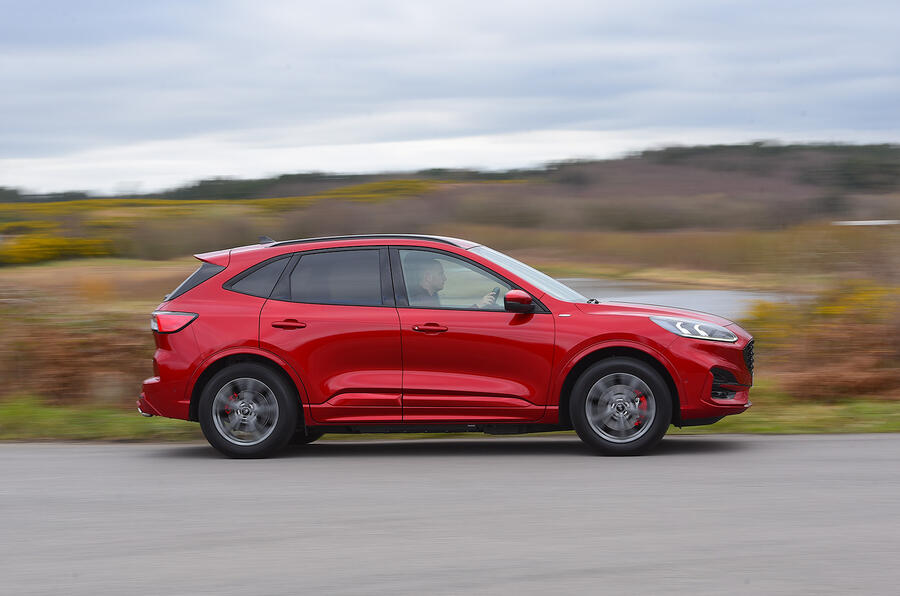
Entry-level Zetec trim has front and rear parking sensors, cruise control and phone mirroring, while Titanium adds LED headlights, a rear-view camera and a digital instrument cluster. ST-Line offers sports suspension, sports seats and meaner-looking bumpers, with ST-Line X adding 19in alloys, heated front seats and a panoramic sunroof. Vignale tops it off with full leather, an electrically adjustable driver's seat and a head-up display.
Most Kugas are £195 a year to tax, but those less than five years old with an original list price of more than £40,000 will be £620. Insurance groups range from a reasonable 10 to 26.
How much to spendÂ
£8000-£11,999 A mix of higher-mileage cars, with trim level having a larger bearing on value than powertrain.
£12,000-£19,999 A vast choice of pre-facelift models in every specification.
£20,000-£29,999 Facelifted cars, including low- mileage, high-spec ones for as much as £20,000 below list price.
£30,000-£50,000 Prices for new Kugas start at £33k, but shop around and you can get a pre-registered Vignale for that.
An owner's view
Alfie Castle: "I've had my 1.5-litre EcoBlue ST-Line Kuga for two happy years. I settled on the diesel because I regularly drive long distances. So the diesel particulate filter isn't a problem, plus I've seen close to 60mpg. I've yet to be disappointed by the car, although the touchscreen is a bit slow to react sometimes."