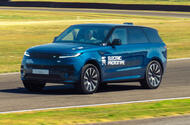
Luxury 4x4 flagship is still going electric - and now its smaller, sportier sibling is, too
You might have a sense of déjà vu reading this, because precisely a year ago Matt Saunders wrote about how he got to drive around an off-road course in a late-stage prototype of the electric Range Rover, with its market launch supposedly imminent.
Now I'm driving a late-stage prototype of the slightly smaller Range Rover Sport EV around a circuit with some obstacles ahead of a supposedly imminent market launch.
Knowing that the full-size Range Rover and the Sport are mechanically all but identical save for some tuning differences, we're effectively in the same place as we were a year ago. The Range Rover people say they wanted to do further testing and make sure that everything is perfect, but it's no secret that demand for big, expensive EVs still isn't all that, particularly in the US, an incredibly important market for JLR. But with the Porsche Cayenne Electric here and a new BMW iX5 inbound, it seems the time for such things has come.
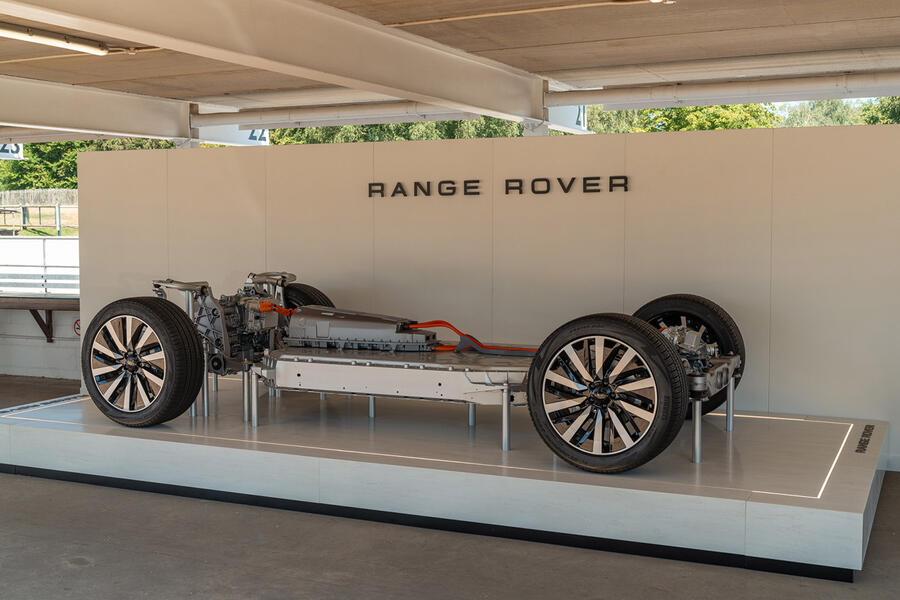
The technical details for the Sport are much the same as for the full-size Range Rover. The MLA platform was always designed with a big battery pack in mind but still meant primarily for ICE powertrains, given that the EV's battery electronics live in the transmission hump and the front motor sits in a cradle that mimics an engine in a crash. Still, the internal floor isn't any higher, there aren't any major packaging compromises and the EV is said to weigh about the same as the plug-in hybrid.
The motors — producing 444bhp or 542bhp in total, depending on the version — are a JLR development, because they couldn't find one with the right characteristics to give the car sufficient off-road performance, such as high torque output from rest. They're also produced in a JLR factory alongside the firm's engines.
Thanks to 800V electricals, charging will be rapid, even if the exact kW figure remains a secret. The battery consists of double-stacked cylindrical cells from AESC. With a usable capacity of 118.5kWh, it's quite big compared with the Cayenne's but not compared with the iX5's enormous 144kWh pack. JLR is projecting 330 miles on the American EPA test cycle, which is a bit more pessimistic/realistic than WLTP, so it should compare pretty well with the Cayenne, at least.
The engineers make no bones about the efficiency, which was never going to be class-leading, due to the characteristically bluff Range Rover shape and the standard all-season tyres, which give the Sport its off-road capability at the cost of some rolling resistance.
After all, job number one was to maintain that Range Rover character: the look, the refinement, the off-road capability and the commanding driving position. As such, the electric Sport isn't meant to be an EV statement but rather just another powertrain option.
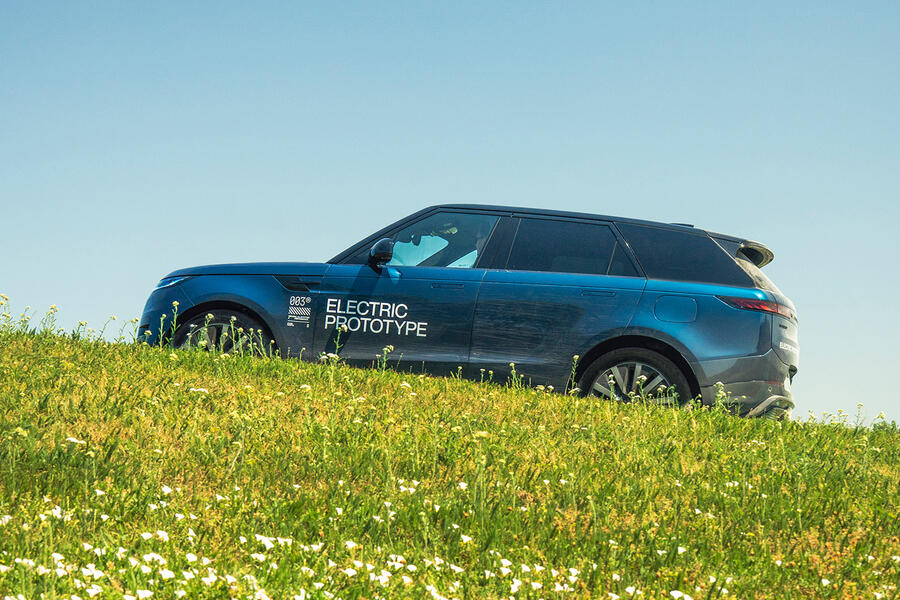
Indeed, unlike the iX5 prototype that I drove a while back, this car isn't camouflaged, because there's nothing new to hide. Other than the closed-off front grille and the EV badges on the slightly more aerodynamically optimised wheels, it looks the same as any other Sport.
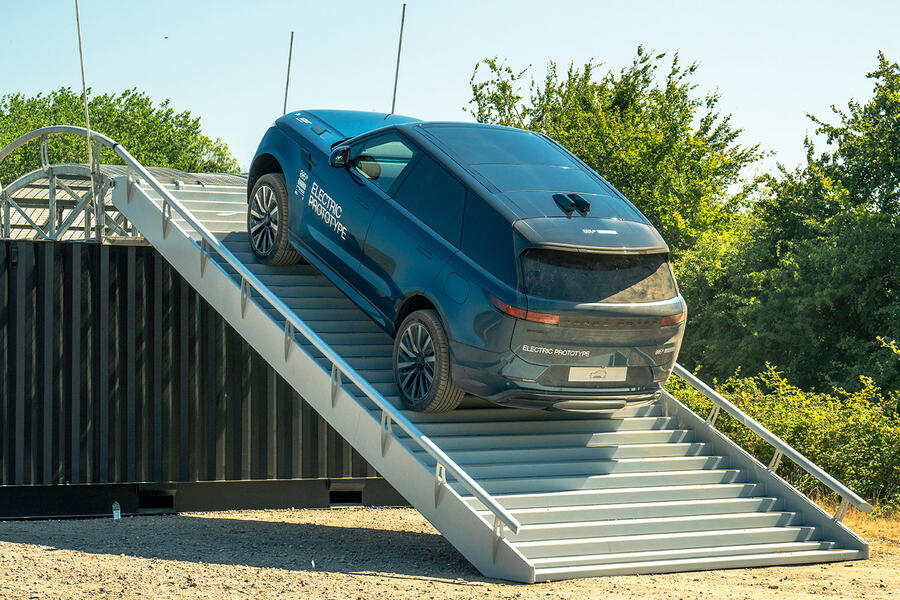
As far as I could tell from a lap of the Goodwood circuit with some diversions onto gravel paths and some cones and a cut-up Airbus to drive through (an owner's typical commute, then), it drives like one too — possibly even a bit better.
As Saunders noted about the full-size Range Rover EV, the really smooth power take-up is a boon off-road. There's no waiting for an engine to rev or a torque converter to convert torque: it's all there from zero and beautifully linear. There's also no need for locking differentials or a low-range gearbox, because the electronics have much finer control over the electric motors compared with an engine.
The regenerative braking plays into this as well. There are no paddles, just D (which can be configured in the screen as 'light' or 'standard') and S (one-pedal) on the drive selector, but all settings are nicely progressive. The engineers say that the one-pedal mode is useful off-road, but in the hardcore rock-crawl-type stuff you often actually need quite a lot of braking force at a very low speed, which is something that friction brakes are much better at than regenerating motors, so I found that the brake pedal offered more consistent response in those situations.
Away from the rough stuff, the Sport seems to benefit from a lower centre of gravity. Range Rovers can have a slightly tippy feeling in faster corners, but this EV feels nicely planted, with reassuringly meaty steering. Even though the front and rear motors are the same, there's a nice rear-biased feel to it when you power out of corners.
One slight misstep is the noticeable torque steer under very hard acceleration. A Range Rover minus an engine is a very refined, quiet thing at speed, but a question mark remains over how the ride feels. The Sport was pretty smooth and composed over a gravel road, but we know Range Rovers can struggle with the harsh, potholey stuff, and there was none of that on the test loop.
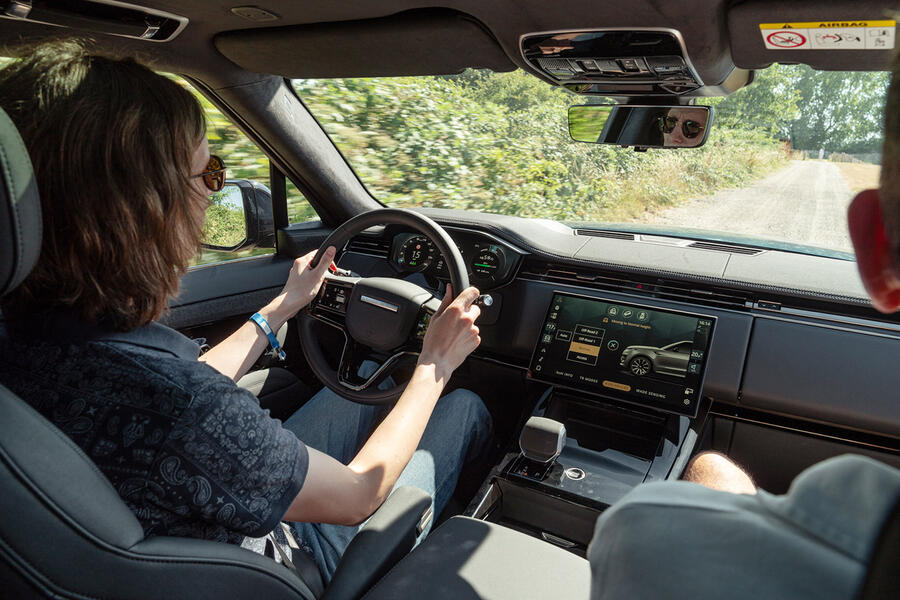
The interior is the same as other Sports, which means that most of the materials are lovely and the driving position is great, but it's brought down by the big slab of gloss black plastic in the centre console and the terrible touchscreen user interface for the climate control and drive-mode selection.
With finer speed control off-road and greater refinement on it, it sure looks like an electric Sport is a better Sport in many cases. It doesn't have the satisfaction of a V8 and those 330 miles of range will quickly evaporate if you do any towing, but then the V8 and the diesels aren't going anywhere for the foreseeable.
Away from the edge cases, the Sport EV is smooth, fast, nice to drive and highly capable off road.
Range Rover Sport Electric 550PS
Verdict: Smooth and silent electric power suits the Sport very well. Interior UI is still a problem and ride and real-world range are still unknown.Â
| Specification |
Details |
| Price |
£100,000 (est) |
| Engine |
Two permanent magnet synchronous motors |
| Power |
542bhp |
| Torque |
627lb ft |
| Gearbox |
1-spd reduction gear, 4WD |
| Kerb weight |
2700kg (est) |
| 0-62mph |
4.4sec (est) |
| Top speed |
130mph (est) |
| Battery |
130/118.5kWh (total, est / usable) |
| Range, economy |
380 miles (est), 2.9mpkWh (est) |
| CO2, tax band |
0g/km, 4% |
| Rivals |
BMW iX5, Porsche Cayenne Electric |