
Recent Updates
08/03/2026 12:00 PM
China’s cost secret: sharing standard parts
08/03/2026 12:00 PM
Dacia Bigster 17,000-mile test: The only car you need – for £30k
08/03/2026 12:00 PM
Alpine aims to be "more niche than Porsche" with six-car line-up
08/03/2026 12:00 PM
Seven ways to save money on EV charging
08/03/2026 12:00 PM
'Fake' shifts, real thrill: Ferrari's synthesised gearbox is still a driver's dream
08/03/2026 12:00 PM
Smile and wave: My Renault 4 got me into the happiest owner's club
08/02/2026 12:00 PM
Ultimate sleepers: Can new Citroen campervan beat VW California?
08/02/2026 12:00 PM
Used Mercedes A-Class: Posh hatch is a catch from just £5k
08/02/2026 12:00 AM
Snorkel, winches... missile launcher? Here's my mad homebuilt 4x4
08/01/2026 12:00 PM
243mph on public roads: meet the world's maddest motorsport event
EV, Hybrid, Hydrogen, Solar & more 21st century mobility!
 How good really is Dacia's new flagship SUV, and is it better than the Duster?
You will have noticed this, but I'll say it anyway: aren't cars expensive these days? Rarely a press loan goes by without a friend spitting out their coffee when I tell them how much that week's test car costs to buy.
As I write, I'm waiting for a Volkswagen Golf GTE to be delivered, and if I tell my housemate this mid-sized warm hatch costs £45,000, I think she might explode. Luckily, Dacia hasn't caught the high-price fever that seems to be spreading among car makers. Since relaunching here in 2013, the firm has kept one eye on the depths of the average car buyer's pocket.
The Bigster, then, is Dacia's latest attempt to be the Martin Lewis of the motoring world. Amusing name aside – it's the sort of word that could fast-track you into an HR meeting if you used it at work – it's a serious proposition. It's essentially a Duster that's been stretched both lengthways and upwards, still using that wonderfully versatile CMF-B platform that underpins all Dacias.
In fact, that's one of the main reasons why Dacias are so cheap: they're all extremely similar from the beltline down, using a lot of tried and tested (or, if you're feeling unkind, 'old') parts from across the Renault Group. And cheap it is.
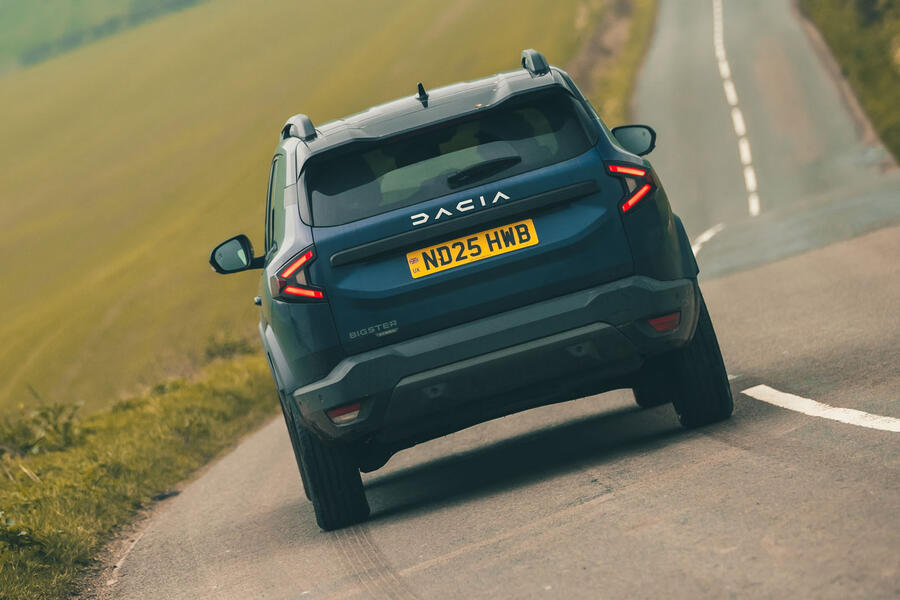
No version of the Bigster will set you back more than £30,000 in standard guise, which is amazing when you look at its rivals. Nissan Qashqai? It starts at £30k for a base-spec model. Kia Sportage? Same price again for the lowliest of low trims. Skoda Kodiaq? That starts at £5k more. In fact, you can get a Bigster from just £25,000, which is Vauxhall Astra money.Â
Ours is a mid-range Journey model, priced at a smidge over £30,000 with its optional extras and the latest 1.8-litre hybrid powertrain. The four-cylinder engine makes 106bhp and 129lb ft, with the electric motor – powered by a 1.4kWh battery - adding another 50bhp and 151lb ft, all of which gives a 0-62mph time of 9.4sec.Â
It's all connected to a clutchless gearbox (four speeds for the four-pot and another two for the electric motor), which works in conjunction with a second motor, itself acting like an integrated starter motor to both start the engine and match its revs to shift without a clutch. It's interesting rather than world-changing underneath, then, but isn't it a good-looking thing on the outside?
There's something reassuringly old-school about it. Most manufacturers seem to have gone for sleek lines and huge light bars (a universally mediocre look to my eyes) but Dacia has taken the opposite approach, with chunky panels and a very square design. It has an air of Giorgetto Giugiaro's 1980s Panda 4x4, and in a world in which nothing else looks quite the same, I'm all for it.
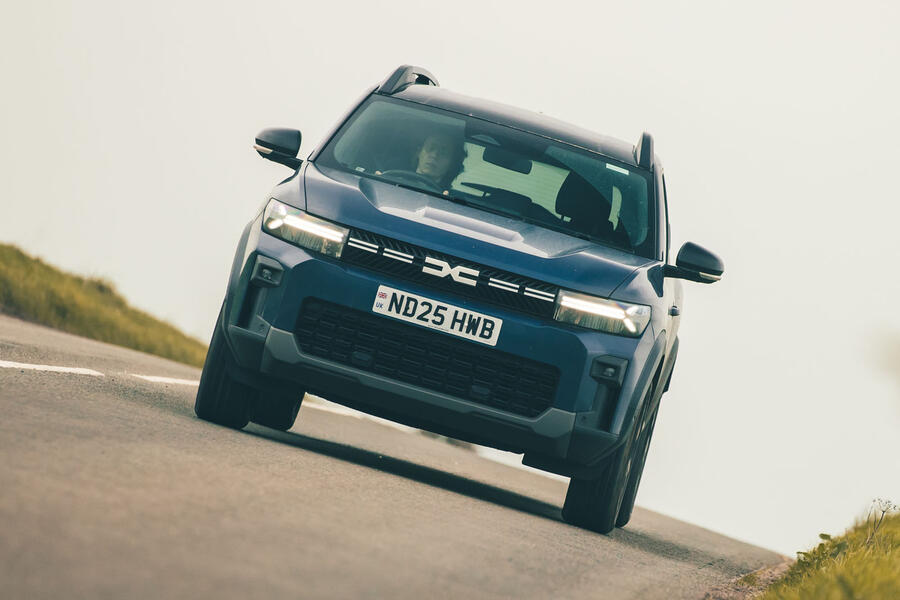
Dacia's angular light motif works really well here, and I'm a particular fan of the wraparound brake lights that split elegantly to house the indicators. Another stylish but sensible feature is the chunky cladding, something that looks naff on many cars but is well integrated on the Bigster.
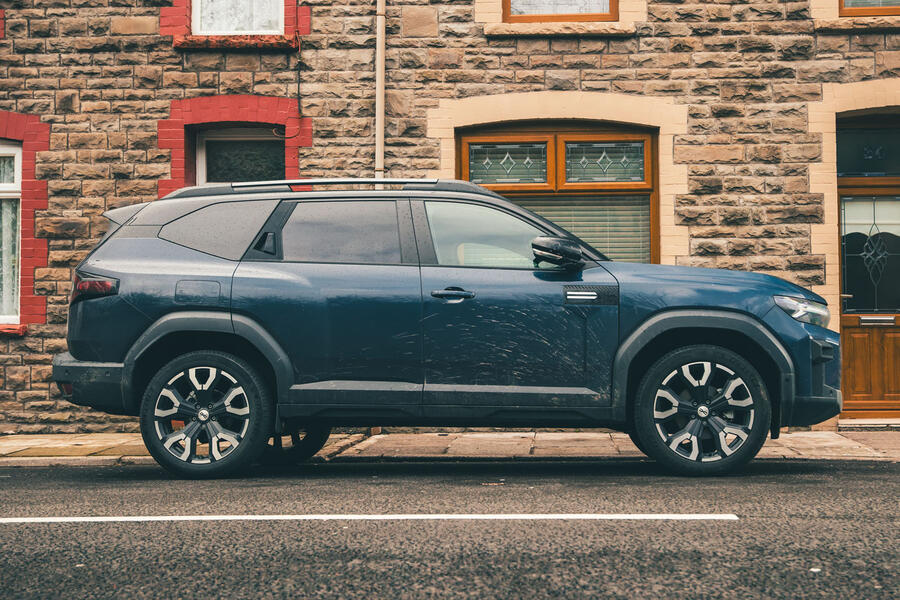
It covers the parts of the car that would be the most scratch-prone on narrow lanes, surrounding the wheel arches and the lower parts of the bumpers and doors – again, very Panda 4x4. Much like that car, it's a really well-proportioned thing in the metal, being long and tall but surprisingly narrow compared with its rivals.Â
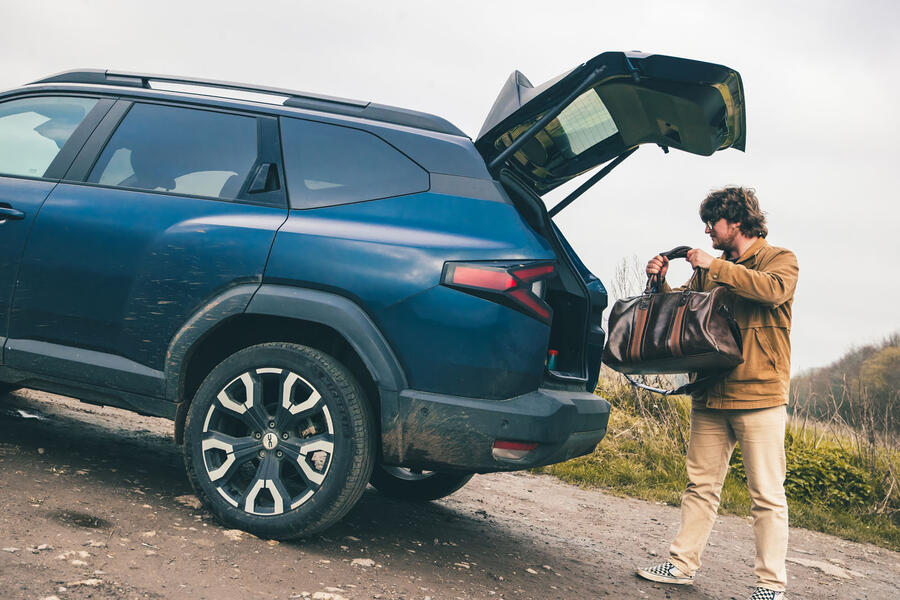
You might be worried that the Bigster has something of a 1980s land yacht about it – massive outside, but poorly packaged inside. Thankfully, this isn't the case. The boot in particular is enormous: forget a cat, you could swing a tiger in there. There's a 612-litre space with the seats up - nearly 100 litres more than the most capacious version of the small but mighty Duster - and a frankly cavernous 1977 litres with them down.
There's even space for a space saver under the boot floor – something that's frustratingly missing from a lot of modern cars. It's a pleasant enough interior too. Sure, there are a few bits that maybe aren't as upmarket as you would like, such as seat fabric and a lot of basic plastic trim that look a little on the cheap side. But the Bigster claws back some credibility with flashes of silver that provide an important aspect of visual contrast.Â
I'm a big fan of the chunky centre console that provides some nice separation between driver and passenger, as well as being both a handy place to rest your elbow at the wheel and a neat spot for an integrated cool box to sit. You get a lot for your money, it must be said. In our car's Journey spec, there's a plethora of comfort features beyond that cool box: the front seats and steering wheel are heated, there's a six-speaker 3D audio set-up and the tailgate is powered.
Externally you get a black roof, which makes it look slightly less tall, tinted windows and some sharp-looking 19in wheels. I'd prefer it on some 16in white steelies but, hey, you can't have it all.Â
On first impressions I'm impressed: the Bigster is aiming to strike the balance between cheap and cheerful that so many cars simply fail to achieve. A few thousand miles should reveal if this is a rare exception to the rule.
Update 2: The heated steering wheel with a mind of its own
I was delighted when I first discovered that the Bigster has a heated steering wheel, but it doesn’t seem to like the idea of me using it too much, because it often simply won’t turn on after just one press like it ought to. My high score for the number of presses needed is six, but three is fairly normal and five isn’t uncommon. Another cost-saving innovation from Dacia? No, just an irritating glitch.
Mileage: 1674
Update 3: Big miles in the Bigster shows how far Dacia has come
I've chucked my Bigster into the deep end, racking up big miles from the off. Barely three weeks into my custodianship, I had a week that involved just about as much driving as this job ever throws at me.
On the Monday I headed down from my home in Swansea to the Dorset coast via the fabulous Atwell-Wilson Motor Museum in Calne, then the next day travelled to Goodwood before schlepping to Ely in Cambridgeshire. I spent Wednesday morning bumbling around rural Norfolk visiting a couple of garages east of Norwich, before driving all the way up to the North Yorkshire Moors later that day and returning to Swansea on Thursday evening.
Let's call it 960 miles all in – not exactly a quick trip to the shops, even by my mammoth mileage standards. Having done a few weeks like this before, I knew it would really make or break the car for me. The key to not going mad on these mega-mile expeditions is being behind the wheel of something that allows you to be truly at ease: maximum miles require minimum annoyance.Â
Thankfully, the Bigster proved to be well up to the task. The isolation is so much better than you would expect it to be, especially compared with Dacias of the past. I was worried it would be a repeat of a 900-mile round trip from Dorset to Scotland in a Jogger some time ago, when the deafening road noise drove me absolutely insane.Â
Maybe it's because there's slightly less room for noise to echo around in the Bigster, or perhaps it's a result of the extra sound deadening and acoustic glass, but it's certainly a much more pleasant place to be on long drives. Not whisper-quiet, of course, but more than adequate for most people.
And you can always turn up the volume on the surprisingly decent sound system...The fabric seats are comfy enough and the armrests especially so, the steering is solid at motorway speeds and a 50-litre fuel tank means you can easily eke 500 miles out of a fill. I'm really struggling to criticise the Bigster's motorway manners; I hope it turns out to be this solid all round.
Mileage 1975
Update 4: Large boot is a snapper's dream
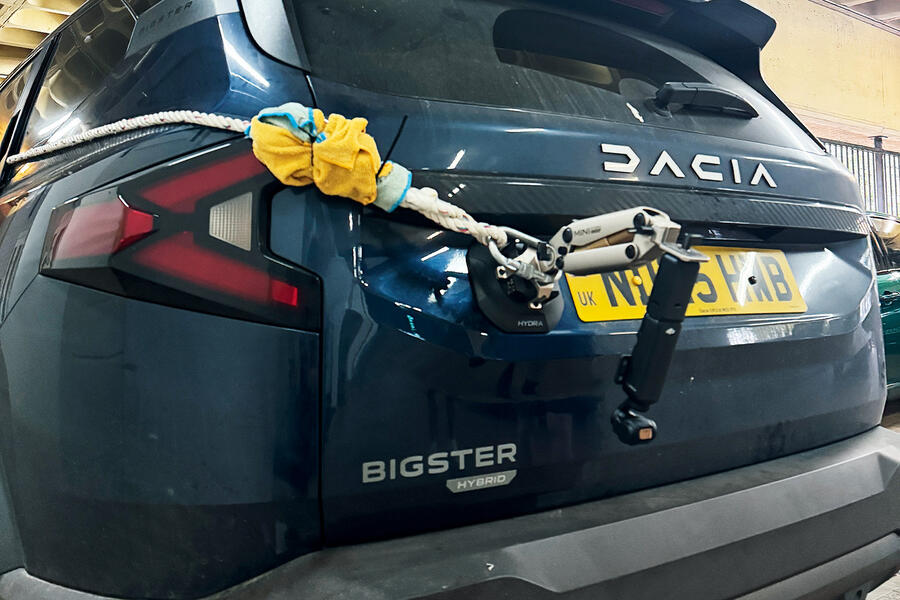
The boot of the Bigster really is remarkably large, considering the car’s relatively reasonable dimensions. In fact, it’s spacious enough that if there were a point to hook on to, I wouldn’t even need to fold the rear seats down when strapping myself in for car-to-car photography. The high roof means I can sit up straight, too – something less common than you might think.Â
Mileage: 3186
Update 5: Narrow, blocky – and all the better for it
Everything is getting bigger nowadays, isn't it? Whether it's bills, burgers or cars, it's bloating at an unbelievable pace. Rarely a day goes by without me being left aghast at seeing something I'd pegged as a mid-size machine fill all four corners of a British parking space.
Watching someone try to park something like an Audi Q5 now tends to be a weirdly fascinating experience. The really entertaining part, though, comes immediately after they've parked, when the driver exits the vehicle. In a world of long cars with longer doors, it requires gymnastic manoeuvres that would make the contortionists of the Cirque du Soleil proud.Â
How do you solve this problem? Not by making the spaces larger, in my view. That would merely result in the big cars getting even bigger and the few usable spaces becoming even fewer. You instead need to maximise less space more efficiently – something the Bigster is proving to excel at.
The key reason for this is the same reason that it's so attractively priced: because it's built on the CMF-B platform, a one-size-fits-all approach that underpins everything from the Renault Clio to the Nissan Juke. This means it's not that big a car, really, despite the name. At 4571mm long, it's 100mm shorter than the Skoda Octavia Estate. Yet it doesn't lag too far behind in the boot capacity department. The length isn't the important bit for maximising space, though: it's the width. At a smidge over two metres wide (including the door mirrors), it's a skinny thing.
Yet you wouldn't guess that from the inside. Because the beauty of the Bigster's design is that there's so little extra metal extending outwards from the limits of the A-pillars, so the cabin width is essentially the width of the whole car. This combines with the blocky bonnet to make it feel narrow on the road too.
As with an old Land Rover Series 3 or a 1980s dad-spec Volvo 240, the squareness of the thing means you know exactly where each corner is at all times. As a result, travelling down the narrow, one-and-a-half-car-wide country lanes that I spend so much time on is an absolute breeze.
I'm struggling to think of many cars short of a Suzuki Jimny - another slab-sided hero – that are this easy to thread through a tiny gap. In fact, the Honda HR-V that I ran previously was very slightly narrower than the Bigster overall yet it felt much trickier to place in tight spots, due to its more curvaceous bodywork.
It took me an exceptionally long time to work out the size of that car from behind the wheel. The Honda had quite a low driving position too, cocooning you inside the cabin, which didn't help with judging its extremities. By contrast, you sometimes feel like you're sat on top of the Bigster rather than in it.Â
To me, this bold blockiness makes the Bigster a great-looking thing, characterful and slightly toy-like in stature – the sort of car that you would be able to accurately represent with Lego bricks.
Interestingly enough, a few dyed-in-the-wool classic car enthusiasts – you know, the ones who believe that literally nothing of any value was designed or built after 1981 and view the seatbelt as modern nonsense – seem taken by the Bigster's design. Perhaps that's because Huey Lewis and The News told them 40 years ago that it was hip to be square.
Mileage: 4927
Update 6: Familiarity breeds contempt – not in this case
My plucky not-so-little Dacia continues to munch miles in the hands of yours truly unlike anything else on the current Autocar fleet, and I'm struggling to think of another car in recent memory that has had even close to as much use.
Its total mileage since it was delivered midway through January is equivalent to driving along every motorway in the UK more than three times over – or going from the Autocar office in Twickenham to sun-kissed Honolulu. That would be tricky to do, mind, on account of the Bigster being unable to act as an aircraft or a boat. One clear design flaw right there, frankly.
The car itself reminds me of the Toyota Corolla Commercial that I ran back in 2023, which is to say it's proving to be pretty much everything I'd like from a modern car in some fairly harsh conditions. By all rights, I ought to be thoroughly sick of the Bigster by now, after the ridiculous number of hours I've spent sitting on its fabric seats, but I'm growing far more attached to it than I'd care to admit.
I have yet to find anything about it that really winds me up in the way many modern cars do – which is odd, considering that I'm Mr Glass Half Empty and it does have a few objective flaws.
First, the petrol engine isn't the smoothest thing around. There are times, particularly on cold starts, when it sounds more like a ride-on lawnmower than a car. Even on the move, it definitely seems more three-cylinder rumble than the smoother hum of a four, and the unorthodox multimodal gearbox sometimes has a habit of keeping itself a gear lower than it feels it ought to be at motorway speeds.
That said, the engine is still not earth-shatteringly noisy, and I don't really notice any gruffness at lower speeds, thanks to it being part of a full-hybrid system, which is diligent enough in its electric usage for instances of the 1.8-litre unit roaring to life without a significant jab of the throttle to be fairly rare.
Oh, that's another slight annoyance, actually: the jerk that makes me lurch forward in my seat should I dare to inadvertently lift off as it shifts up a gear. The brake pedal isn't the smoothest either, having a short initial range of travel in which absolutely nothing seems to happen, followed uncomfortably soon by a stop as if someone has dropped a supertanker's anchor on the pedal itself.
Again, not great, and I dare say it's a little telltale of how Dacia keeps the cost of its cars so low, but the regenerative braking is strong enough to slow me most of the way down in good time before a tickle of friction braking brings me to a stop. Having said that, stopping is something the car is quite keen to do all by itself when the active cruise control is enabled – something I've moaned about here before.
Those annoyances aside, plus a fairly occasional tendency to disconnect my phone on start-up, there really isn't much to dislike about the Bigster. It feels like a truly trustworthy workhorse, and I still marvel at its ability to transport both me and my abundance of photography equipment so easily while keeping me in such a good mood.
I like when a car feels purposeful, and that's the word I'd most keenly apply to the Bigster. It knows what its job is and simply gets on with it.
Mileage: 7245
Update 7: The ultimate tracking car
The Bigster proved its worth as an essential hired (or rather borrowed) hand for filming last week. The lads from our sister magazine What Car? were impressed by not only the space inside – easily enough to accommodate all of their video kit, plus my not-small photography bag – but also the smooth ride, which made the car-to-car tracking shots as easy as they can be.Â
Mileage: 9825
Update 8: Not just a bigger Duster
I see quite a few other Dacias on the road – especially where I live in Wales, where they seem as much of a staple of the nation as crumbly cakes or mountain sheep frolicking along a hillside – but it's rare that I see any other Bigsters.
Admittedly, they can be somewhat hard to spot. Even to my eyes, as well trained as they are on all things Dacia, I struggle to identify a Bigster from a Duster at first glance. Line the two up side by side and you can spot the difference, mind. Naturally, the overall bodyshell is the same – the similarity across the range is one of the key reasons why Dacia can keep the prices of its models so low – but if you know what you're looking for, there are a few little telltale signs to identify the pair.
Weirdly, the Bigster's extra 227mm of length isn't that easy to spot, so natural is the look of its styling. The only obvious signs that distinguish it from a Duster are the contrast roof, a stripe on the C-pillar, a slightly different tailgate and a flatter, less rugged-looking front bumper. They're two from the same pod, as you'd expect.
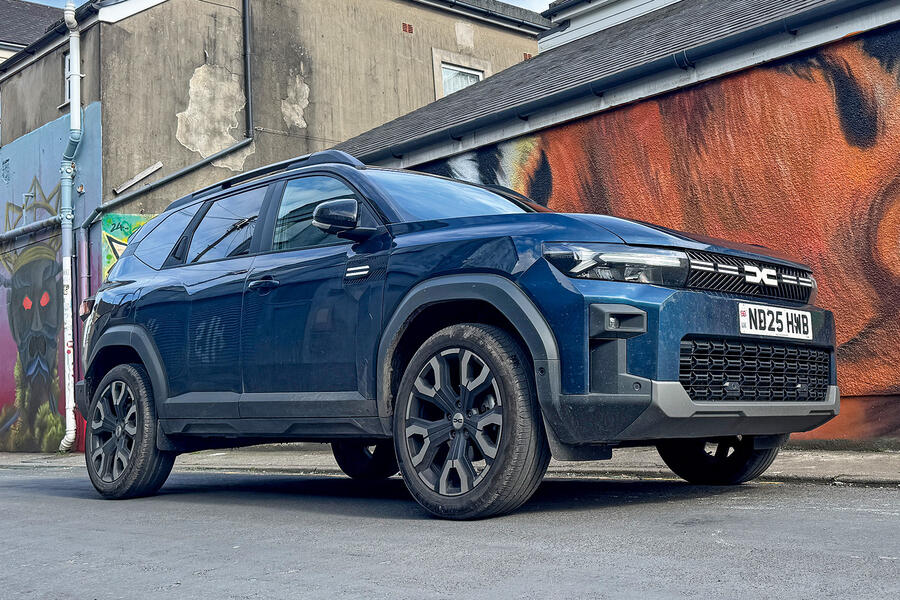
The pair are almost identical inside too, save for one key difference: all but the highest-trim Duster lacks the Bigster's chunky centre console. That's a shame, because it makes the cabin feel much more upmarket as well as providing a fair amount of genuinely useful storage.
The Duster isn't quite as nice to drive, either. Its wheelbase is 50mm or so shorter and that means it doesn't ride quite as well as its bigger sibling, even on smaller wheels. It's also a noisier place to be when you're on the move. There's more wind noise and a bit of extra road roar that the bigger car manages to tune out.
So why buy a Duster when the Bigster exists? Well, the Duster starts at £3370 less than the Bigster in base trim and always seems to be about £3k cheaper than the bigger car regardless of spec. I suspect most people simply don't feel that they need the extra 20% of boot space because the Duster has a decent enough boot anyway – and in fairness, even I sometimes find myself wondering if I really need it.
Mileage: 10,341
Update 9: Chunky SUV passes key family test
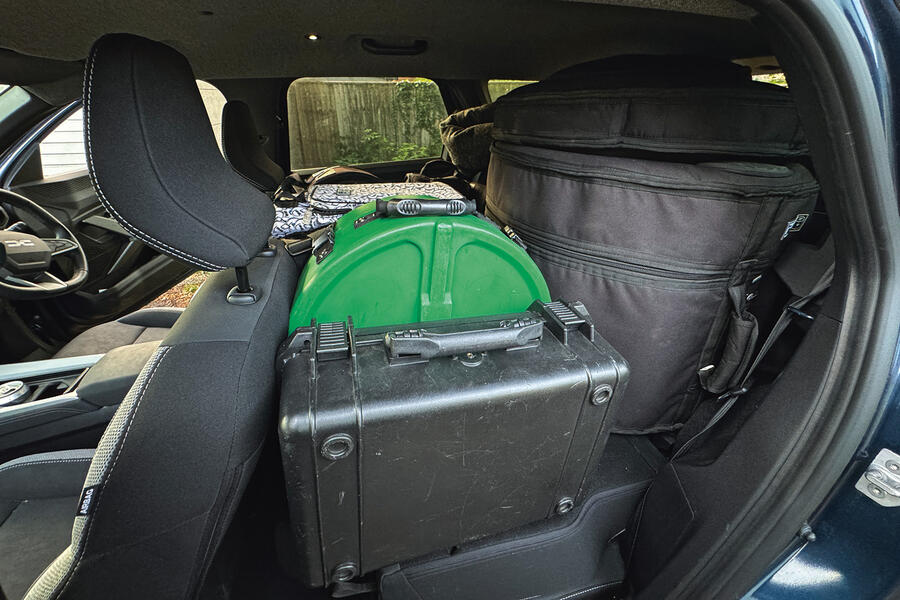
The Bigster has passed an important and challenging test in the family household: my dad's attempt to fit an entire drum kit in the back, something that has (somewhat hilariously) dictated his car buying for years. Dacia's largest model passed with flying colours, swallowing the not-insignificant load with relative ease and without even needing the false floor or space saver wheel underneath to be removed. And it rode far more comfortably afterwards too.
Mileage: 11,328
Update 10: Irritable snapper can't find much to get irritated by
A few very mildly irritating things about the Bigster have revealed themselves.
In fairness, as someone who is annoyed quite easily by things being needlessly difficult to use (read: I'm just irritable and perhaps a bit thick), I can't remember the last time I drove something that was so wonderfully logical. As Autocar's photographer, I really do rack up the miles as I pound the UK's motorway network, and funnily enough having a car that doesn't irritate me incessantly puts me far more at ease on these long journeys.
I suppose a big part of that is the much-lauded My Safety Perso button found in the majority of Renault Group products, which puts the exceptionally annoying, EU-mandated combination of lane keeping assistance and overspeed warning noise in a soundproof prison cell at the press of a button.
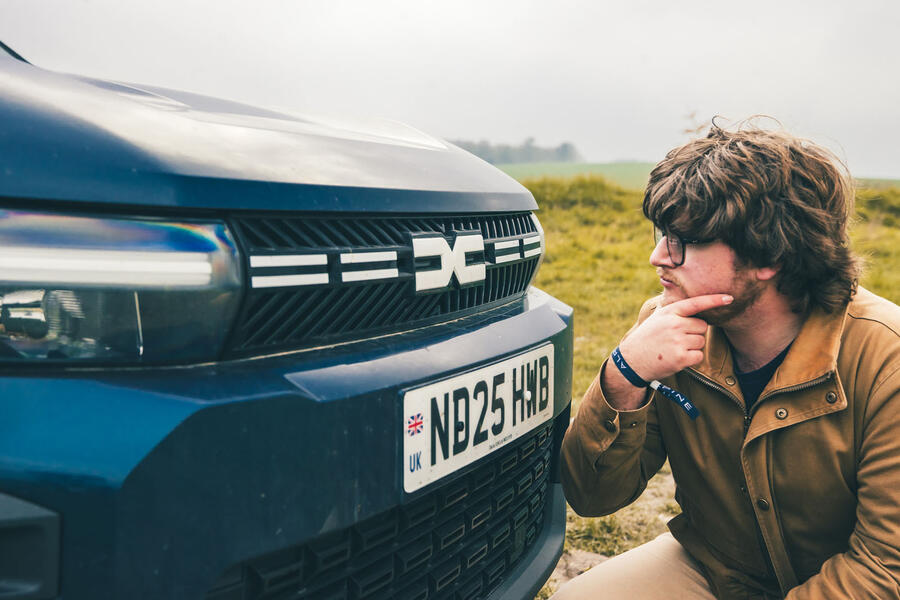
Every time I end up in another car, I subconsciously find myself reaching for the right-hand side of the dashboard where the button is and being disappointed to find it missing. Why have so few car makers taken Renault's lead?
That said, it's probably a good thing that the speed warning is so easy to disable, as it has a nemesis in the form of the humble national speed limit sign. It seems to confuse the car as much as quantum mechanics confuses me, resulting in it picking up the correct speed limit on these fastest roads only once in a blue moon. It thinks 60mph single carriageways are strangled with 50mph restrictions and assumes motorways have a 60mph limit. Very odd, all in all.
Other annoyances? The Bigster comes with adaptive cruise control, which sounds all well and good. But unlike some other cars on sale with this, it lacks the option of 'standard' cruise control. The system is better than most at not reacting too soon when approaching slower vehicles, but it's incredibly sensitive to rain blocking the sensor, at which point it stops working and leaves you on your own. What's wrong with classic cruise?
These are fairly trivial things, mind, and my day is still brightened whenever I get behind the wheel, even after 12,000 miles together.
Mileage: 12,125
Final report: Bigster is a winner – and joins an exclusive club of classless cars
There's a certain type of car that I hold close to my heart. Not hairy-chested muscle cars or bulletproof off-roaders but rather what I term the classless car: something that fits in no matter where you take it, from Mayfair to Mansfield. The original Mini is probably the classic example.
There aren't many modern cars that really seem to fit into this category, other than perhaps the Skoda Superb and Volkswagen Golf. But I think the Dacia Bigster has firmly earned its place in this pantheon of social chameleons.
No one could ever accuse me of not spending enough time with my long-termers in my job as Autocar's photographer: over the past few months, I drove this cut-price SUV to every English county bar five (Cumbria, Cornwall, the Isle of Wight, Northumberland and Tyne and Wear, if you're wondering), to four countries and on almost every motorway in the land – and it fitted right in everywhere it went.
I think those chunky looks are the main factor in that. It somehow looks grounded in reality but with enough fancy flourishes to make it stand out from the crowd.
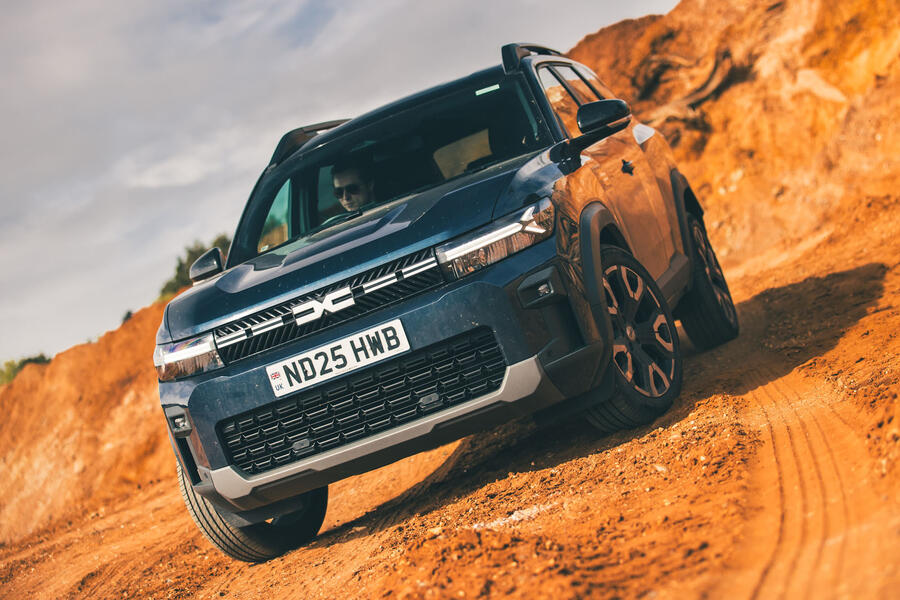
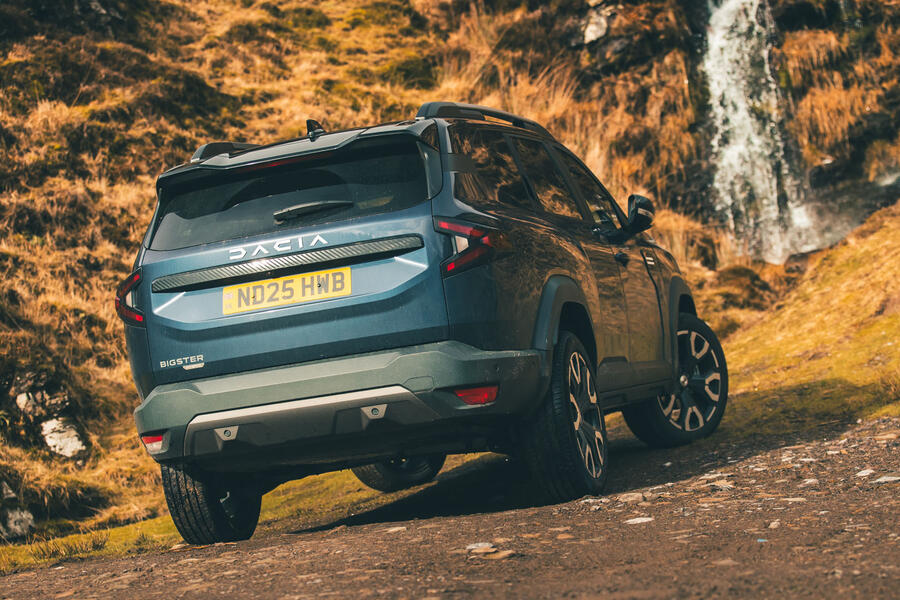
Those chunky edges perhaps give the Bigster off-road credentials that this front-wheel-drive Hybrid 155 version can't quite live up to in reality, but who cares when I'm spending most of my life charging up and down motorways anyway?
I had multiple people say they thought it was a Range Rover, and I can think of many far worse cars for this Dacia to be mistaken for.
It isn't just a pretty face, either. The exceptionally long motorway slogs I spend my life tackling were made much more bearable behind the wheel of this car by its comfort and refinement. The high-speed ride was so much more composed than many of its rivals', while I really was amazed at how little outside noise there was: to look at it, you would think that clipping along at 70mph would sound like you had stepped inside a wind tunnel, but no.
A real bugbear of mine in cars are short ranges, so the fact that I was regularly getting well over 500 miles out of one 50-litre tank of petrol was another little thing I quickly started to love about this Bigster.
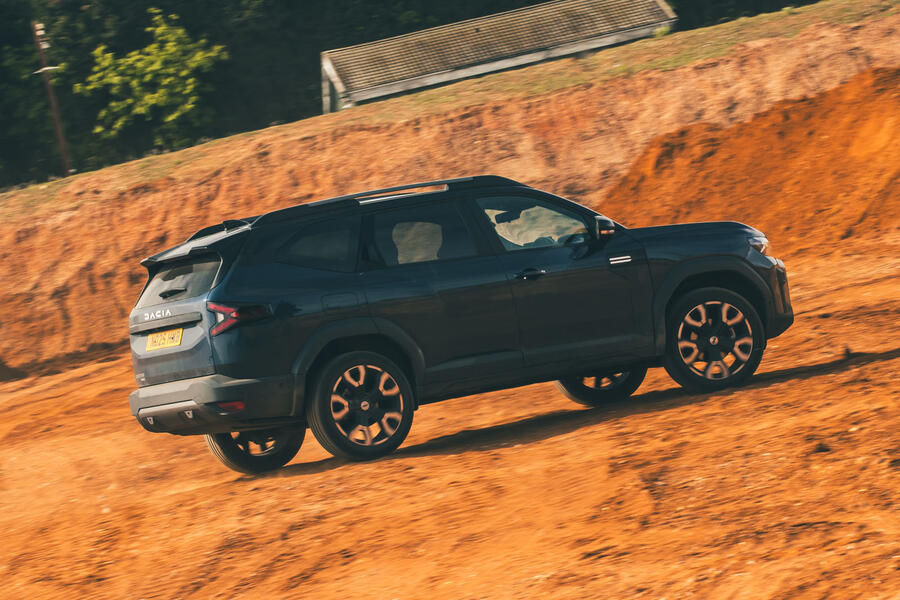
Things were pretty good off the beaten track, too. The deceptively narrow footprint, boxy shape and surprisingly fun chassis made threading the Bigster down narrow roads a real joy, knowing that I would always find space to squeeze it into should I find something coming the other way.
Inside, things were less rosy, but only slightly. By and large I was far more impressed with the fit, finish and general ergonomics of the cabin than I expected to be for something at this lower end of the cost spectrum. The physical HVAC controls felt just right, making a nice click as they were operated, and everything else seemed pretty well put together – and appeared to stay like that as the miles piled up.
At one point I thought that an irritating rattle was the result of something coming loose, when in reality it was simply a case of me not having clipped the removable drinks holder in properly.
The narrowness of the footprint doesn't translate to the interior, which in combination with the long wheelbase meant I could fit three adults across the back in genuine comfort – something that's surprisingly uncommon.
And that boot! In terms of useful space, it was just fantastic. Carrying everything from full-size drum kits to race-spec bucket seats, I never once found myself fighting the car trying to squeeze stuff in: it would simply swallow anything I fed it and then ask for more.
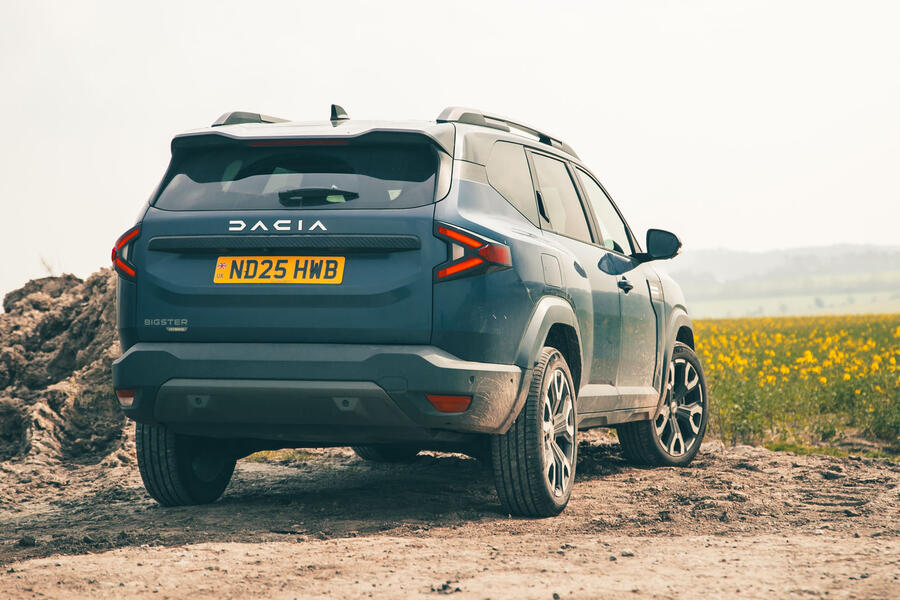
Now, it wasn't all sunshine and rainbows. The somewhat fidgety low-speed ride got on my nerves around town – I suspect a result of the admittedly great-looking 19in wheels – but not as much as the engine, which sounded like someone throwing a bag of hammers into a rock grinder when it fired into life. It was certainly a stark contrast to the creamy smoothness of the car when it was gliding along in all-electric mode.
The front seats were slightly suboptimal too, with Dacia's weird wetsuit-like material getting sweatier than it should have done on long drives in the summer. I wish they were a little bit softer, too, as I didn't really sink into them.
But all in all, I'm struggling to think of anything else on sale that's as good of an all-rounder as the Bigster is. Whether you're driving home from the shops or over to Belgium, you can be sure that it will get you and enough cargo to furnish a small flat there in comfort, ease and a surprising amount of style. I'm going to really miss it.
| TEST DATA: DACIA BIGSTER 155 HYBRID JOURNEY | ||
|---|---|---|
| Mileage | At start | 6,401 |
| At end | 23,201 | |
| Prices | List price new | £29,740 |
| List price now | £28,265 | |
| Price as tested | £30,590 | |
| Options | Options fitted | Indigo Blue paint £650, spare wheel £200 |
| Economy and Range | Claimed economy | 60.1mpg |
| Fuel tank | 50 litres | |
| Test average | 50.4mpg | |
| Test best | 52.6mpg | |
| Test worst | 41.9mpg | |
| Real-world range | 554 miles | |
| Tech Highlights | 0-62mph | 9.7sec |
| Top speed | 112mph | |
| Engine | 4 cyls in line, 1789cc, petrol, plus electric motor | |
| Max power | 153bhp | |
| Max torque | 127lb ft | |
| Gearbox | 4-spd automatic, FWD | |
| Boot | 677 litres | |
| Wheels | 19in, alloy | |
| Tyres | 205/55 R19, Michelin ePrimacy | |
| Kerb weight | 1419kg | |
| Service and Running Costs | Contract hire rate | £358 pcm |
| CO2 emissions | 106g/km | |
| Service costs | None | |
| Other costs | None | |
| Fuel costs | £2297 | |
| Running costs including fuel | £2297 | |
| Cost per mile | 14 pence | |
| Faults | None | |