
Recent Updates
08/08/2026 12:00 PM
Tiny car, tiny country: Fiat Topolino vs the Vatican City
08/08/2026 12:00 PM
Porsche's GT boss: why future 911 GT3s will keep getting better
08/08/2026 12:00 AM
Opinion: BMW's in-car Spiderman ad is a step too far
08/08/2026 12:00 AM
ZEV mandate review imminent: government mulls softer sales targets
08/07/2026 12:00 PM
The Smart car returns: new #2 revealed ahead of October debut
08/07/2026 12:00 AM
Ford Fathom: name confirmed for £21k 'skunkworks' EV
08/07/2026 12:00 AM
I own a classic Alpine A110 and a new one - guess which I'd keep
08/07/2026 12:00 AM
Video | Is the Skoda Enyaq vRS the ultimate one-car garage?
08/06/2026 12:00 PM
Range Rover: 'the sky's the limit' for price of bespoke models
08/06/2026 12:00 PM
Why history shows that Range Rover can rival Rolls-Royce
EV, Hybrid, Hydrogen, Solar & more 21st century mobility!
 Andreas Preuninger has overseen Porsche's GT arm for 25 years – so what's next for the fabled model line?
There's a sell-out crowd at the Porsche Experience Centre at Silverstone, host of the Sunstede Festival celebrating 75 years of Porsche in the UK.
To the attendees, as the brand's biggest enthusiasts, Andreas Preuninger is a rock star akin to a Glastonbury headliner given the number of hits he has overseen as head of Porsche's GT division.
After our sit-down he's straight off into the crowd to see some cars (many of which make up his own 'greatest hits' album), meet some punters and later make a main stage appearance that night for an audience with owners.Â
Preuninger, in his position for all but a few months of this century, admits he can be a bit shy and distant in new company, but he softens at the adoration he gets from the Porsche public, calling it "very flattering and very rewarding" and observes that in the case of his GT cars "almost a religion has been built upon this".Â
He adds: "This Porsche family is very special. The way they look upon me as the project manager of these [GT] cars, congratulating me and cheering on the cars, gives justification of what you do all day."Â
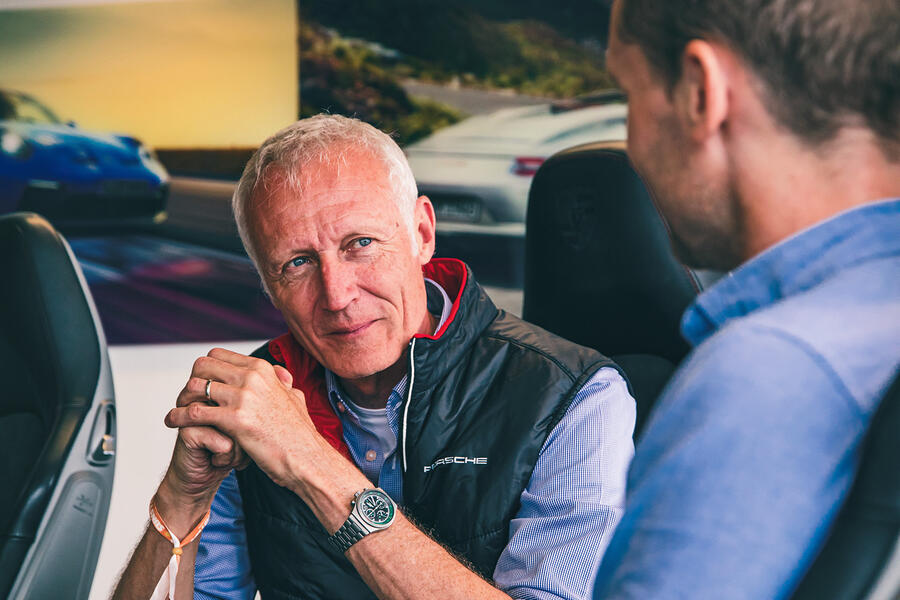
When he talks with his congregation, Preuninger makes sure he listens – and he ensures the GT team he has built around him does the same. He talks of a "mirror" to his customers, where the GT team and the customers all want the same thing.
"When you talk to English customers, American customers, German customers, mostly they all want the same special characteristics in a car," he says. "In my team, we are fans of that kind of car ourselves. If we like the cars, we can be 99.99% sure the customers will as well. It's a very simple thing, but it works."Â
Preuninger recalls a survey Porsche GT sent five years ago to around 5000 owners in 10 countries across seven regions, asking how they used their cars and what they would like to see in product development in the future. The conclusion was unanimous.
"They all wanted a car that talks to them, that translates into a rewarding driver experience," he says. "Having a car communicate exactly what it is doing in a split second, while having a transparent, authentic, honest and puristic feel about it. This is what everybody says, no matter where they are."Â
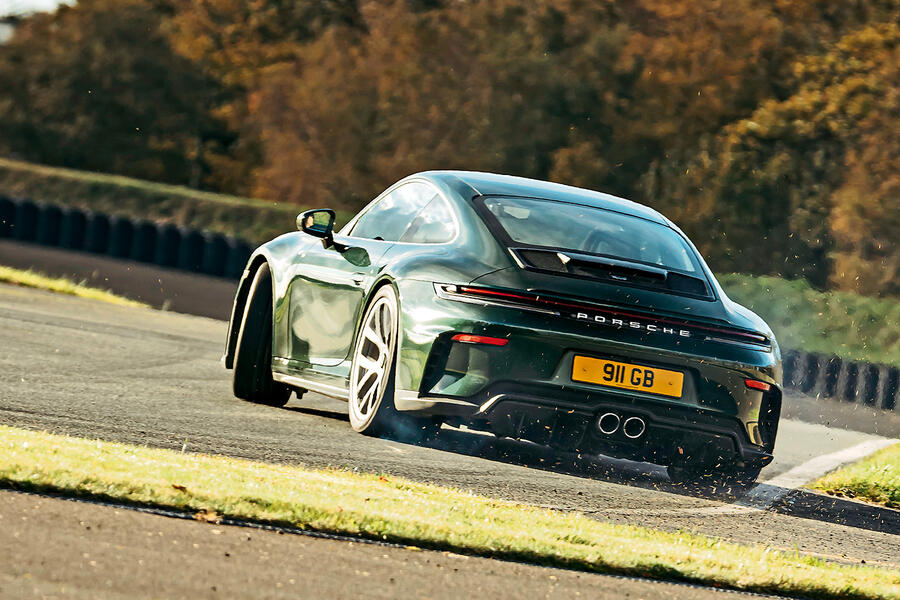
I ask if his job is now harder in the context of having to ensure that even Porsche GT meets the regulations addressing not only emissions but also active safety. "Yes, absolutely," comes the emphatic reply. "We have to try even harder to overcompensate for the things that Brussels comes up with that we have to put in cars. For 99% of customers they don't want to be distracted by these gizmos.Â
"We found a way to switch off all the systems in a [current 911] GT3 second-gen in one swipe. We're kind of saying: 'Sorry, we have to have it, but if you don't want it, there's an easy way of getting rid of it. You have to stay on the legal side, it's more difficult and more complicated, but we don't give up.'"Â
Preuninger is not against new technology or progress when it comes to the way his cars drive, and he notes that new materials, for example, always give opportunities. Then there is technology that can "befit the character of the car" and enhance the driving experience, although he always cautions that the car cannot be made too heavy, because being light ensures it is fun to drive at all speeds.
"So many cars I know only talk to you when they're going really, really fast and everything else is kind of boring," he says. "That should never be the case of a GT car."Â Technology has also in part necessitated a split in the GT model range between more hardcore track tools such as the RS models, where the lap time is important, and the more road-biased driver's cars such as the 911 S/T.
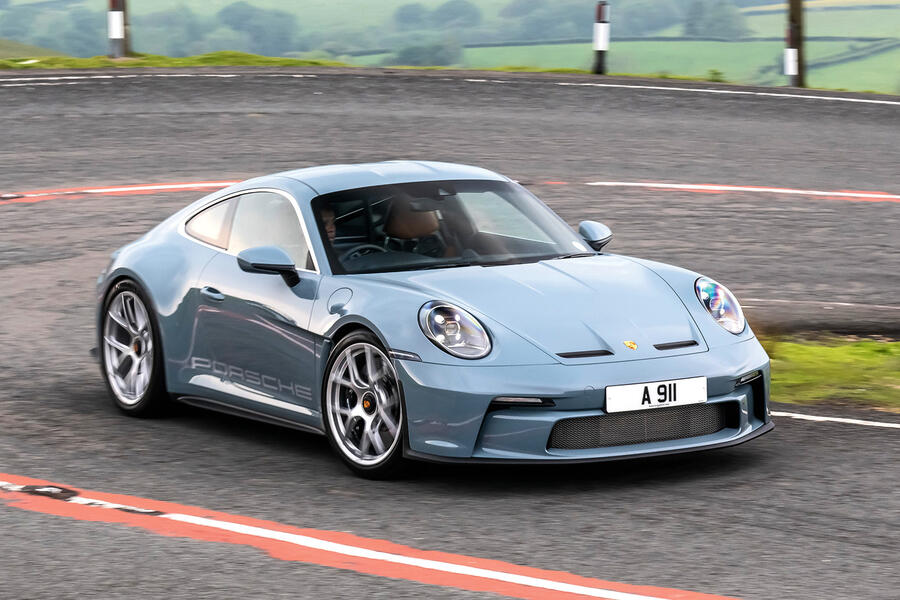
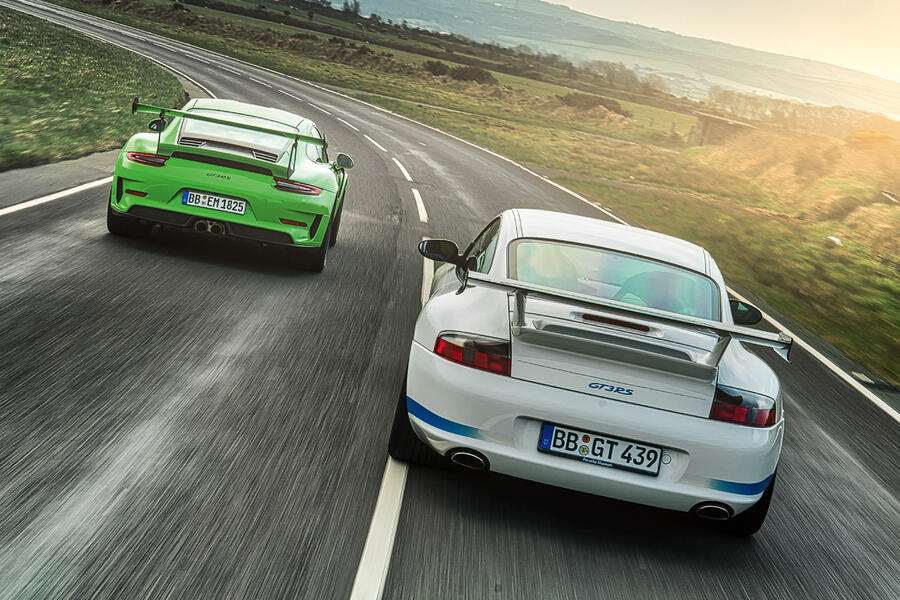
"In the '997' era we could address both these needs with the same car," says Preuninger. "We didn't have PDK (dual-clutch transmission back then, and a car that was good for a track was mostly a very light one that felt very nimble on a normal road, too.
"Now we need some technology to be quick on track, but the driver's car guy shies away from this as it's too complicated. So we split things with the Touring and the GT3 and RS, and now the S/T. We have almost an even share on both sides, and the audience for GT cars has widened substantially in the past 10 years."
With the likes of manual gearboxes and naturally aspirated engines still in his cars, does Preuninger feel an extra responsibility to keep this part of the enthusiast market alive? "We know what the customers want, what we ourselves want and what technology gives us to support those characteristics in a car," he says.
"I like a little bit of pressure and responsibility, because it gives you a deeper sense of what you are doing. Everybody working here likes the idea we're working on a car that nobody needs but everybody wants and which produces smiles."
He recounts a story of an American veteran of the Afghanistan war, whose care package from his mother one day included a magazine with an interview with Preuninger on the launch of the 997 GT3 RS. He fell in love with the car and vowed to buy one after the war, and that's what kept him going. He told Preuninger as much in a hand-written letter included with a package that mirrored the one his mother sent him.
"These are some of the reactions I get from people in the market, praising the car's ability to make them feel good, to heal and to evoke so much positive energy," says Preuninger. "They're looking for someone to be thankful to. You can't normally do that with a consumer product."Â
I ask Preuninger about his view on the media, particularly with the regular success his GT Porsches have around the globe - not least in our own road tests and annual Britain's Best Driver's Car contest, in which GT models have scooped the most honours across recent years.Â
The cars' fitness for purpose sees them reign supreme in our tests, but frequently Preuninger's GT models are oversubscribed before we even get to appraise them. "The media reaction is one of the rewarding things that comes first after you introduce a car," he says.
"The media that tests our cars are well known with good drivers and good sources of information, who I think the average GT buyer thinks very much alike. Your influence on our customer base is very high.Â
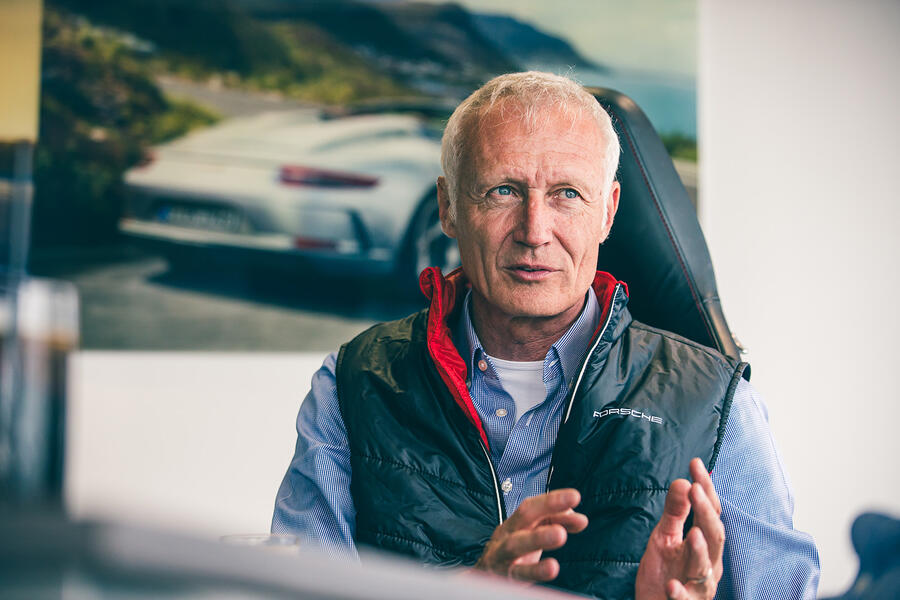
"In the meantime [between the reveal and our first drives, we have a lot of trust direct from the consumer. When a car is coming out, orders are flying in. They don't wait for the road tests, which is rare in the market. Why? Because we have never let them down, not one single time. In the last 26 models my team has made, every single one was a big success. I'm not boasting; it's true.Â
"GT cars are built for having fun, and this comes across in the writing. If the journalists are having fun, it's a good test. A lot of automotive media own GT cars, or would like to, so you are customers at the same time, or would like to be."
Preuninger has a point: just the day before the festival, a conversation I'd been having with industry colleagues turned to Cayman GT4s and the plunge one of them was potentially about to take. My Autotrader history shows the two most recent searches were for GT models. One day…
On the skyrocketing values of some GT models – a 997 GT3 4.0, an epic machine, of course, is now pushing £1 million! – Preuninger says his team creates cars to be driven, not as an investment, and limited-run models are limited only because of tooling and production constraints. Still, he is proud of how strong the residual values are.Â
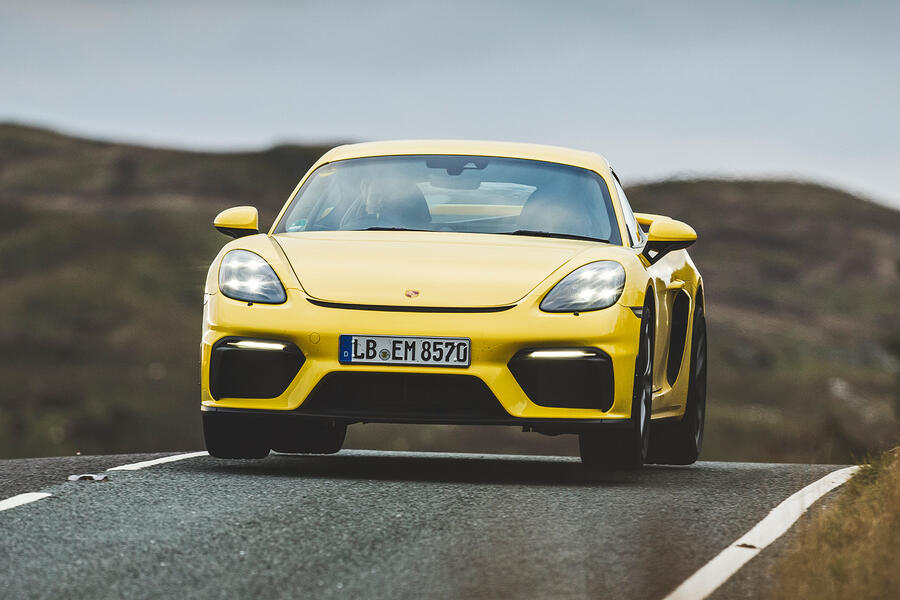
GT3 911s are driven so much, says Preuninger, that Porsche tuning partner Manthey has calculated some 70% of all Nürburgring 'tourist laps' are done by such cars.
You need only wander through the paddock outside the Devil's Diner, which sits on the Döttinger Höhe straight, to understand this amazing stat: on track days it is wall to wall with Porsche GTs, old and new. They're loved not only for their performance and how they drive but also for their durability.Â
"You can drive it all day, no matter what the temperature, and drive safely home again," says Preuninger. "The car does not feel as if it has suffered. Even the race cars use the same engine with the same part number; it's just a different seat and another exhaust."Â
I suggest the phrase 'buy cheap, buy twice' would be fitting here, and Preuninger says achieving such high levels of durability is a huge motivation for his team. One owner he knows with a 991 GT3 RS has done 60,000 miles, some 50,000 of which on the Nürburgring. Tyres, brake pads and discs have been the only bills.Â
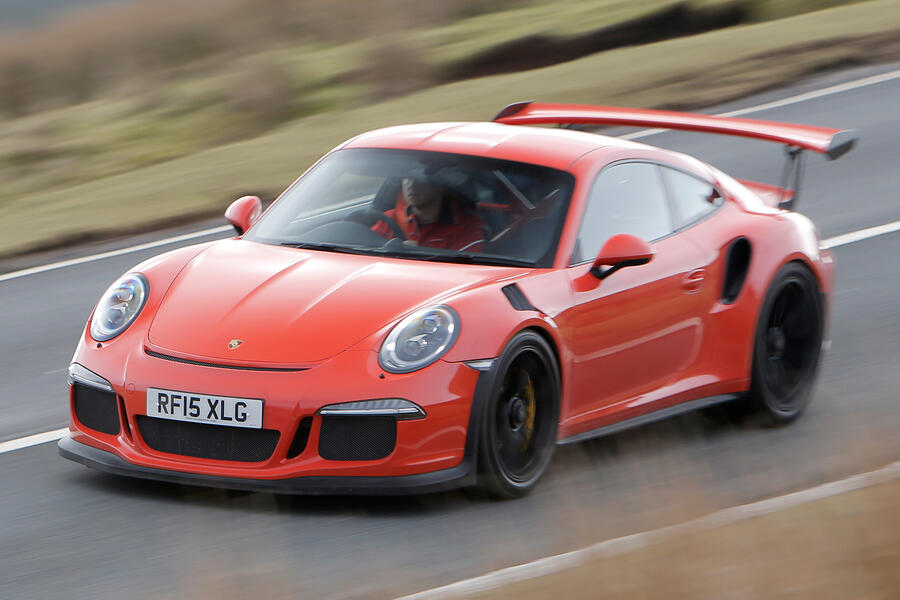
This serial, multi-brand supercar owner told Preuninger: "You can't believe what we had to do to keep all the other cars running properly..."Â
I ask Preuninger, with 26 hits and counting, not what his favourite is from the GT back catalogue, but which was the hardest to get right. "The current GT3," he says. "We couldn't increase the power [for legislative reasons], so we were looking for different ways to make the car more attractive than the predecessor.
"We took the gearing of the S/T and made it a bit more explosive for country roads, then the Weissach Package to make it a bit lighter.
"In the past, we wanted to give the customer enough reasons to really want a new one, and we will continue to do so. A facelift is always more problematic than a new platform, but I think it worked pretty well."
Preuninger has already acknowledged that his job is getting harder, but should enthusiasts be worried that true driver's cars could become a thing of the past rather than a contemporary offering? "Your readers are in good hands for the next years to come," he says.Â
"We have some great ideas for some great new cars, and I'm 100% sure everyone will love them. Nobody should be concerned that the characteristics of our cars are about to change. We know clearly and exactly what we have to do, and we are always open to new ideas." Phew.