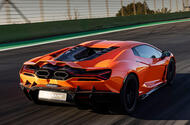
Boss believes synthetic fuels are an "easier leap" for supercar firm; its everyday cars will go EV first
Despite already committing to fully electrified models in other parts of its catalogue, Lamborghini will continue to take a watching brief when it comes to BEV super sports cars - and will only commit to them as and when decisions are made about the future of synthetic fuels.
Lamborghini Chairman and CEO Stephan Winkelmann told Autocar that his company “can afford to leave the door open for a few years yet."
"Synthetic-fuelled sports cars would be an easier leap for us, but we have to wait and see what the legislators decide about them, and whether we can get global agreement on their viability," Winkelmann said.
"We are a global company, so it’s no good if they are only allowed in one area. They have to be real and flying everywhere... The plan is for our everyday cars (the Urus SUV and new Lanzador GT) to both be fully electric by the end of the decade. For the super sports cars, we will be hybridised; and those cars will live for eight or nine years from now (until the early 2030s). And so, given that a typical development cycle for a new sports car is four years, we have some time yet to watch and wait until the picture becomes a clearer.â€
“We certainly see a clear trend from our younger buyers towards sustainability,†Winkelmann went on. “The overall footprint of our brand in terms of the by-volume emissions of our cars is negligible; but our sense of social responsibility for the brand is much bigger, and we have to honour that.â€
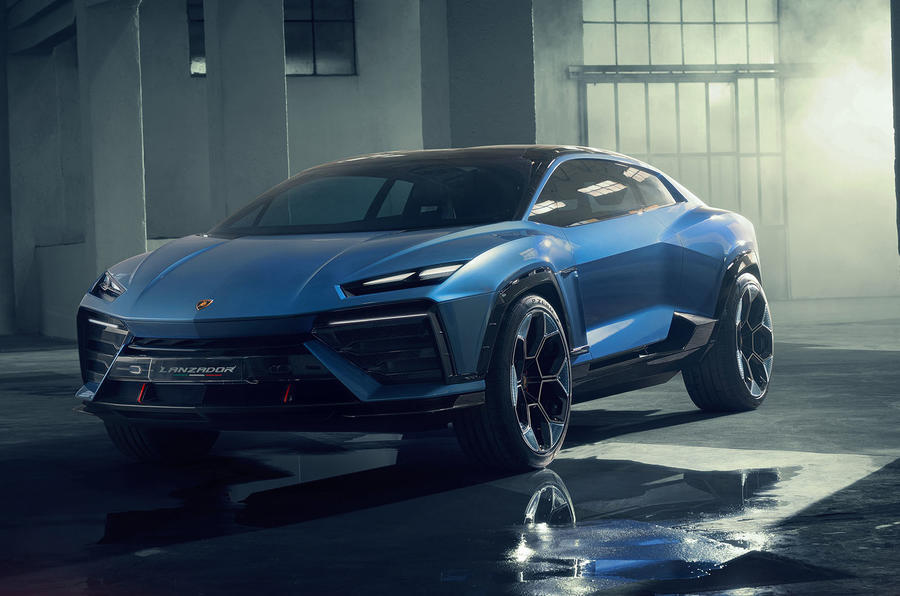
“The truth is, we just don’t know how much of our existing sports car customer base might already consider a BEV alternative. We’re not even asking yet. First, we have to prepare them in a way that is credible. You have to do things in the right order. With Lanzador, for instance, we came with a concept, a vision: something real. Only once people have seen it can you really judge if the market is ready.â€
Winkelmann says he’s not daunted by the idea of Lamborghini going fully electric, even across its wildest and most enthusiast-targetted models, however. “When I look back five to six years, when we took the decision to go hybrid, it was a tough decision. Nobody thought it would be accepted. So you have to think of public opinion as a film, not a snapshot.â€
“Clearly, there will be a moment in time when full BEV sports cars can be even more emotional than ICE. The power output is already so amazing. What we have to prove is not the performance, but the handling dynamism and the excitement.
“In fact, we can already see the time when battery energy density will allow to make even more agile EV supercars than the ICE ones we have today. With enough reassurance from us, we can make those cars even more emotional for our owners, too.
Winkelmann added the technology was for the firm to develop and prove, rather than waiting for other brands to move ahead.
"We know we are already not the first ones - but, when we get there, we want to be the best ones," he said.
“For me personally, I have not decided whether I prefer e-fuel or BEV for the super sports cars. For the daily driver models, there’s really no alternative to EV. My doubt on synthetic fuels is only to do with scalability. Come 2035 there will still be billions of cars on the road with combustion engines, and if we want to make the biggest difference to global emissions, the best way to do it, in theory, is with e-fuel. But I’m not convinced that’s viable.
“Right now, the whole industry is already investing in battery technology. So as an industry - and clearly not only for the benefit of brands like Lamborghini - we need greater consensus and focus.â€