
Recent Updates
06/07/2026 12:00 PM
Inside the Leapmotor-Stellantis deal that's changing the car world
06/07/2026 12:00 PM
My 1992 V8 Range Rover only costs me £100 in repairs each year
06/07/2026 12:00 PM
The rise of the virtual gearbox: Why EV sports cars are faking it
06/07/2026 12:00 PM
The finest cars of Buick
06/07/2026 12:00 AM
How the Daewoo Matiz began life as a Fiat concept
06/07/2026 12:00 AM
The world’s coolest police cars
06/06/2026 12:00 PM
Exclusive: Testing Renault's top secret new cars - with the firm's boss
06/06/2026 12:00 PM
How the RAF helped make Britain a sports car mega-power
06/06/2026 12:00 PM
21 controversial models from famous car manufacturers
06/06/2026 12:00 PM
The brilliant car designs of Giorgetto Giugiaro
EV, Hybrid, Hydrogen, Solar & more 21st century mobility!
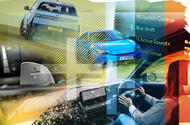 Simulated sequential 'boxes, pioneered by Hyundai, are the hottest new trend in high-performance EVs
The sign of any great new technology is how quickly it smoothly slips into your life.
When was the last time you actively thought about making a contactless card payment? The speed at which I defaulted to using the faux gears of the Hyundai Ioniq 5 N's N e-Shift system after making first acquaintance with it - even keeping it murmuring away in the background, mimicking a dual-clutch automatic 'box on more arduous drives - was telling. N division had knocked it out the park.
Its vibe is of something central to the car's mood board right from the off, not a 'wouldn't that be nice?' bonus slotted in closer to the project's conclusion - a hunch confirmed by Alexander Eichler, a senior engineer at Hyundai's European base in Rüsselsheim, Germany.
"It was initiated very early on," he says. "At that time, Albert Biermann was the father of N, and he always was very engaged when it came to gearshifts. He had pushed us in developing our dual-clutch transmission and he thought that we should offer something similar in the electric era.
"The secret behind it, the reason it turned out to be so realistic, is that we had engineers working on both projects; they knew exactly how a DCT feels, how a perfect and imperfect shift feels. To make it realistic, it has to be imperfect, of course, otherwise it would be too seamless."
Chasing imperfection seems an illogical central tenet for an engineering team, but then the petrol-engined Hyundai hot hatches that came before the Ioniq 5 N were lovable precisely for their roguish nature beside more strait-laced rivals - a spirit that lives on in N division's electrified era.
"We use various models," continues Eichler. "The pump losses of a combustion engine vary over the RPM range, so our virtual drag torque also had to vary across the revs in order to feel realistic. We had a lot of debate about what drag torque we should overlay for it. And we ended up with almost twice the figure you typically get from a V8 petrol engine."
Essentially, Eichler and his team had to overemphasise this element of their simulation to counter the Ioniq 5's inherent size and weight, "but the rest exactly mimics the physics behind a real combustion engine", he promises. It's a firm "yes" when I ask if smaller, lighter N products would use different N e-Shift maps.
The Ioniq 5 N, a bona fide five-star car here at Autocar, already feels pretty deft and agile for its 2235kg weight. The N e-Shift works hand in hand with the N Active Sound+ system to ensure an impressively realistic turbocharged four cylinder sound matches upshifts, downshifts and engineered-in physical jolts through the car.
Staggeringly, the two technologies were developed by different teams, but clearly they share a strong relationship. The Ioniq 5 N will enthusiastically bap-bap-bap against its 8000rpm limiter and you will feel and hear the effects of a last-ditch downchange to second, the car held against an invisible barrier partway through a turn if you're not mighty quick to grab third.
N e-Shift feels like a startlingly good invention by people who clearly care about what they do, and it's a piece of technology that expertly mirrors the general dynamics of the car. This is a grippy, neatly balanced, four-wheel-drive mega-hatch, but one that allows its wheels to slip and its steering wheel to writhe around in your hands with relatively modest provocation.
The harder you push, the more its sensations heighten, and where other EVs frustrate with increasing commitment, its appeal crystallises under such conditions. Reports from my esteemed colleagues suggest its Ioniq 6 N saloon sibling - with a new, improved tune of e-Shift - only sharpens the dynamism.
"Hyundai is a great company for letting you play around without the management saying 'come on, this doesn't make sense'," says Eichler. "Having fun: that's the clear strategy. It's a nice playground for us."
And what about its Kia and Genesis siblings, which now also deploy faux gears in some of their sprightlier EVs? "We are always in contact with them. Naturally we share our software logics, but then it's always up to each team what exact logics they would like to use."
While Hyundai N projects will continue to deploy more extreme tunes of the technology, there's still fun to be had with their relations. The new Kia EV9 GT is a curious and still rather luxurious electric SUV that uses an eight-speed, 7200rpm-limited Virtual Gear Shift system. It gives its driver something familiar to latch onto and is evidence of a spark in a car that, in bald terms, isn't a pure enthusiast machine.
In a Genesis GV60 or GV70, it's nice to simply leave the system running in automatic mode in the background, some of the pitch and heave of a stocky electric SUV - and thus the potential for car sickness - usefully dimmed by its presence. The rortier GV60 Magma, meanwhile, is set to score a 9000rpm redline to accompany its V6-impersonating acoustics.
Will shift strategies always feel rooted in the reality of a petrol-powered car? "I think that's what customers expect when you offer this," answers Eichler. "If you let it go to the real limit of the e-motor, which is over 20,000rpm, would that make sense? I don't think anyone would really understand it, so we limit to 8000rpm, which is what people know from combustion engines."
Given that electric motors' revolutions are significantly reduced by simulated gears, it's fair to hypothesise a notable lag in their track performance. "It depends on your personal driving style," says Eichler.
"Theoretically you would lose some seconds, although [former World Touring Car Champion] Gabriele Tarquini supported one of our media events at a race track in Italy and, on that track, he told me he's faster with Ne-Shift than without, for a simple reason: when you accelerate out of the curves, you have to work to ensure the car doesn't oversteer too much, and by just selecting the right gear, he can be fully on the throttle out of corners, knowing that the car is capable of taking it."
Enthusiasm for virtual gearshifts outside of Hyundai is mixed, however. Porsche has shown support but Lamborghini appears to disagree. Polestar's head of product attributes, Christian Samson, is currently against the idea too.
"The way Hyundai has done it is entertaining, but I don't see us doing that," he tells me. "It makes you smile, and we have assessed it from time to time, but it feels like a decoration that calls upon heritage or legacy. We come from a minimalistic, more contemporary place."
However, with BMW having committed to the concept for its forthcoming quad-motor M3 EV, the wind is firmly in the sails of Eichler's team. "We have big smiles on our face when we read these articles, and it encourages us to make our work even better," he says. "Some healthy competition is all part of the game, isn't it?"
Honda is another big proponent, with its new Super-N electric hot hatch offering seven simulated gears and a matching soundtrack in a car costing less than £20,000. Our first taste of a pre-production car showed promise, while the S+ Shift system in the new Prelude draws its faux-gear experience from an actual engine to help glamorise a sensible hybrid powertrain that might otherwise feel like ballast in a seductive coupé. The result is a thoroughly likeable car.
"Our target was to have a very engaging sensation with S+," says chief engineer Tsutomu Tatsuishi. The Prelude's modest 117mph top speed provides a small spectrum across which to spread eight simulated gears, ensuring your hands are kept busy on the paddles - although with no pure manual mode, it saves any blushes: "Changing gears here doesn't mean any friction, time loss or mechanical wear. And there are no space constraints. We could just think about the fun and pleasure you have when changing gear."
Toyota, meanwhile, has dabbled with a simulated manual 'box right down to a physical gearlever and three pedals - something editor Mark Tisshaw has sampled in a Lexus UX 300e. In the here and now, the brand's RZ 550e is a gently competitive electric crossover whose driving experience is dramatically gamified by a steer-by-wire yoke and the stubby shift stalks of its eight-speed Interactive Manual Drive set-up.
"The idea was born from the desire to play catch-ball with the car," says advanced drivetrain engineer Yoichiro Isami. "We realised the drive felt less rewarding [without the sensation of shifts]. I purposefully made it jerky and added sound when it would otherwise be quiet. The system requires a certain amount of skill: it will return both your successes and your mistakes."
The Lexus system offers no pure auto mode, meaning you must stay focused on your current ratio lest you end up crawling ponderously out of a village in 'fifth. But on the right road, in the right mood, it's fun, even if the more realistic sound profiles and physical sensations of a Hyundai N car evade it.
Crucially it appears to be our first taste of something much more significant: the electric Lexus LFA Concept has synthesised gears, and you would expect a production version to need such surprise-and-delight features to help it escape the shadow cast by its legendary V10-powered ancestor.
Indeed, an acknowledgement of what was great before feels crucial to tech like this reaping affection in the future.
Back to Eichler: "I always loved combustion engines, and I still have an Alpina B3 S in my garage, which I had as a daily car before I joined Hyundai. When we have a few days of snow here, I head out to the mountains to have fun with it." When that's a pastime of one of the brains behind N e-Shift, no wonder we're so rapt by the minor revolution that it has brought to performance EVs. Let's hope his peers move the game on yet further.