As landmark $30k pick up starts testing in US, Ford hints at Europe potential for affordable new EVs
Future models built using Ford's new Formula 1-influenced affordable EV platform could be offered in the UK to complement the company's revamped European line-up.
The new platform, called Universal EV, features "cooler engineering than a hypercar", according to Ford CEO Jim Farley. It has been developed by a 'skunkworks' project in California set up by Ford to work semi-independently.
Universal EV will eventually spawn a range of 'global' vehicles and the first production car to use it will be a US-market pick-up, pictured above, priced at around $30,000 (£22,300).Â
A teaser video displaying early sketches of the pick-up shows how Ford is rethinking its approach to design and engineering, with dramatically different styling to its existing combustion-engined trucks.

Ford hasn't confirmed whether cars underpinned by the platform will be offered in Europe, but it could be used for EVs that would arrive after the firm's Renault-platformed small hatch and crossover, due in 2028.Â
Since the project is largely a clean-sheet design, Ford has recruited staff from outside the mainstream car industry – with a focus on motorsport, given the belief that lessons on efficiency and aerodynamics learned in competition can give it an edge over Chinese rivals.
Speaking exclusively to Autocar, Farley said: "One of the biggest gifts that Formula 1 ever gave Ford was our skunkworks team in California. Almost every one of them either comes from Formula 1 or is a huge F1 fan."
Farley added that the bulk of the skunkworks staff "have never worked in the auto industry before" but "we picked them for their aerodynamic knowledge" - although he acknowledged that had been a challenge.
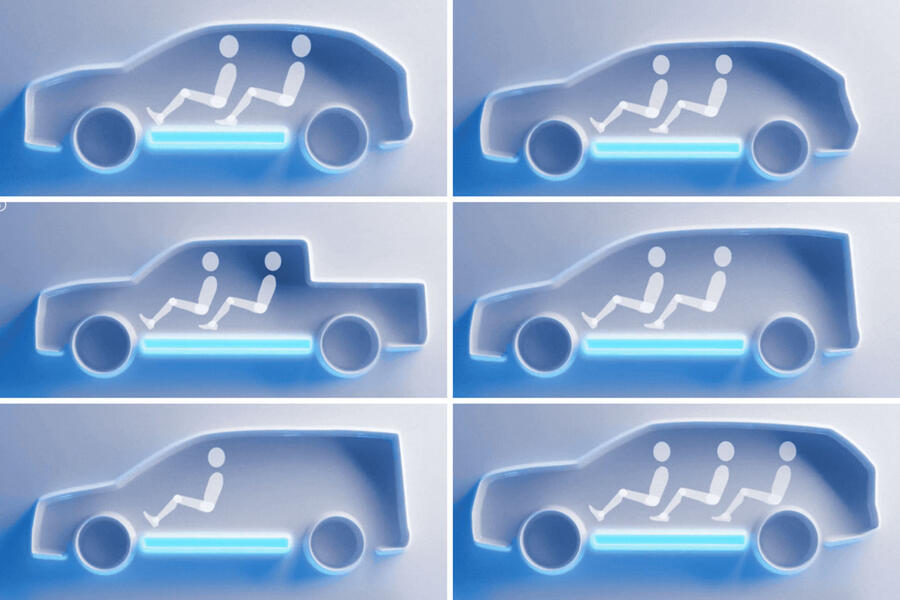
"It turns out that finding people who love motorsport who want to 'build a buffet in Vegas' – a $30,000 EV that's nice-looking and fun to drive - is hard," he said.
"A lot of people want to stay in F1 and the challenge is picking people from motorsport who can actually design a breakthrough product. But when people see what we did with this skunkworks, they will say: 'Wow, that's cooler engineering than a hypercar. They will be shocked."
Farley said the extreme aerodynamic focus of modern F1 cars was a key attraction in recruiting people for the skunkworks.
Ford claims the forthcoming pick-up-tipped to revive the Ranchero name - is 15% more aerodynamically efficient than any pick-up currently on sale in the US.
"Every bit of aero we can improve will help us reduce the size of the battery, and F1 has the best aero people in the world," he said.
"I can't steal [F1 design guru] Adrian Newey. I asked Adrian (when he was at Red Bull to look at the Cd of some of our EVs, and he said he didn't care about homologation rules. But we needed those skills to come over. It's the same with recruiting people for EV powertrain efficiency."
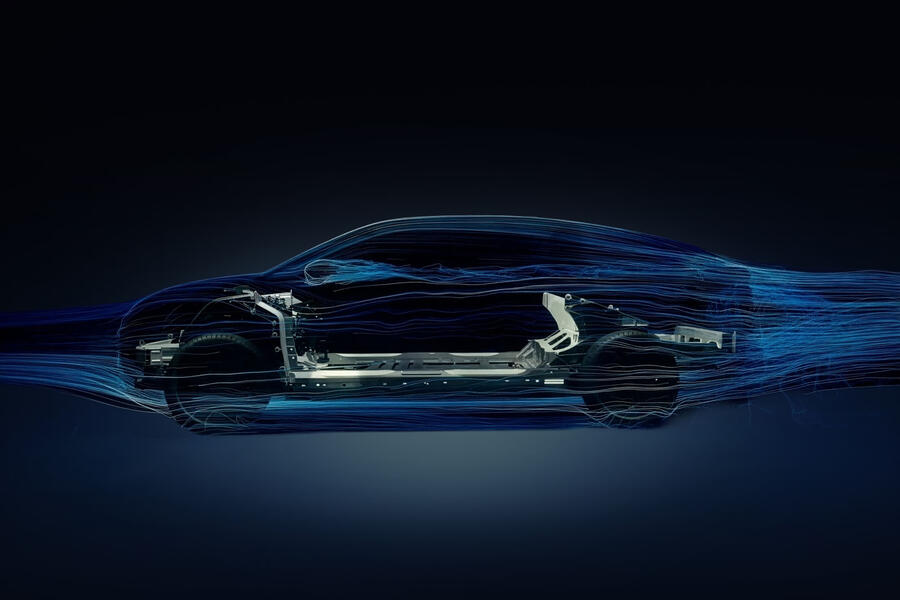
Farley said the intense focus on aerodynamics and powertrain efficiency would enable the skunkworks EVs to be fitted with smaller batteries, in turn keeping weight down and improving packaging options.
He highlighted this as a particular area where Ford could outperform Chinese rivals, some of which he said "have really cheap batteries, and that's their problem".
He added: "Their control systems – the efficiency of the motors, inverters and gearbox, and how they all work together with the software - aren't that efficient, so they're carrying around a bunch of battery they don't need to. We've found 20-30% gains in efficiency but we had to get people over from motorsport to do it."
Universal EV models will also make extensive use of megacasting, with whole segments of the body cast as single parts, to help reduce the complexity and further lower costs.
The first vehicles on the platform will be built at a new US factory in Kentucky.