Hyundai subsidiary prioritises brand prestige over fast European market growth, but can it ever match Lexus?
What defines success for a car company? Sales, profits, happy dealers, happy customers, brand awareness: these are all attributes that go into what we would consider a healthy automotive business.
All of which makes judging the success of Genesis quite difficult. It's now five years since Hyundai's premium brand launched in the UK, but rather than a brand with five years of experience behind it, it feels more like a brand that has lived its first year five times over, as it looks to establish a model that works.
Sales in the UK stood at just 626 cars in the first half of this year, wedging it between KGM and Lotus in the sales charts.
Across Europe last year, Genesis sold around 2500 cars in the three markets in which it’s present (the UK, Germany and Switzerland), so sales have yet to take off.
Peter Kronschnabl, Genesis Europe's MD, said the ambition is to increase that number fivefold by 2030. To support that, it’s entering Italy and the Netherlands; it's switching from a direct sales model – which included dedicated assistants for buyers – to a more traditional dealer model; it now has a closer backroom relationship with parent firm Hyundai; and new physical sites are opening, including a new Arnold Clark facility in Glasgow.
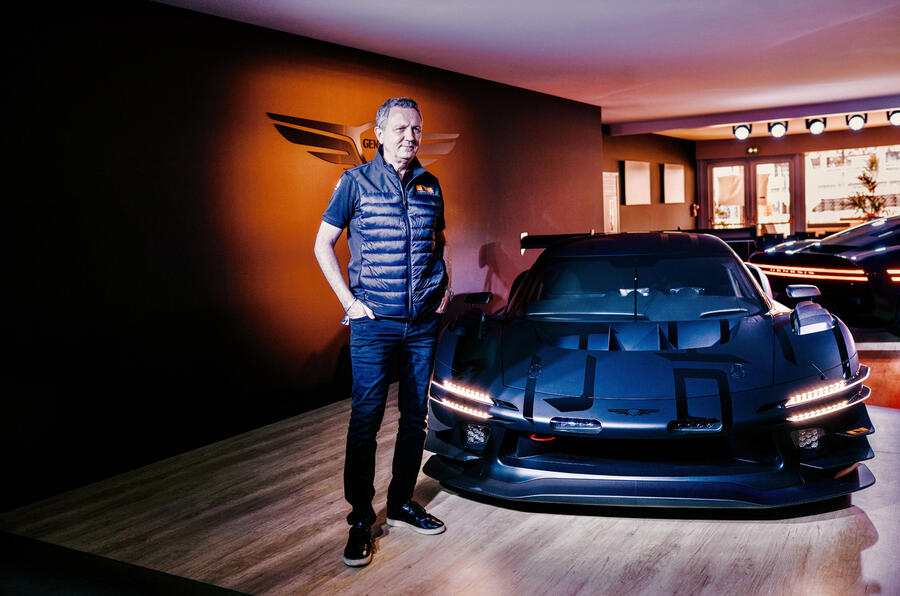
"In order to sell cars, you need partners and you need a physical presence," said Kronschnabl (below).
Sales of some 12,500 cars per year by 2030 in Europe really doesn't sound overly impressive, but at that level Kronschnabl said the business would be sustainable and deliver profits for Genesis and its retail partners.Â
If Genesis is happy with sales at that level, should we then consider it a success? It still seems such a bafflingly low number to be worth bothering about in the context of a global giant like the Hyundai Motor Group, whose Hyundai and Kia brands together sell more than seven million cars per year, and even more so when Genesis isn't just launching a core range of models but also a performance and motor racing arm in Magma.Â
The reason why Genesis would consider and tolerate such modest growth and true 'value over volume' without dumping cars on the market at heavy discounts to get to a vanity sales figure lies in the global context and the halo effect it has on Hyundai as a car maker.Â
Globally, Genesis has passed more than one million cumulative sales (just over 220,000 of which came last year), and while almost two thirds of its volume comes from its home market of South Korea, it's closing in on 100,000 sales a year in the US.Â
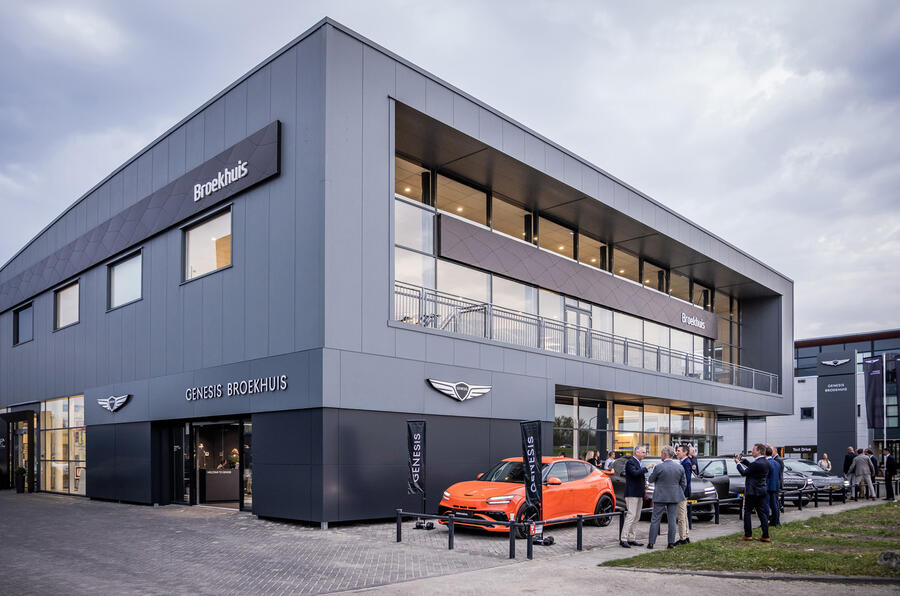
To be seen as a credible premium player globally, though, it must be seen to be acting as one in Europe, and with true substance behind it.
While the European way of doing premium may not be working in China any more (Genesis is another premium brand tanking there), for the rest of the world Europe is considered the home of premium, where bespoke platforms, individual design and performance products are a must.
It’s why Genesis is investing in the likes of the lavish GV90 flagship with Rolls-Royce doors and launching hot Magma versions of its models, starting with the GV60: this is what is expected of a European premium brand.Â
It also explains why DS is struggling so badly: you can't be taken seriously as a premium brand when you're basing cars on mass-market, front-wheel-drive platforms with shared technology and weedy powertrains. Buyers see through it, however much leather and posh stitching you add, and residual values suffer. Plus, there's no real global business to support.
This is also why Infiniti failed here: it initially launched cars that felt American in flavour, and when it tried to go bespoke in Europe it simply rebadged Mercedes platforms and technology.
Lexus provides a better example of what Genesis could hope to achieve. Its sales still sit stubbornly below 100,000 in Europe even after nearly four decades, but its platforms have substance, it has taken performance models seriously and its reliability is a byword for quality. While success is still limited in Europe for Lexus in sales terms, it's good enough to contribute to global goals.
Kronschnabl isn't totally convincing when highlighting Genesis's point of differentiation from rivals. He picks out the quality of its materials and the concierge-style personal service its customers get, neither of which necessarily feels like a primary reason to buy.
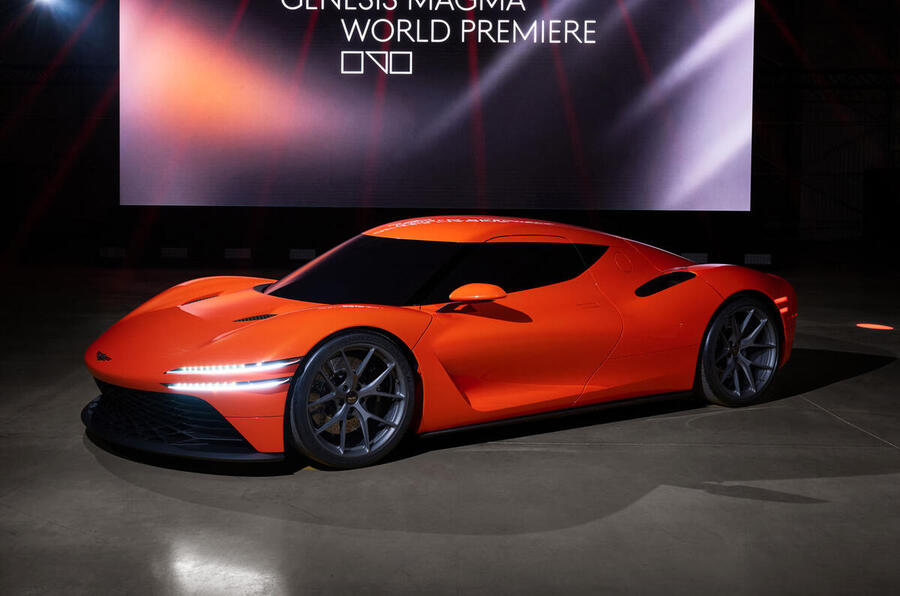
Genesis is certainly an interesting brand to follow from the outside. It's come up with some fascinating concepts, from hypercars like the Magma GT concept to golf carts like the Box Buggy, and its models look and feel different - in a similar way to a Lexuses, with substance behind them.
Kronschnabl said buyers are coming to Genesis from German premium brands as well as trading up from Hyundais.Â
He calls the brand "new premium" and sees it in a different way to how a buyer might view a new Chinese brand, because he believes buyers don't yet consider Chinese cars premium. Buyers still value Western premium brands for prestige and heritage, which China tries to bypass with raw technology.Â
Even if your brand isn't a smash hit in Europe, you still have to act like a European player with a full model range with substance behind it.
All considered, the Genesis operation looks expensive and of limited ambition sales-wise. But if it serves a global purpose and the staying power remains from Hyundai executives in Seoul, then those goals that seem so unambitious from the outside will be considered far more impactful in the corridors of power.