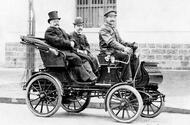
When cousin Eugène cancelled Armand Peugeot's early car-building plans, Armand quit to start his own rival firm
Visitors to the 1905 Paris motor show "who wish above all to appreciate the progress of the car in the touring category will obviously go to the stand of the Société des Automobiles Peugeot", reported French sports newspaper L'Auto.Â
Meanwhile, at the stand of Le Fils de Peugeot Frères, "exhibited amid victorious and nickel-gleaming bicycles and motorcycles is the voiturette that appears to be the true expression of everyone's desires and needs" – so much so that it caught the attention of the French president, who declared: "So, here is the true popular car!"
Hang on… two distinct Peugeot companies, making unrelated cars and promoting them on separate stands at the same show? How very confusing! Just what was going on? To answer that question, we first need to go all the way back to 1810 – a whole lifetime before the car was invented – when a family named Peugeot established a steel foundry in eastern France.
Some six decades later, an ambitious son, Armand, undertook an engineering placement in Leeds, England, where he witnessed the birth of bicycles and tricycles – or vélocipèdes as he called them. He returned home in 1871 and by 1885 had convinced his family to enter this exciting new industry.
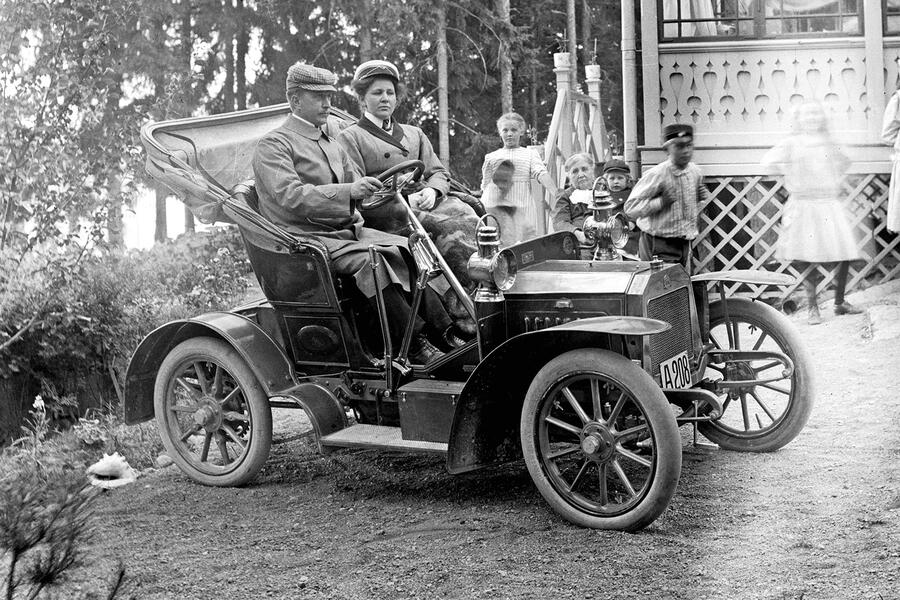
The next invention to capture his imagination was the steam boiler, but his attempt to use this to power a cycle proved unsuccessful. At the 1889 Universal Exposition, though, he discovered a far greater solution: the internal combustion engine.
Consequently Peugeot became the first French firm to build a true car, the Type 2 emerging in 1890 with a Daimler-supplied engine. Two years later, Armand went to the board with a bold plan: to invest F500,000 (£2.2m in modern money) in building a factory specifically for cars, but this was deemed too risky.
He tried again in 1895, with Peugeot's car sales rising steadily, and had it approved – but just a month later, his cousin Eugène engineered a dramatic reversal. "It is decided that the production of motor cars shall be abandoned," stated the board meeting report.
"Efforts will be made to liquidate as best as possible the equipment, patents, goods in production and supplies. Consequently, from this moment on, not the slightest expenditure shall be incurred other than those indispensable to the stated objective of liquidation."Â
With annual bicycle sales rocketing past 9000 and car sales not yet exceeding 100, conservatism had won out. Armand promptly quit the family firm to found Société Anonyme des Automobiles Peugeot, this being allowed to use the famous name and lion logo on the condition that it would make nothing with a saddle, while Le Fils de Peugeot Frères would make nothing with a bench seat.
The new factory was opened at Audincourt in April 1897, creating some 400 jobs – and was expanded rapidly, because demand instantly outstripped supply by four to one. Unsurprisingly, it seems that the distinction between the two Peugeot firms wasn't popularly recognised.
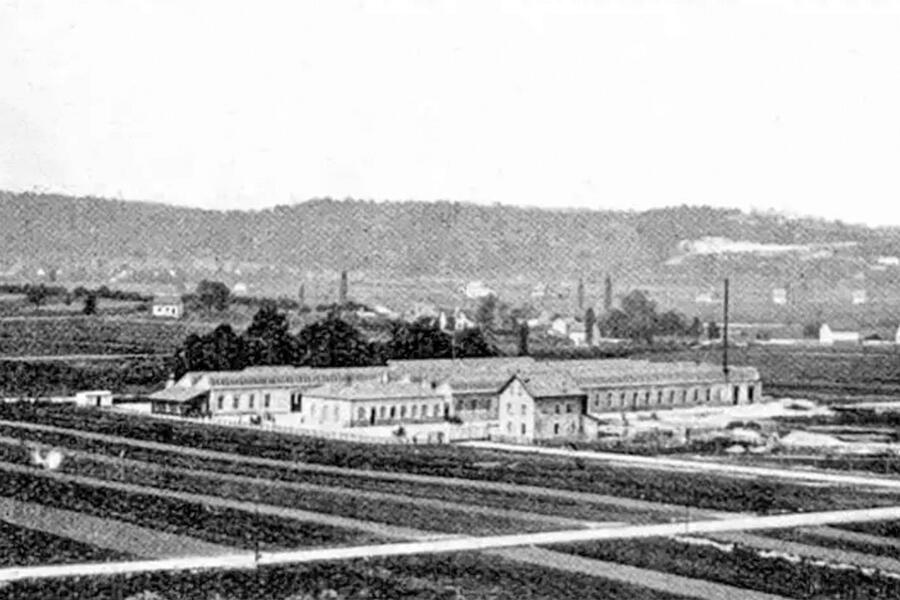
For instance, in 1899 we reported that when workers at Valentigney went on strike over a foreman's sacking for 'misbehaviour', those at Audincourt walked out in sympathy. As the car firm grew, the other side of this divided family began to worry about slim margins on their bicycles and lower than anticipated demand for their new motorcycles.Â
And so after Eugène's retirement, his successors approached Armand with a request to cancel their non-competition clause for F300,000. Protracted negotiations followed as the two sides' lawyers quibbled over which car types and branding would be allowed, but ultimately Armand accepted the proposal.Â
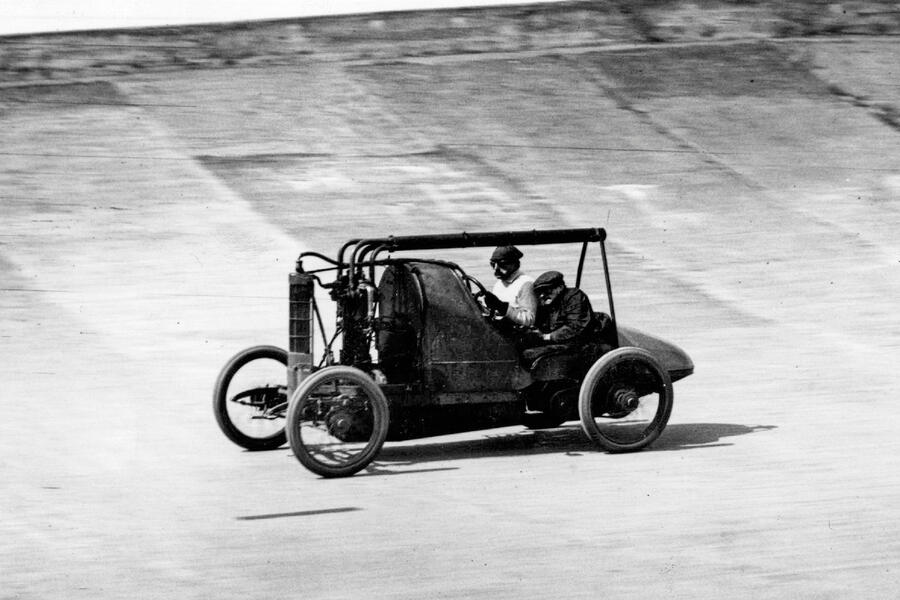
His cousins would be limited to making cheap, lightweight, little 'voiturettes' under the name Lion-Peugeot – but of course the Peugeot car brand also had a lion as its logo. Thankfully for all those confused punters, the family rift was finally smoothed over in 1910, and Peugeot has been a unified company ever since.
Well, unless we're talking about the bikes or the pepper mills or the saws, that is…