Have MPVs gone from being a symbol of a dreary family life to the height of opulence?
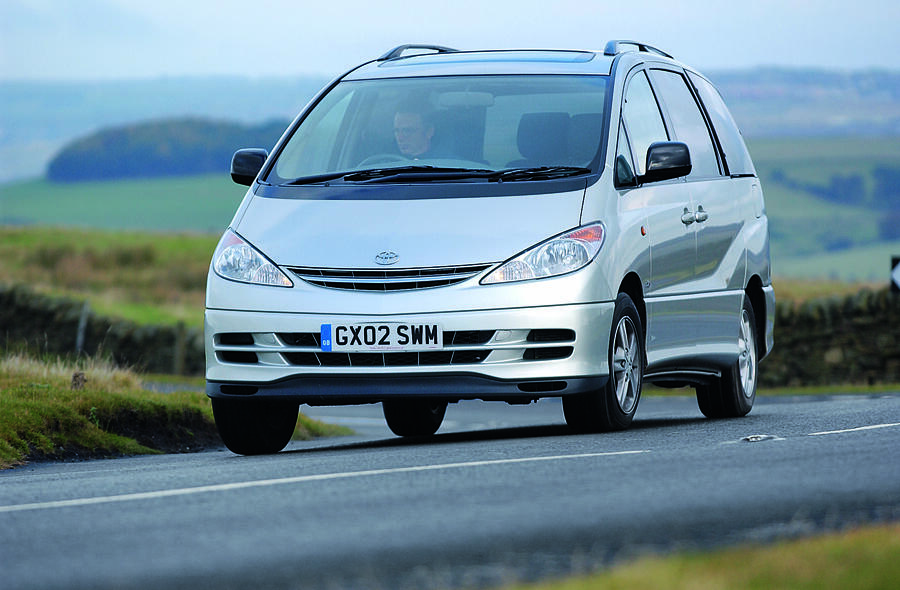
Spare a thought for the MPV, won't you? The multi-purpose vehicle, as it was known, was a big, boxy thing sometimes described back in its heyday as a people carrier. As opposed to what I never knew: what is a car if not a vehicle for carrying people?
Anyway, I use the word 'was' because while some still exist, most MPVs - like the Volkswagen Sharan, Ford Galaxy and a plethora of others - didn't survive the past decade's push towards posh; the move towards 'lifestyle'.
An MPV suggested, I think, and if you will excuse my paraphrasing a mood of the times, that while its owners had been somewhat successful in the sack, they had somewhat given up on other areas of life, such as style or luxury. They had become the frame, not the picture, as parenthood is sometimes described, to the detriment of their own existence.
An MPV's owners were so busy with baby buggies, runs to school, evening child-related activities involving cramming loads of stuff into a vehicle that there wasn't any room for their own lives, personal leisure and pleasure: hiking, showing off, having a nice time in a nice-looking car and doing the lifestyley things that an SUV-a sport utility vehicle - was supposed to allow one to do.
The SUV now more than half of all cars sold in the UK and still inexplicably rising-looks more rufty-tufty and classy and says more about its owner, whereas an MPV says more about its passengers.
So when society - via social media, reality telly and more-promoted self-obsession and 'me time' and perhaps even glorified a little narcissism, the SUV took off. When me-me-me became fashionable, the MPV did the inverse.
What a pity. And what rot. Because actually no car is more lifestyle-oriented, and arguably no car is more luxurious, than an MPV. Time is the biggest luxury of all, but space is maybe the next one after that. Big houses cost more than small ones. And no car offers space like what is effectively a small van. This is, after all, why the Americans call such vehicles minivans.
MPVs are incredibly airy. That's sometimes seen as undesirable and unfashionable. Boring. Why is it that in a luxurious house we want big windows and optimum airiness, perhaps floor to ceiling glass, and old buildings with big, high ceilings are lovely, yet in a car, a high window line and a snug, cocooning ambience is preferable?
In a house, we would call it poky. An MPV is the closest there is to an extension of the home - probably the most luxurious and relaxed space any of us has. It's the equivalent of a conservatory: nice big windows letting the sun stream through and warming our souls as we recline in semi-relaxed chairs, with the benefit that it can be kept the right temperature all the time and the view changes.
MPVs are also - or rather can be - quite nice to drive. Shorn of the obligation of pretending to be off-roaders or sporty in any way, they can be set up comfortably something that is, mercifully, becoming slightly more popular than it has been in recent times but still, I think, an underrated virtue.
And when it comes to efficiency, while an MPV has a large frontal area, it's a relatively aerodynamic shape. The Volkswagen Type 2 had a cleaner drag coefficient than the Jaguar D-Type.
Today, while largely ignored in the mainstream sector, the MPV does survive, and here's the thing: it's a true luxury vehicle. It's used by those who are so busy that they don't drive themselves. The Lexus LM, for example, is just a four-seater and it starts at £95k. The Volkswagen California is perhaps more day van than camper van and starts at £65k. And there's perhaps no car more suited to an active lifestyle than a four-wheel-drive California.
What the mainstream market overlooks the true luxury market still remembers. If you want to look successful, be successful, forget your pseudo-off-roaders or sports cars or coupés: MPVs are where it's at. Perhaps the mass market will remember that at some point and not look down on it when it happens.