I expected iPhone designer Jony Ive to completely digitise Ferrari's future – but physical appeal remains key
Last week I was sitting on the 27th floor of San Francisco's Transamerica Pyramid, where I was among the first to be shown the interior of Ferrari’s long-awaited EV – which we were told just moments before would be named Luce.
The cabin (as well as the exterior, which we will see in May) had been penned by former Apple design boss Jony Ive’s firm LoveFrom, so hype was understandably high – even in the context of this being the first electric car to wear the Prancing Horse on its nose. And when I was listening to Ive and the full set of Maranello’s top brass wax lyrical about how amazing and groundbreaking this interior is, it was easy to get caught up in the bluster.
But even now, with the dust settled and my thoughts collected, I believe this truly is a brilliant bit of a design. And I can confirm that the terrible CGI pictures Ferrari has officially released really don't do this cabin justice.
The key for me is, simply, how intuitive it feels to use. Ive told me he wanted to create a cockpit that offered a degree of physical experience yet would be easy to operate while travelling at speeds. And while I’ve yet to use it in an actual car, that brief carries through to the final product.
The biggest surprise is how many physical controls there are. Given the man who designed the iPhone held the pen, I expected something much more screen-heavy – the new Mercedes-Benz GLC EQ’s dashboard-wide 39in touchscreen was something I had in mind as inspiration. But it really is anything but that.
I got hands on with every bit of the Luce's cabin and everything felt like it was there for a reason. “If something doesn't work, it's ugly,†Ive said, adding that “beauty is derived from functionâ€.
Yet that focus on functionality doesn’t come at the cost of form: there wasn't one element with any perceptible concession to cost – pretty important for a car that will command a six-figure price tag. The switches below the iPad-esque central touchscreen, the glass drive selector, the chunky steering wheel paddles and even the air vents all felt expensive and satisfying to operate. In fact, I just wanted to push and prod them - and isn’t that the mark of a job well done?
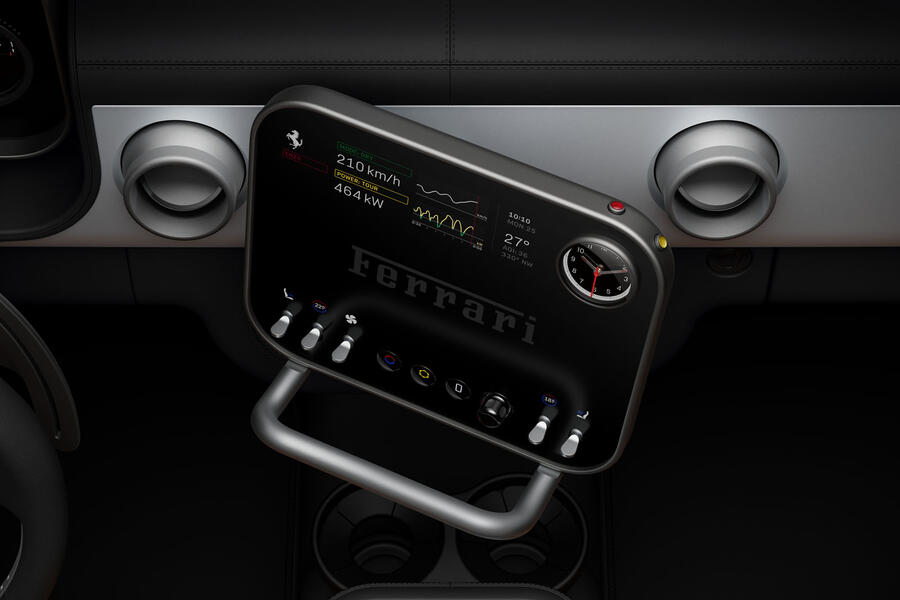
The cabin is awash with leather, anodised aluminium and strengthened glass – the latter used instead of plastic because it's a more overtly premium material, Ive said. There is no Alcantara anywhere in the cabin, which is actually rather refreshing, given that it's usually the main ingredient a car maker adds to make an interior feel more expensive and performance-focused.
Aside from how it looks and operates, just as interesting is how the cabin has been assembled. Marc Newson, co-founder of LoveFrom, said the design was as much influenced by Ferraris of the past as it was by luxury watches.
I could see (and feel) that from the sense of traditional craftsmanship, which shone through despite the emphasis on touch controls. Yes, there is a sense of over-engineering (the tiny clock has nine dials to operate it), but at this price you expect that.
I’m intrigued by how this will translate from our first hands-on to the production cars, due next year.
Before the event, there was a lot of hype around what the man who designed the iMac, iPhone, iPad and Apple Watch could do when given the keys (or, indeed, the job of crafting them) to Maranello’s most talked-about model in a generation. What he has delivered meets the hype. Bring on the exterior unveiling.