
Recent Updates
03/31/2026 12:00 AM
The tech secrets of Audi's smartest diesel engine yet
03/31/2026 12:00 AM
Car buyers in line for £829 in mis-sold finance compensation
03/31/2026 12:00 AM
Renault Twingo
03/31/2026 12:00 AM
Moves like Jag? Errr.. Yes, actually. New GT vs XJ and E-Type icons
03/30/2026 12:00 PM
Monstrous new 1064bhp Aston Martin Valhalla rated
03/30/2026 12:00 PM
Kia EV2
03/30/2026 12:00 AM
Reverse in, drive out: It's time to get parking right, for good
03/30/2026 12:00 AM
New Peaq driven: Skoda's new era starts with a three-row winner
03/29/2026 12:00 PM
Does a £4000 upgrade make the Polestar 4 a true super-saloon?
03/29/2026 12:00 PM
I paid £1500 to clean my 2019 Mini – it was worth every penny
EV, Hybrid, Hydrogen, Solar & more 21st century mobility!
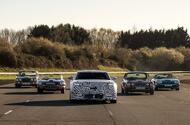 We put the new 1000bhp EV up against the most legendary classic Jaguars - with promising results
There may not seem much difference between the idea of starting a car brand from scratch and restarting one.
What would you do differently? Very little, the marketing cynic might say. Simply focus on the now, target the customer whose wallet you want to get into and deliver something they want. Alternatively, come up with a distinct vision or uniquely appealing notion that they don't yet realise they want. But what if that notion already exists - even if it's little more tangible than a feeling? Then grab it, if you can. Call it a head start, if it's useful; baggage to be discarded, if not. What you need to know first is: does it really exist at all? Or is it ephemeral? Has it been talked into existence?
That was precisely the question addressed five years ago by the team behind the all-electric Jaguar X900, Type 00, 4-Door GT - call it what you like. (We won't know the official model name until September.) It's why we have come to JLR's Gaydon proving ground today, not so much out of curiosity but for the chance of reaffirmation.
As it is called inside the building, the X900 is, by its nature, entirely novel technically, so it stood to inherit nothing material from any Jaguar before it. Any hint or feeling of 'Jaguarness' it might eventually evoke wouldn't turn up circumstantially, therefore. It would need to be deliberately and carefully designed, engineered, tuned, coded, woven and stamped into it.
That's why, in the very earliest stages of the car's development in 2021, the key engineers involved in the project convened a unique 'Spirit of Jaguar' testing exercise. Done in lieu of a preliminary competitor benchmarking exercise, this was all about defining a dynamic character. About deciding what a true Jaguar feels and drives like.
From its visual presence to its driving position. From the view out of the windscreen to the key characteristics of the first 50 yards at the wheel. From the tactile qualities of its primary controls to the defining fundamentals of its ride and handling.
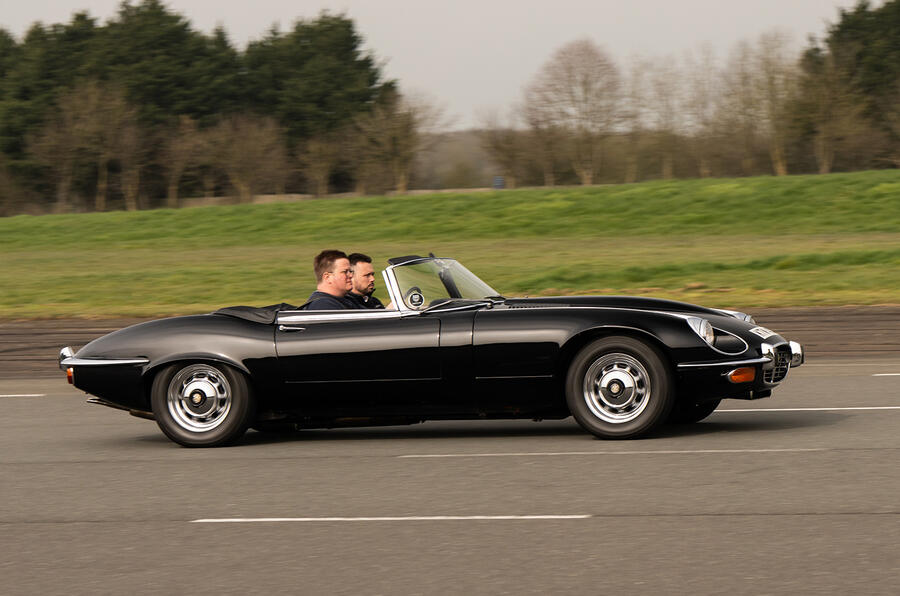
Back in 2021, a team led by chief engineer for the project Jon Darlington plundered a bunch of classic Jaguars from the Jaguar Daimler Heritage Trust. They did a lot of driving, note taking and note comparing, and set out to make the intangible, elusive, subjective and indefinite real enough to pin targets to. Today, we mark their homework. On the apron in front of me sit two E-Type roadsters: an early 3.8-litre Series 1 car with a flat floor and external bonnet latches and a much later V12-powered Series 3. They are Jaguar's sports car icons, almost as show-stopping today as an E-Type must have seemed in 1961.
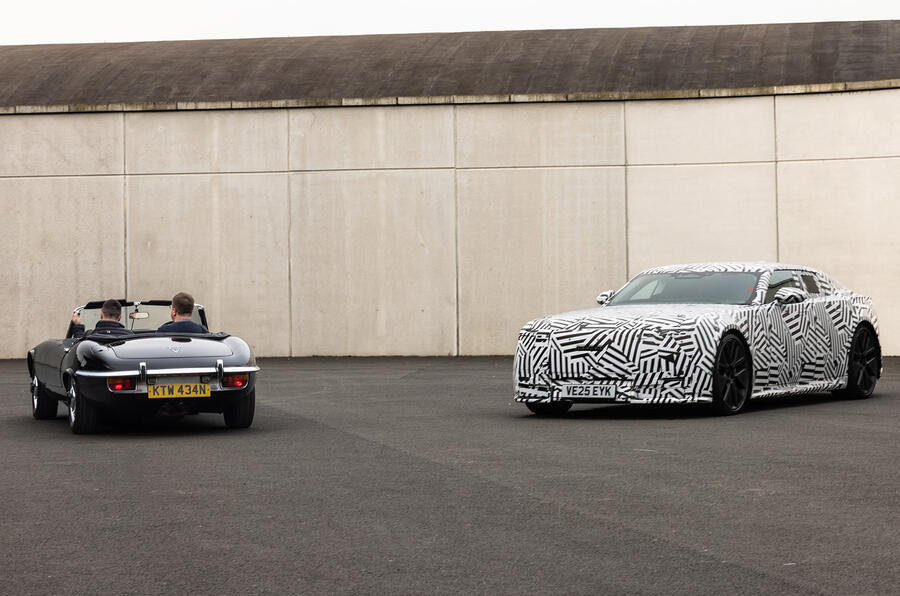
But next to them sit two early XJs - the last of Jaguar's saloons to be designed under the gaze of company founder Sir William Lyons. Proper grown-ups' Jags, you might say. There's a late Series 1, long-wheelbase XJ12 - and next to it a gorgeous, short-wheelbase Series 2 XJ-C V12 coupé. And there, beside them, sits the new kid on the block, still covered in camouflage, bedecked with emergency stop switches and the like, and surrounded by minders and engineers. All 1000-horsepower, three drive motors... and some 2.5 tonnes of it, I hear. Can it possibly fit in to the historical narrative here? Or is this just an exercise in the power of suggestion?
Where to start?
For me, it's E-Types first. Though I'm 6ft 3in and heavier than I should be, previous experience assures me that I'll fit behind the wheel okay. Close to 20 years ago, I tested the same Series 3 car out of the old Browns Lane showroom on one of what Jaguar used to call its 'Green Blood' days. (This company has always known how to wield its history.)
You understand in a heartbeat why Jaguar has ended up with such an unusual, long-bonnet design for its new EV, knowing that this is how the development thinking started. Nothing in motordom is quite like looking down the long, curving, hillocked prow of an E-Type. Having so much of the car ahead of you puts you right in the middle of the action.
You're exactly where you feel you should be: you're centrally located, with your backside about as low as it could be, and you feel like an integrated part of the automotive sculpture so neatly wrapped around you. The large diameter and thin wooden rim of the steering wheel gives you just enough space to stretch your thighs underneath. When you're in motion, the vents of the bonnet just an arm's length ahead seem to direct the hum of the engine directly at your head. It's all so intimate, immediate, vivid.
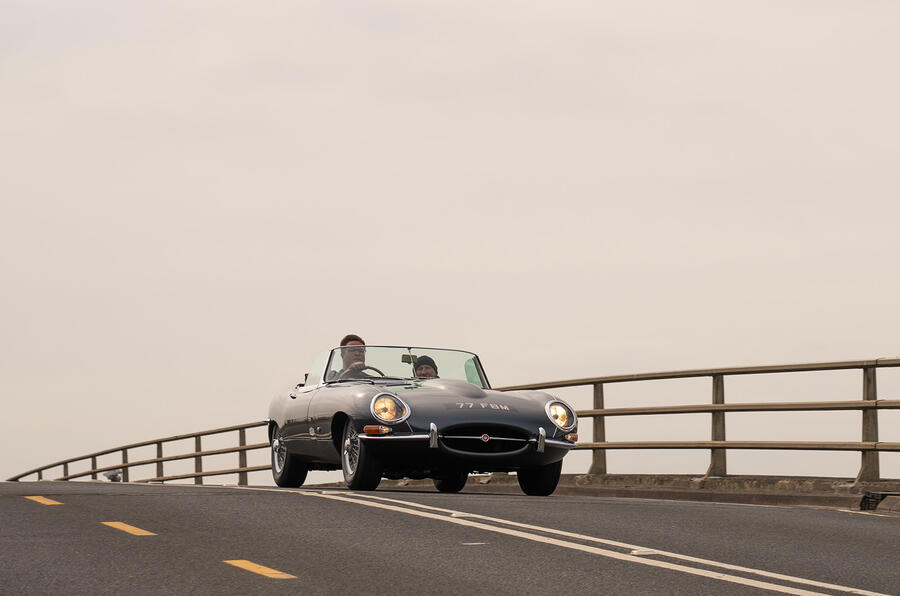
I hadn't realised quite how different the Series 1 and Series 3 E-Types would feel. The S1's driving environment is tighter. The flat floor restricts usable leg room a bit, pushing your knees up into the steering orbit and making pedal access tighter. The Moss four-speed manual 'box is a challenge: first is the only gear that's unsynchronised but all the others act like they could be too. Still, the straight six is wonderfully smooth, sweet-revving and well mannered, and the car feels light on its wheels and nimble.
The later 12-cylinder longer-wheelbase E-Type, by contrast, is a more natural cruiser. Jaguar made fewer of them than either the S1 or S2, but I wonder if they might have had a more lasting effect on the company's dynamic DNA, because this is, without a doubt, the iconic sports car turned GT.
It's notably lighter and easier to manage through its pedals, gearbox and steering - and so smooth and torquey, thanks to its 12 cylinders, that you can simply pick a gear and stick with it, if you like. It's an unexpectedly rich and luxurious experience.
Speaking of which, the XJs now await. They are from the S3 E-Type's 1970s era and speak a similar language - only more lavishly, mellifluously and effortlessly still. At its launch in 1972, the XJ12 was the only mass-produced 12-cylinder saloon in the world. The Lotus Carlton of its day. Well, it doesn't have bucket seats or launch control.
But there's a sense of cocooning intimacy about its driving position, with the relatively close windscreen and pillars, and a big, elegant, close-set steering wheel. Importantly, it doesn't feel huge, inside or out. Snick down to 'D' on the auto gearbox's drive selector lever and you almost hover your way forwards.
The V12 does accessible torque in a woofly, velvety, super-inviting fashion. The way it makes rapidly building forward impetus without apparently needing lots of revs or a big stab of throttle, especially at roll-on motorway pace, somehow makes it seem urgent and unhurried at the same time. It's this, surely, that Jaguar is referring to when it talks about its trademark 'power in reserve'.
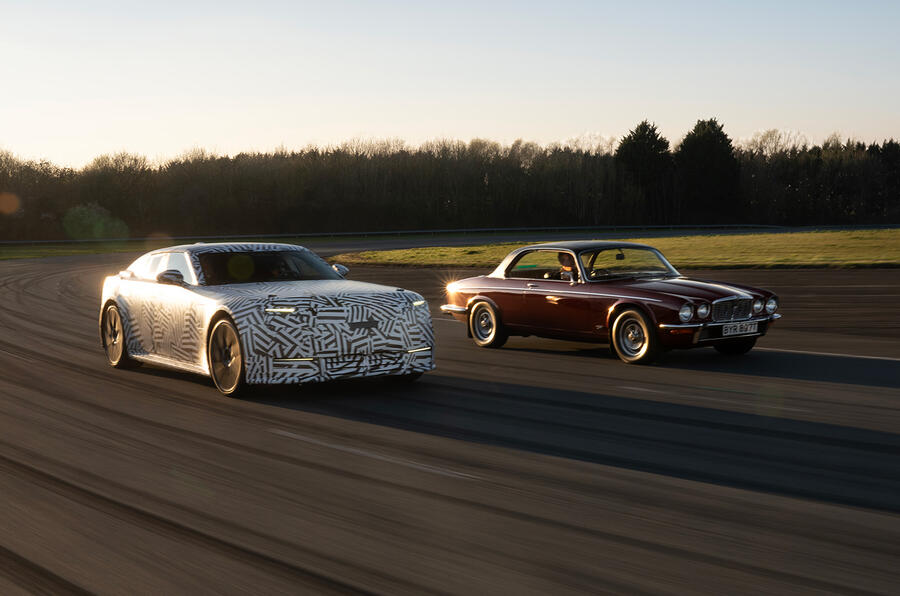
On ride and handling, a similar sense of effortless poise characterises the way both XJs behave. There's a suppleness, fluency and absorbency to the ride of both that seems to let the axles work independently of the body, like the imaginary swan's submerged legs. You expect that bad cornering manners must come as a consequence, but they don't. Both the XJ and XJ-C roll a bit as they turn in, yet they do it so intuitively, in perfect harmony with the rate of your opposing steering input. Then, they settle on their loaded wheels, quickly come to heel on your preferred line, take a gently positive posture and can be driven to the exit with plenty of poise and pace.
The XJ-C has the better, keener handling of the two, its shorter wheelbase and sense of leanness combining with its abiding comfort and refinement to really striking effect. Neither it nor the XJ feels spine-tinglingly potent, as something with a more operatic Italian V12 might. But the way they make speed come so easily, without breaking a sweat, is spellbinding all the same.
Time to drive the X900
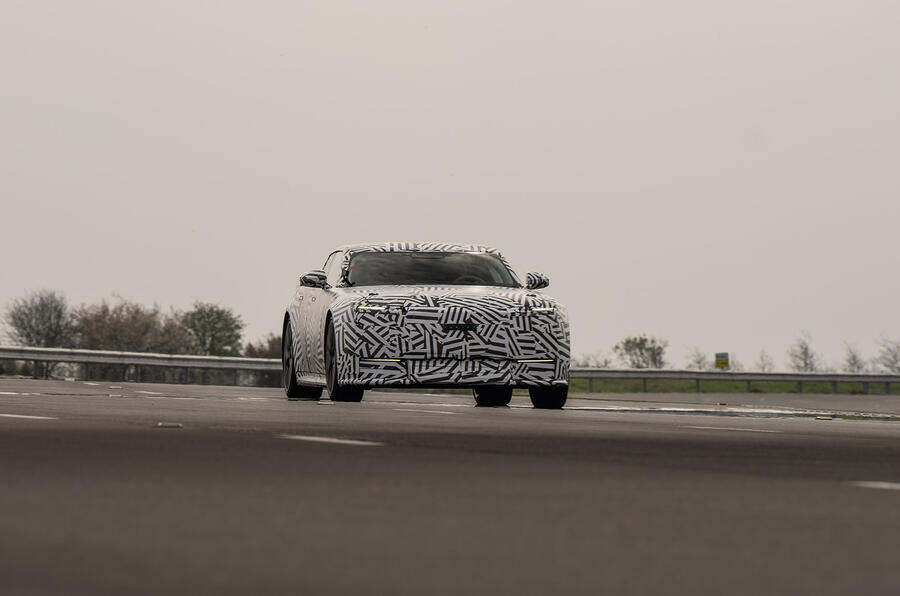
Follow that, then, new boy. I slide into the X900, having been delighted by its antecedents and a little circumspect about its chances of picking up the dynamic thread. And yet it sets about its task straight away. This is a 5.2m-long car - a good foot longer than even the XJ12. But there is a surprising sense of low-rising intimacy about its cabin.
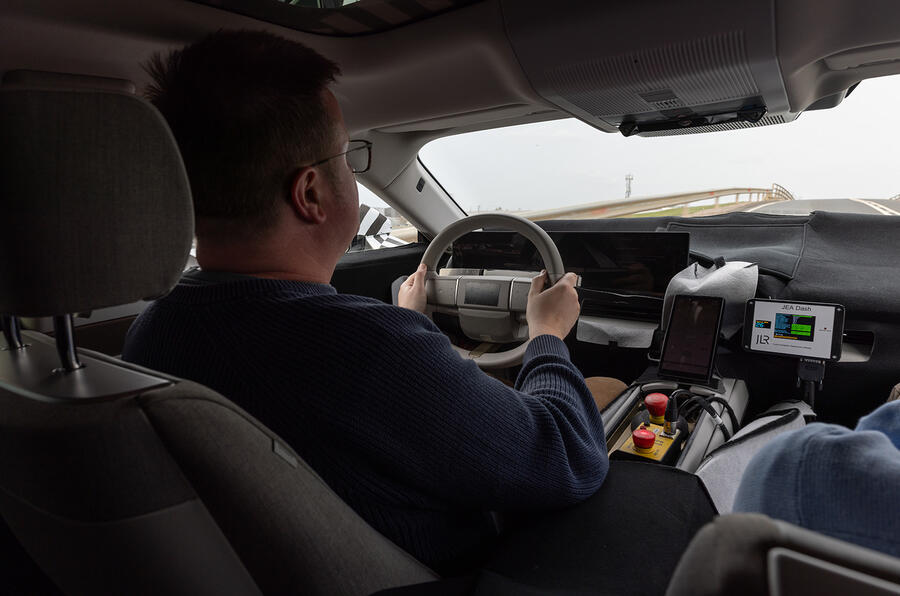
A great many of this car's key dynamic strengths flow from its stance and shape - its outright length and lowness of profile, and its clever ability to sit you right on the yaw centre of the chassis, with your backside just 60mm above the car's super-low centre of gravity. (That has been achieved by the way Jaguar has split its battery pack and both lowered and angled backwards its front seats.)
The dashboard is slim and compact - the parts of it you can see between the temporary cloth covers, that is - and the centre console skeletal and high. The roof and side windows come close to your head, so there's no wasted head room for this 6ft 3in driver. The pedals seem quite high-set, in an economical footwell. And so you wait, recumbent and snug, quite close to the windscreen in front of you, staring down that long plateau of a bonnet - before flicking the column-mounted drive selector lever downwards for drive.
And... squeeze. Noiselessly, the X900 eases itself on. It doesn't spring into motion. There's just a hint of cushioned progressiveness to the accelerator response as you 'tip in', which feels very Jaguar indeed. The X900's step-off is quite gentle, but what happens next is much more spectacular. The proving ground access roads out to Gaydon's High Speed Emissions circuit wind down some lanes and around a couple of traffic islands, where the car's steering shows lovely weight and really faithful, consistent and distinguishing feel, even at low speed. This isn't just another luxury coupé - and the way it steers tells you almost immediately.
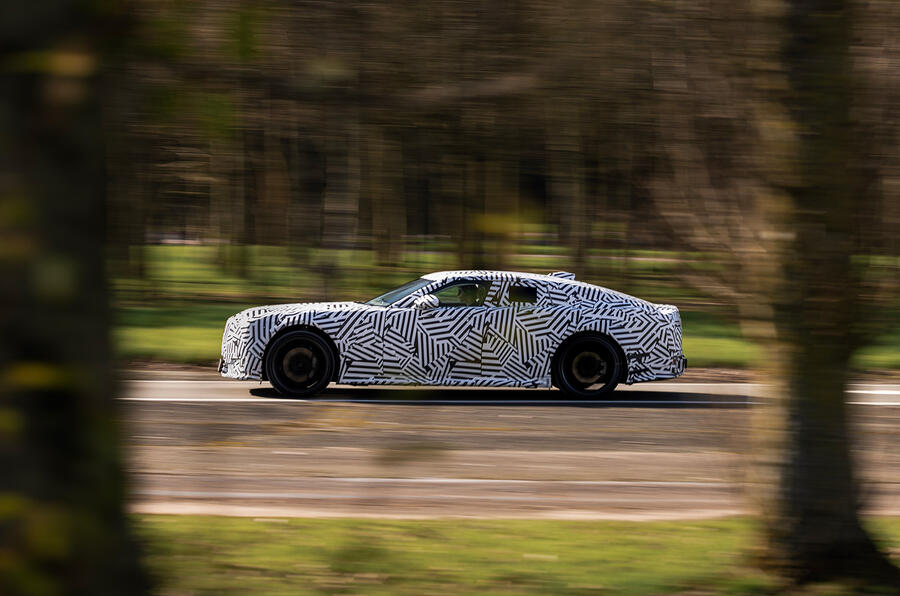
Although our prototype is on 23in wheels and all-season tyres, it rides with a level of isolation, suppleness and fluency that really does feel supremely good for a modern luxury GT. It's softer and more yielding than Porsche's actively suspended Panamera and Taycan, yet the car's sheer length and lowness, and its low concentration of weight, seem to prevent it from pitching and tossing around at all. It's as if the car's fundamental design had Jaguar-brand ride comfort in mind from the off.
And then, out on Gaydon's multi-lane test track - lordy, it feels fast. That's what a morning of driving 1970s cars will do for your perceptions, I suppose. But it's actually the way in which the X900 transitions from a totally serene cruise to pick up speed with titanic urgency that really lives with you. Even above 70mph, it still accelerates like a 1000-horsepower car.
There's very little sense of ebbing potency from the electric motors at fast motorway speeds. As you dip the throttle, you feel the tail squat slightly and watch the long bonnet rise towards the horizon as the longitudinal forces build. That's just a hint of theatre, to announce the rocketship thrust that begins to hurl you towards 100mph and beyond, at once urgently and effortlessly.
That sounds familiar - and it feels it. Is this a Jaguar? To its bones, I would say. From sitting in it, to drinking in its tactility, comfort and isolation, to then fully uncorking it and beginning to experience the remarkable breadth of dynamic character that it has. You'd say it was a Jaguar like absolutely no other. But a Jaguar all right.