
Recent Updates
06/04/2026 12:00 PM
"Product is king": Stellantis pivots back to volume in bold growth plan
06/04/2026 12:00 PM
5000 miles in a 2005 BMW 3 Series: Can you daily drive a modern classic?
06/04/2026 12:00 PM
First look at seven-seat Skoda Peaq ahead of 23 June reveal
06/04/2026 12:00 PM
Fiesta, Bronco, Puma and more: Ford's European comeback detailed
06/04/2026 12:00 AM
Tsars and their cars: When world leaders first took the wheel
06/03/2026 12:00 PM
Miles better? The best EV is the one you can't always have
06/03/2026 12:00 PM
Fiat Grizzly SUV unwrapped as Grande Panda's bigger brother
06/03/2026 12:00 AM
New Rolls-Royce Spectre boosts power and claims 390-mile range
06/03/2026 12:00 AM
Bentley Flying Spur gets fresh look and 671bhp S variant
06/03/2026 12:00 AM
New BMW M2 gains four-wheel-drive option for £74k
EV, Hybrid, Hydrogen, Solar & more 21st century mobility!

Autocar renders show what the new 'Fiesta' and European-market Bronco could look likeElectric hatch will be joined by new small crossovers and an SUV - all with 'rally-led' dynamics
Ford will launch five new cars over the next four years in the UK and mainland Europe - including a new electric Fiesta successor - and the firm's Europe passenger car chief has vowed that their driving dynamics will live up to Ford's rich heritage.
The new models will all sit in the B-and C-segments. They comprise a Bronco-inspired 'multi-energy SUV; a small electric hatchback that could revive the Fiesta name; a crossover that will be built on a Renault platform; and two further plug-in hybrid crossovers that are tipped to be produced in collaboration with Geely.
Ford dominated the UK sales charts for decades with models such as the Fiesta and Focus. But its market share has slumped in recent years, in part due to the decision to axe both of those models and convert its Cologne factory to produce the Explorer and Capri electric SUVs, which are built on a Volkswagen Group platform.
However, Ford has insisted that it remains committed to the European car market and the firm's Europe chief, Jim Baumbick, has declared: "We don't just want to compete. We're here to play to win."
Five new Fords: what's coming
Ford's revamped European strategy includes a major focus on the most popular B-and C-segments, which account for around 80% of sales in the region. All five new models will be between 4.0m and 4.65m long.
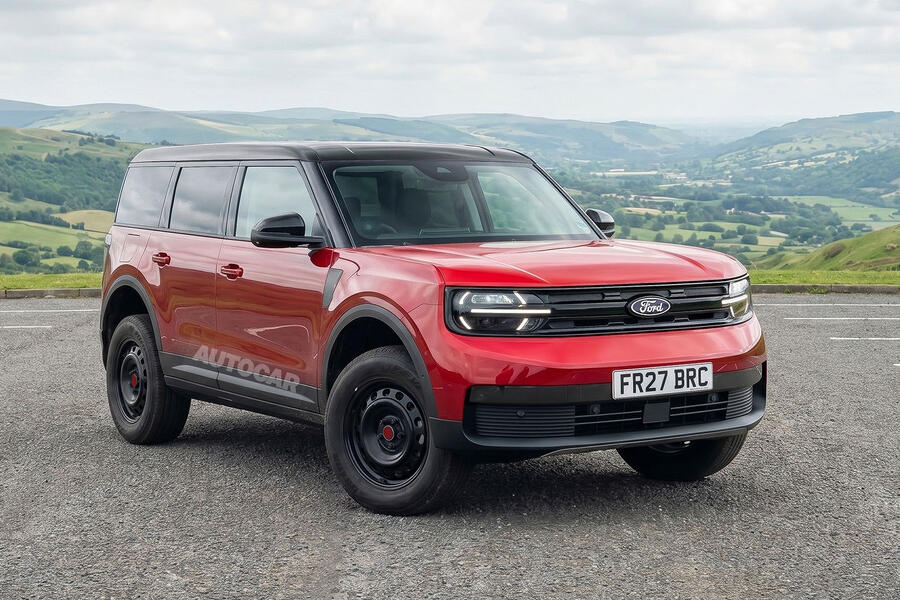
The firm's new-look European line-up will be led by a compact SUV that, as first revealed by Autocar, will be part of the global Bronco family, with styling modelled on the hugely successful US-market off-roader.
The new model will be produced from 2028 onwards at Ford's Valencia plant alongside the existing Kuga SUV, with which it is expected to share Ford's C2 platform. The move is part of a plan by Ford, previously outlined to Autocar by company boss Jim Farley, to turn the Bronco from a single off-road model into a global brand.
Baumbick said the new European Bronco would be true to the US model's heritage but would also be "produced in Europe and sized for the European market", adding that "it will be a high-volume model".
The electric hatchback and crossover, also due in 2028, will be produced for Ford by Renault as part of a previously announced partnership between the two firms. They will sit on Renault's RGMP Small platform (formerly Ampr Small), as used by the Renault 5 and Nissan Micra.
However, Ford insists they will be bespoke propositions, with their driving dynamics and rally-inspired styling dictated by Ford.
Baumbick said: "To a customer, it's the things that [you] see, touch and feel that need to be different to make it authentically a Ford.
"Our job is to work with partners to assess the capability, and the bandwidth of the [Renault] platform gives us the variables to inject and differentiate the driving experience for a Ford, so we're not just buying a list of parts.
"This is not a cafeteria style of development. This is making a strategic choice on a world-class set of platforms and partners that then gives us the tools in the toolkit to do what our development teams do best, to use that toolkit to create a different experience. I assure you that you will see a completely different vehicle."
Baumbick declined to comment on whether the new hatchback would revive the Fiesta name and sources at the firm have insisted that a final decision has yet to be made. But he said that "certainly the history and the heritage" of some of Ford's classic model names "is not lost on me".
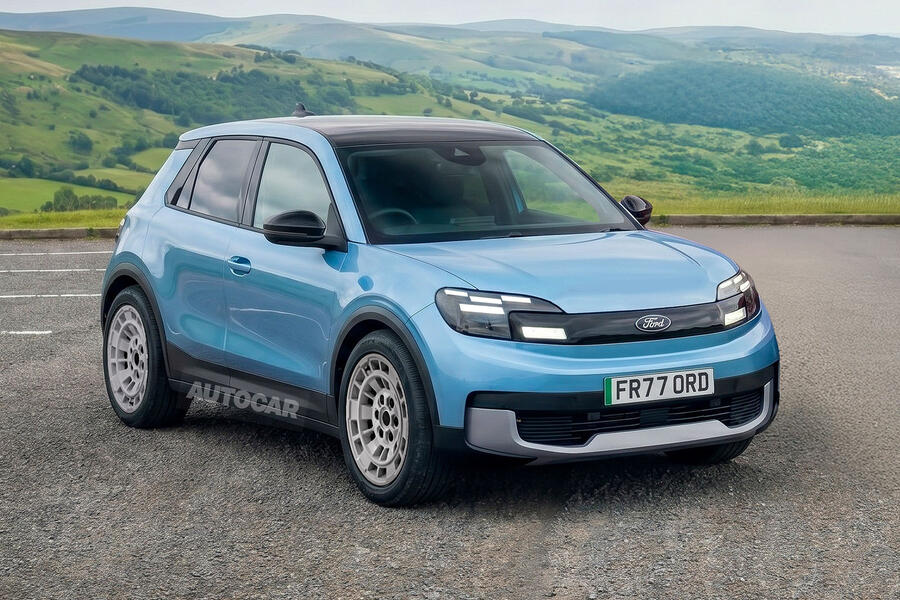
Ford will also launch what it describes as two "rally-bred crossover models" that will use a multi-energy platform and arrive before the end of 2029. While Baumbick refused to be drawn, it is expected that these will be jointly developed with Chinese giant Geely.
Ford is believed to be in negotiations with Geely to sell part of its Spanish plant to the firm, which owns Volvo and Polestar, and potentially collaborate on platforms.
Baumbick highlighted the importance of strategic partnerships to Ford in giving it the scale and volume required to compete in the European market-but he hinted it could also include Ford producing cars for other firms on its platforms.
The current Puma was launched in 2019 and is offered in petrol and electric forms. Christian Weingärtner, Ford's Europe passenger vehicle boss, told Autocar that the model was "up for renewal" and Ford was considering its future. But he insisted those future plans were "not directly related" to the similarly sized new cars being launched in the coming years.
Ford to focus on driving dynamics
All five of the new vehicles are claimed by Ford to be 'rally-bred', drawing on its long history of off-road competition. The focus on its off-road heritage reflects a similar strategy Ford has taken with its US line-up in recent years.
Based on the success of the revived Bronco, its more road-biased Bronco Sport sibling and Raptor variants of its pick-ups, the firm has focused on becoming "the Porsche of off-road".
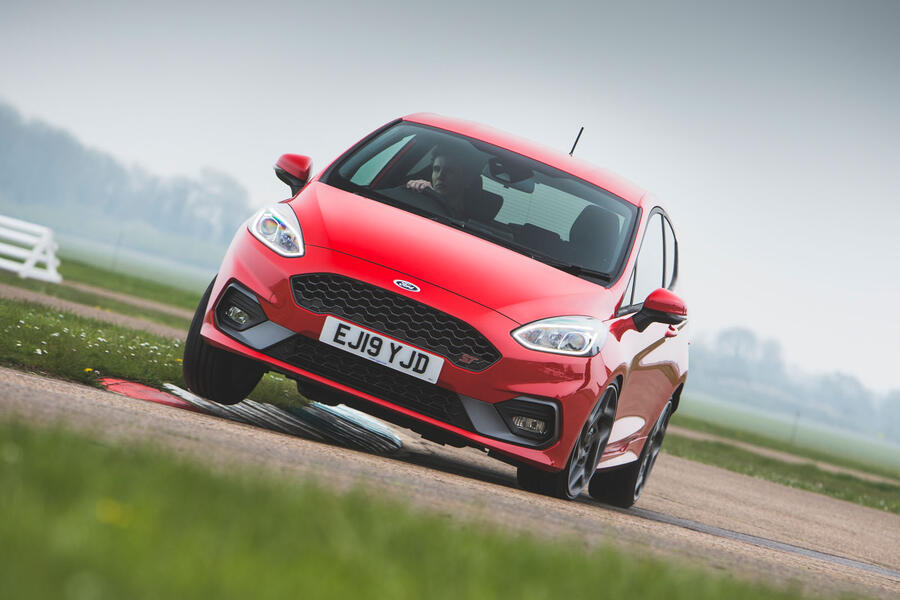
Ford will use its rallying heritage to follow a similar path in Europe, believing that this approach will reinforce its history of producing cars with strong driving dynamics. The company's aim is to ensure that Fords offer superior driving dynamics to rivals, something that the firm became particularly known for in Europe with models such as the Fiesta and Focus, which were honed by dynamics guru Richard Parry-Jones.
Weingärtner told Autocar: "We need to combine the heritage with the future. If you look at the market today, what sets us apart is that we've been here for more than 100 years."
He added that this needed to be reflected in the dynamics of every vehicle Ford produces.
He said: "If the only reason to buy a car is price, then heritage matters not at all-but there are more reasons to buy a car, and this emotional connection people have with Ford matters.
"But heritage alone doesn't sell vehicles: it needs to be a good proposition, and having a sporty car is what people like to drive. We're convinced that, say, having a lot of touchscreens in a car doesn't necessarily make it the best car. Driving dynamics is something Ford has traditionally been really good at, and we'll double down on this."
This doesn't mean that all new Fords will be hardcore rally-infused models, but rather that their handling traits will emphasise fun driving. Weingärtner insisted that Ford would be able to accomplish that on platforms developed by a different company.
"We can't just have that as a marketing slogan. It needs to be injected into the core technical elements of the vehicle," said Weingärtner. "That's what we're going to do with the dampers, suspension and all those kinds of things [so it] will be true to Ford.
"The charging system of an EV platform might not be ours, but that has nothing to do with how a vehicle drives. The driving dynamics, all the things that matter, all the tunable elements and the design that will all be true to Ford."
Wider role for van division
Ford Pro, the firm's commercial vehicle arm, has long been the main profit driver of its European operations and in the future will push further into developing software-based services enabled by more advanced EVs. But it will expand its product line-up too, including the new Transit City electric van that has been developed with Chinese firm JMC.
Ford will also launch a new Super Duty variant of the Ranger pick-up, which is intended for use by emergency services and the military as well as in heavy-duty industries such as forestry and mining. It can tow up to 4.5 tonnes, has a payload of close to 2.0 tonnes and features beefed-up suspension and extra underbody protection.
Ford has used the Super Duty badge in the US since 1999 for a range of extreme commercial variants of its F-Series pick-ups.