The JCB Hydromax shows the publicity gains of chasing a land speed record – and manufacturers should take note
Getting to spend a few days on the Bonneville Salt Flats in Utah watching Andy Green and the JCB Hydromax team set a new 406.320mph land speed record for a hydrogen-powered vehicle was a real privilege – and it provided plenty of takeaways.
First, land speed records are incredibly cool, one of the few areas of motorsport that isn’t overburdened by regulations and still encourages boundary pushing. Second, Bonneville is an incredible place, simultaneously flat, featureless and other-worldly yet also totally alive and constantly changing. And third, watching land speed records live is amazing but isn’t the easiest of spectating experiences because the car is going straight and you have to stand reaallllly far away.Â
Another thought occurred to me as I watched JCB set this piece of hydrogen history: given the increasing focus on electrification, isn’t it bizarre that the fastest zero-emission car – in terms of tailpipe emissions, at least – in history is powered not by electricity but by a hydrogen-combustion machine built by an engineering firm and powered by two converted digger engines?
Seriously, why aren’t EV manufacturers queueing up with their own land speed record challengers? While JCB has just pushed the hydrogen mark past 400mph, the current official FIA land speed record for a battery-electric vehicle is 341.264mph, set by the Venturi Buckeye Bullet 3 way back in 2016. That machine offered close to 3000bhp from four motors (one powering each wheel) and eight lithium ion battery packs (a total capacity was never disclosed).
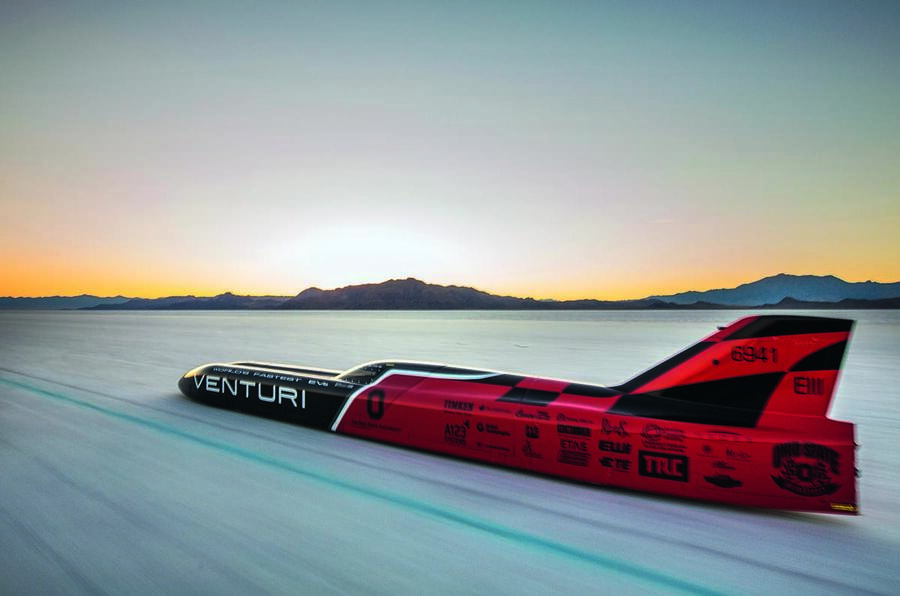
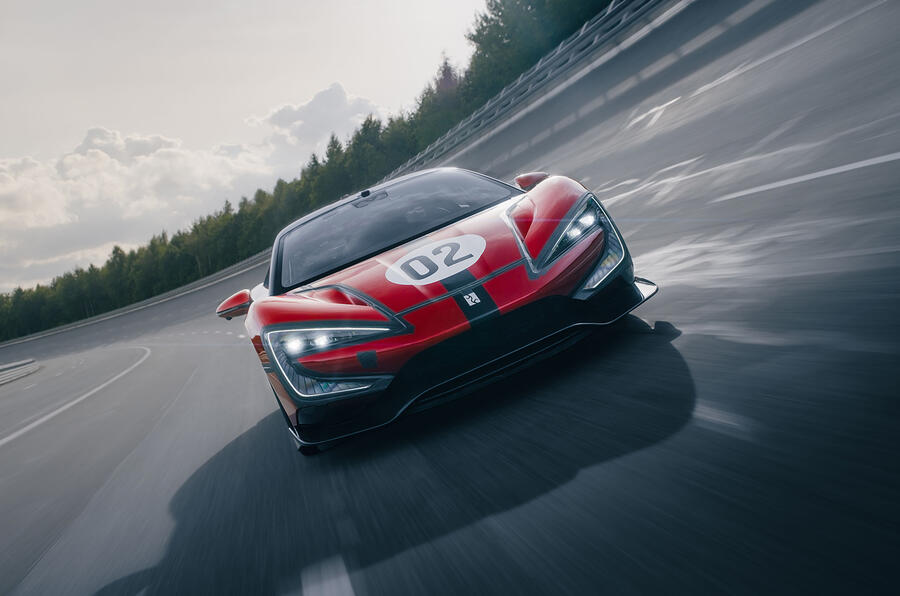
Given the advances in electric technology – and the number of manufacturers pushing development of it – in the past 10 years, that decade-old record, set by an unusual collaboration between oddball Monaco-based manufacturer Venturi (now focusing on lunar rovers, which seems a very limited market) and Ohio State University, feels like seriously low-hanging fruit for a committed manufacturer looking to showcase its mastery of electric powertrain technology. It’s not that much quicker than the 309mph the production-based Yangwang U9 Xtreme has reached.
Clearly, an electric land speed record car faces some challenges: it will be heavy, because it will need a lot of batteries. The Buckeye Bullet 3 weighed 3.6 tonnes, with the batteries accounting for 1.6 tonnes of that. But with aerodynamic freedom and more efficient motors, that can surely be overcome. After all, chasing aerodynamic efficiency to improve range is a key focus of many EV manufacturers.Â
Another challenge is that the FIA rules dictate vehicles must make two runs within 60 minutes on a measured course, with the average speed of the two runs taken for the record. That turnaround is challenging for most land speed record teams, but particularly problematic if you have to recharge an EV’s batteries. Predictably, there aren’t any chargers on the Bonneville Salt Flats (although the Pilot Flying J petrol station in nearby Wendover has a shiny bank of 350kW chargers).
But that is surely an opportunity for a manufacturer to showcase technology to overcome such challenges. BYD is rightly proud of its superfast Flash charging, and with a big enough portable battery store, it could surely top up a car in time. Nio could use a record challenger to highlight its battery-swapping tech. Or maybe a firm such as Mercedes-Benz could showcase its efficient motors to prove you can make do with smaller batteries.
Basically an electric land speed record bid could be used to develop and showcase technology that is relevant to electric road cars. But let’s be frank: that’s not the main reason for doing it. JCB’s engineers were pretty honest that, despite using two heavily upgraded hydrogen-combustion production engines, it won’t learn much from the Hydromax that it can apply to future alternatively fuelled diggers.
But that doesn’t really matter, because it was a fabulous publicity stunt that has received extensive coverage from both specialist and national media outlets. Even if it doesn’t make JCB’s diggers or hydrogen engines better, Hydromax has drawn attention to the British company – and often maligned, still controversial hydrogen technology.
You can, of course, argue that land speed records don’t really matter: going fast in a straight line on a salt flat is a very specific skill. And you can argue that it won’t improve electric technology: after all, plenty of EVs can go very fast but fall short when it comes to handling in corners.
But it surely wouldn’t take much for a committed manufacturer to make an electric slipstreamer capable of comfortably topping 341mph and reaping the publicity benefits. The electric record is there for the taking: why aren’t manufacturers racing to claim it?