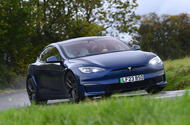
Factory to be retooled for robots; 1020bhp Model S Plaid remains the fastest-accelerating car we've tested
Production of Tesla’s first two mainstream models, the Model S saloon and Model X SUV, will end this summer.Â
CEO Elon Musk said “it’s time†to discontinue the cars, the Model S having been launched back in 2012.
This virtually halves the Tesla line-up, leaving only the smaller Model 3 saloon, Model Y SUV and Cybertruck pick-up on sale.
The long-delayed Roadster is scheduled to be shown in production specification at last on 1 April this year, before the fully autonomous Cybercab – with no steering wheel or pedals – arrives in 2027.
The Model S and Model X factory in Fremont, California, will be converted to produce Optimus robots as Musk diversifies the business through heavy investment into artificial intelligence and automation.
Although the Model S and Model X became technological flagships for Tesla, ultimately headlined by 1020bhp Plaid variants, they accounted for only a small slice of its annual sales. Last year, the company delivered less than 50,000 examples of the pair combined, compared with nearly 1.6 million Model 3s and Model Ys.Â
The Model S was a game-changer when it first arrived, with the Performance variant offering 416bhp and 300 miles of range (on the outdated NEDC test cycle) for £68,700 (£96,000 in today’s money).
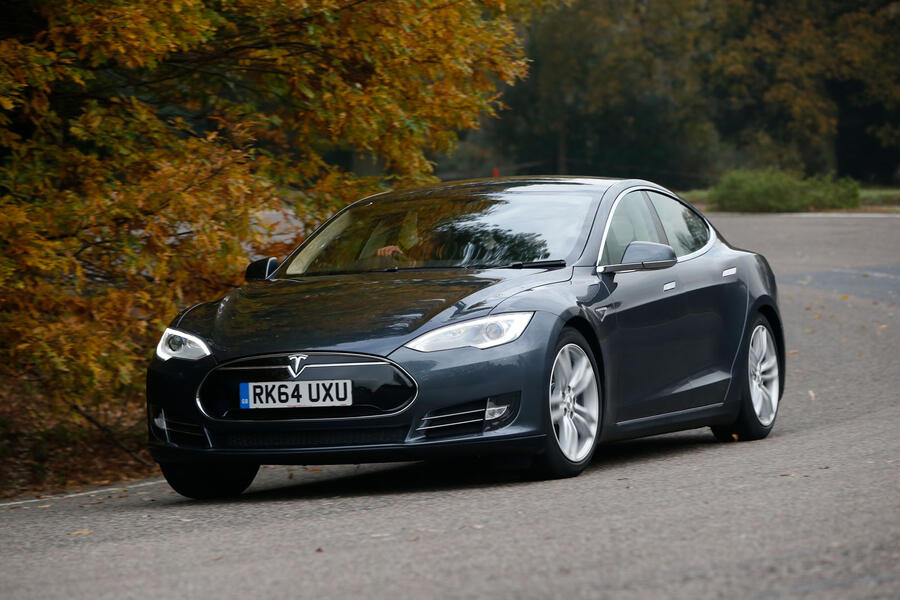
Autocar’s 2013 road test found it to be the best car in its class. A 4.5-star rating put it ahead of the contemporary Porsche Panamera S E-Hybrid, as well as hybrid versions of the BMW 7 Series, Mercedes-Benz S-Class and Audi A8.
“Of the half-dozen electric cars that we’ve road tested during the re-emergence of the EV, only two have managed to complete our full set of track tests, photo shoots and road assessments without the assistance of a trailer,†read our verdict.Â
We continued: “Finally, it seems, here’s a company that understands the workings of the automotive consumer. Small cars are already cheap and use very little fuel. So making an electric one of those work for everybody is going to be a very hard task, as their sales, or lack of, demonstrate.Â
“With a luxury car, though, Tesla has found it easier to gain price and performance parity with its rivals. It has been able to offer a vast range by fitting vast batteries and has found a customer base more open to the new technology and with more resources at their work and home to counter the drawbacks. Practical, refined and, above all, desirable, the Model S is a triumph.â€
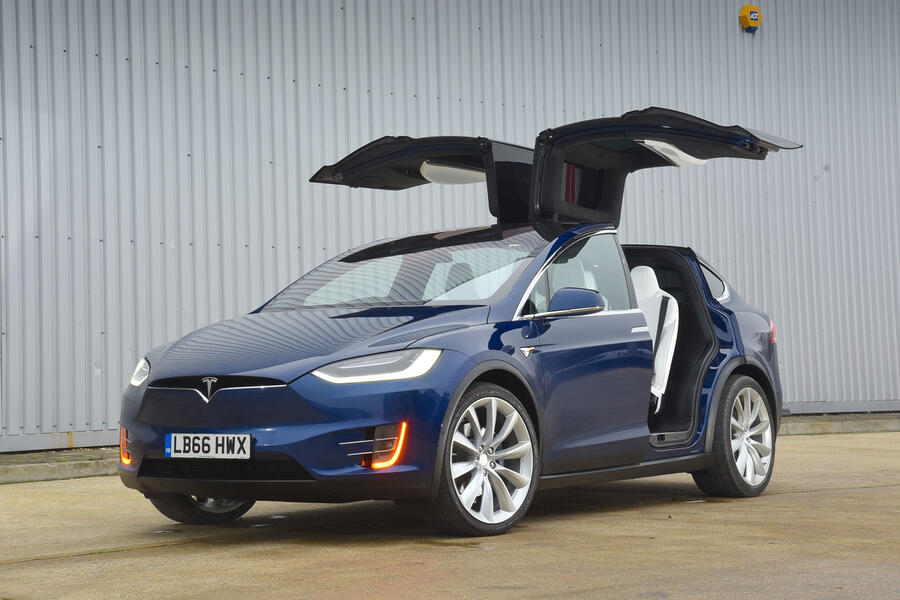
The Model X was revealed in 2015 with unique ‘falcon-wing’ doors and the option of seven seats. Although clearly a derivative of the Model S and not a class-leader in the same sense as the Model S (with a firm ride and rough build quality among its main deficiencies), it still ranked ahead of many mainstream alternatives.Â
“It is necessary once again – even with qualifications – to acknowledge that there is nothing else like the Model X,†read our road test verdict.
The Model S Plaid arrived in 2021, with Musk claiming it to be the “quickest production car ever made of any kindâ€. Indeed, it could complete the 0-60mph sprint in just 1.99sec – although this claim involved a small ‘roll-out’, meaning the car was already moving when timing began.
Autocar’s stopwatch timed it at 2.4sec, which, while not as impressive as claimed, still made it the fastest-accelerating car we had ever tested by August 2023, beating even the Bugatti Veyron Supersport.
It remains the quickest car to 60mph yet put through a full Autocar road test, despite stiff competition from the electric Lotus Evija (2.8sec) and hybrid Lamborghini Revuelto (2.5sec) supercars.