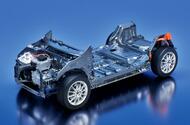
Batteries made from lithium-sulphur could boost range, cut weight and cost less
Claims of revolutionary breakthroughs in EV battery technology come and go on a frequent basis.
But it looks as though Stellantis has turned a corner with lithium-sulphur technology, which promises to halve the cost per kWh, improve rapid-charging speed by 50% and weigh significantly less. Stellantis says the new batteries are “targeted†to power its vehicles by 2030.
The technology is being developed in collaboration with Texas-based Zeta Energy, which was founded to develop lithium-sulphur batteries in 2014 and has been working on them ever since.
The key thing with the new battery is the amount of energy it can store for its weight, known as the gravimetric energy density.
Energy density figures for lithium ion batteries vary depending on the type of battery and the ingredients used in them. The choice of ingredients also has a bearing on its environmental credentials and sustainability.
Two of the most common types of battery today are lithium-iron-phosphate and nickel-manganese-cobalt.
The advantage of an NMC battery is higher energy density while LFP batteries are considered to be intrinsically safer and longer-lasting and use cheaper, less environmentally harmful elements. Lithium-sulphur promises the best of both worlds and requires no nickel, manganese, cobalt or graphite.
The main differences lie in the chemistry of the cathode (positive electrode) and anode (negative electrode)Â in each cell. All existing lithium ion EV batteries have graphite-based anodes, with cathodes consisting of the materials that give each different type its name.
The Zeta Energy cathode is based on sulphurised carbon materials. The company says it is stable and gives better performance than existing metal-based cathodes.
The other major part is the anode. One of the earliest prototype lithium batteries had a lithium metal anode that in theory allows ultra-fast charging and high energy density.
One of the problems is that lithium metal anodes grow dendrites, which are like tentacles that reach out towards the cathode. Eventually these deadly structures penetrate the separator membrane between the two electrodes, causing a short circuit and destroying the battery.
The lithium-sulphur battery has metallic anodes but they consist of vertically aligned carbon nanotubes (imagine microscopic carbon drinking straws standing on end and packed with lithium ions), which don’t produce dendrites.
Given that a battery pack can be 40% of the cost of an EV, the new battery has the potential to make EVs substantially cheaper.
Meanwhile, Stellantis has just announced a £3.4 billion joint venture with CATL to build an LFP factory in Zaragoza, Spain.
The new plant will help underpin its existing “dual chemistry†approach of using both LFP and NMC batteries in its cars.