The arrival of an infant means I must find efficient, family-friendly transport – but it must also have soul
I'm on the hunt for new wheels: something nimble and efficient but with a bit of soul. It takes me back 10 years, when I was on a similar quest.
Commuting from London to Northampton in my Mk1 Focus RS, the drudgery of the M1 did not sit well with the fuel bills. The eventual solution was an original Honda Insight; a safer bet would have been to lease a Volkswagen Up, but the little aluminium two-seater from Tochigi, where it was built alongside the NSX, was irresistibly more interesting.
Once I'd learned how to screw maximum efficiency from its three-cylinder powertrain, it cost me just £3.20 each way - less than a coffee shop cappuccino. I shed a tear two years ago when I sold it, in fine fettle despite 200,000 miles on the clock, not because I'm a skinflint but because it was such a singularly lovable and wholly undemanding machine.
The brief this time round is only slightly different in that I need rear seats, courtesy of a screaming infant crash-landing into my life. And it needs to be friendly and straightforward enough to drive for my wife (her words). There exist a great many sensible and worthy options, but they are, in the main, unspeakably drab. I therefore find myself drawn to the BMW i3.
I have always had something of a soft spot for BMW's electric curtain-raiser, whose name is today applied to a more capable but more ordinary machine. When I was an editorial underling I was sent to Munich to report on the i3's development story, and I found myself sitting next to design chief Adrian van Hooydonk and a few of the engineers one evening, eating schnitzel in a cosy backstreet restaurant.
What struck me was how utterly committed they were to this vision of an optimised city car, how they had a raw excitement for the idea, palpably more so than with the supercar-styled i8. Their energy was tempered only by the certain knowledge that the production-spec i3 wouldn't get the McLaren Senna-style glass doors - a wonderful touch for judging kerbs when parking - or the front bench seat that was devised so you could shuffle across with ease if your parking spot slammed your offside tight against a wall.
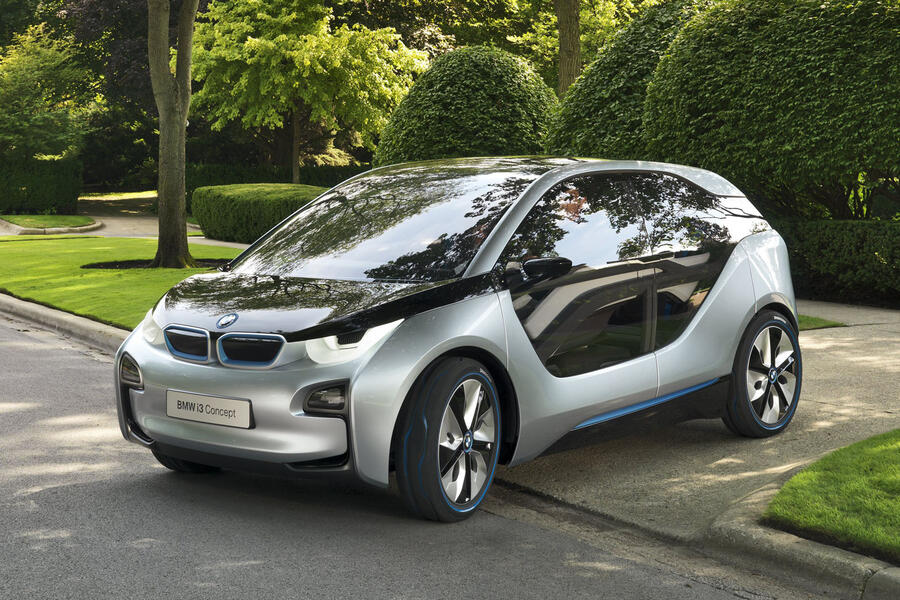
These were the only meaningful punches BMW pulled with the showroom model, which today still feels totally contemporary.
The excitement in Munich, back in 2012, stemmed from the fact that the car's creators had been let off the leash in a way that is unusual and, it could be argued, hasn't happened since. The most radical approach since the i3 is probably Renault's unfolding reinvention of its classics - the new 5 looks superb and the Twingo is just sensational. But those cars don't have a turning circle almost the match of a black cab, or a carbonfibre tub strong enough to permit coach doors. Bluntly, they do nothing of engineering interest, either real or conceptual.
As well as the intellectual buy-in of the people tasked with developing the i3, there was also an element of broader philanthropic purpose they surely felt. In the US, the Washington state facility that produced carbonfibre for the tub operated purely on local hydroelectric power, while juice for the Leipzig production plant, where each car spent only 20 hours in build, was generated by wind on-site.
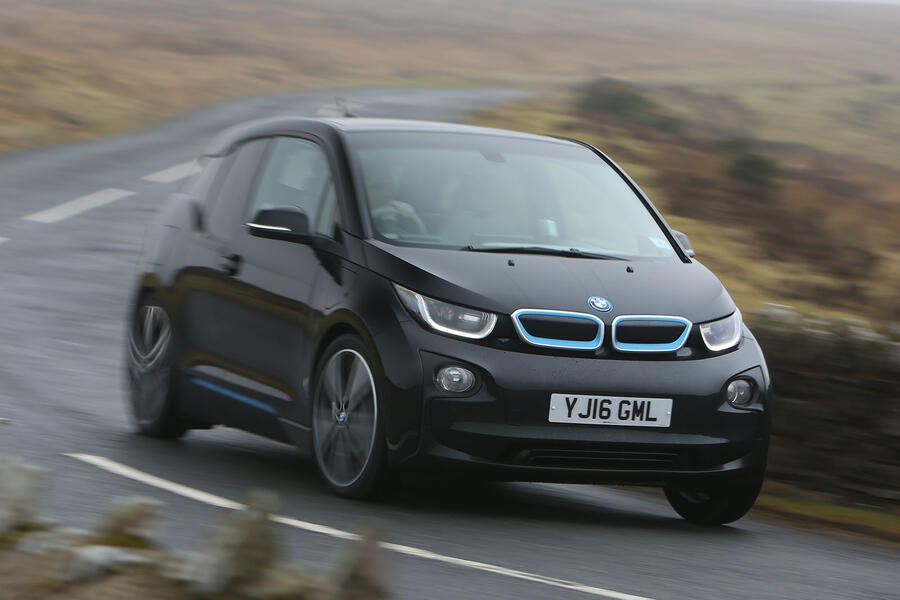
The exterior panels were deliberately numerous, such that city-speed dings meant only localised repairs would be needed. BMW reckoned accident repair costs would be 40% lower than for conventional cars such as the 1 Series, with benefits not only to owners' wallets but also in terms of the reduction of material wastage. Sell several hundred thousand cars, as BMW did between 2013 and 2022, and that really makes a difference.
Against this backdrop the i3 is also a decent thing to drive. The steering has an almost hydraulic-feeling life about it and forward visibility is tremendous, underscoring the sense of narrowness for which owners are grateful in town.
BMW also offered a range of interiors, including the punchy 1970s-like Lodge trim, with its brown weave and leather against a wood dash insert. You feel like you're sitting in with Fleetwood Mac during a recording session.
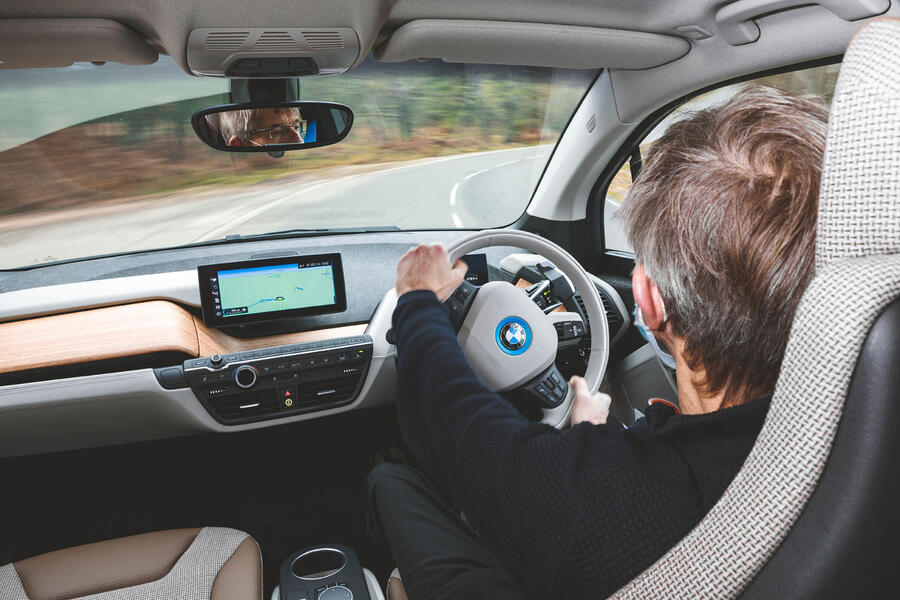
The i3 is a car of quiet but monumental character, which is why I'm willing to overlook the paltry real-world range, which amounts to only 150 miles even if you opt for the larger post-2018 battery.
That and the slightly shonky springing. In 2014, a speed bump in Tufnell Park caught me by surprise and, hitting it at perhaps 25mph, one of the first i3s in the country covered the next 20 yards with never more than one of its skinny tyres in contact with the road. Or so it felt. Ride quality is even worse with the sportier i3s, which is a shame, because its stance is welcome.
And yet those of us who consider a lack of soul to be a worse crime than simply being a bit crap will gladly put up with the drawbacks. And owning one of the finest city cars ever made, not to mention one of the bravest projects in modern automotive, for less than £10k? Hard to complain.Â