New spin-off aims to launch driverless taxis in Croatia in 2026, with the UK and Germany following a year later
Rimac has unveiled Verne, its new spin-off that plans to launch an autonomous taxi service in the UK within the next three years.
The company, previously known as P3 Mobility, will launch with a radical two-seat electric hatchback designed from the ground up to ferry people around major cities in comfort.
The Verne ‘robotaxi’ majors on interior space, ergonomics and on-board entertainment. It is claimed to be roomier inside than a Rolls-Royce, with five different position settings for the “extra-large†seats that are designed for both work and rest.Â
In place of a traditional dashboard is a huge, 43in display screen, controlled via a touchpad on the centre console. This screen can be used for entertainment, such as watching videos, or for displaying information about the journey in progress.Â
There is no steering wheel nor any pedals.
“We wanted to make the interior less automotive and more like a living room,†said Verne designer Adriano Mudri, who also penned the Rimac Nevera.
Mudri added that the two-seat layout was chosen over a traditional four-, five- or seven-seat interior because “nine out of 10 rides are used by one or two peopleâ€.
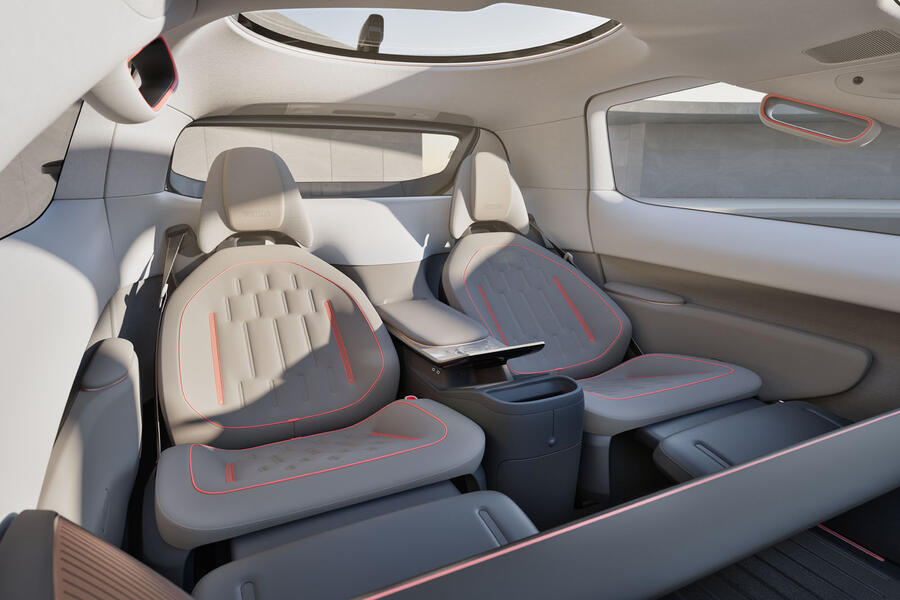
The use of a bespoke ride-hailing app for the Verne service will also allow the interior to be pre-conditioned for a ride. This means a taxi could arrive already warmed to a passenger’s exact preference on a cold day, for example. Even its interior scent can be decided ahead of time, the company said.
It added that customers can “rest assured†that rides will not be cancelled, addressing a key stumbling block of traditional ride-hailing services.
The Verne taxi is underpinned by a new electric car platform that is said to be highly adaptable, suggesting it could spawn future variants according to regional needs. The firm said it was designed to suit “a variety of locations, on different road types, under varying weather conditions and even taking local driving styles into accountâ€.
Its autonomous driving systems were developed in partnership with Mobileye, an Israeli-based specialist owned by chip-making giant Intel. It has already been tapped by some of the world’s most prolific car firms, such as Geely and the Volkswagen Group, for their own assisted driving systems.
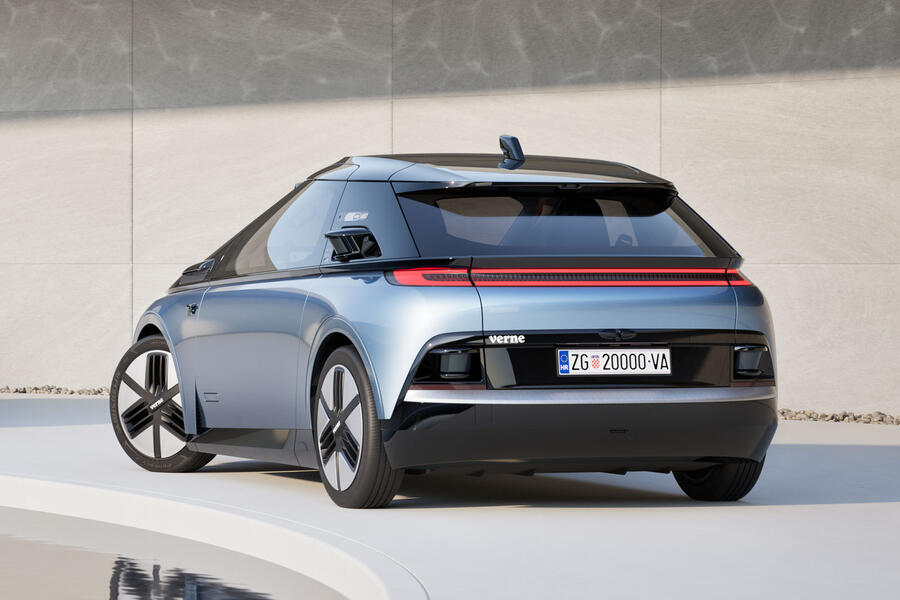
Verne’s hatchback was designed from the inside out, the company said, with its exterior prioritising the neat integration of the required cameras and sensors, as well as aerodynamic performance.
Mudri said: “We deeply integrated cameras, radars, short- and long-distance lidars, and their cleaning systems. At the same time, we were able to simplify the appearance by removing the typical human-driven vehicle features. We got rid of the windshield wipers. The same goes for side-view mirrors. This makes the aerodynamic performance more efficient and allows for easier cleaning.â€
The taxis will be built in Crotia’s capital, Zagreb – a move intended to “put Croatia on the map as a country that encourages the development of key future technologiesâ€, according to Verne CEO Marko Pejković.
The service will initially operate from Zagreb, for which a 2026 launch is currently targeted. The UK and Germany are promised to follow in 2027, as the first two of 11 additional cities Verne has already signed agreements with.
A series of ‘motherships’ will be built ahead of the service’s launch in each city, serving as home bases for vehicle inspection, maintenance and charging.