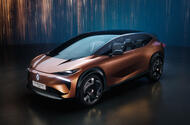
Concept features a novel modular interior with a cabin that can be reconfigured based on the owner’s needs
Renault will launch 12 new models in Europe in the next four years, featuring electric, range-extender and hybrid powertrains – and it has previewed a bold new design language with a radical concept car that hints at a next-generation Espace.
The new R-Space Lab concept is described as “a laboratory for exploring the spirit of voitures à vivre†– or ‘cars to live in’. The R-Space name was previously used for a 2011 concept that ultimately previewed the styling of the previous-generation Espace MPV.
The ‘one-box’ concept is around 4.5m long and 1.5m tall. While Renault claims the R-Space concept will not directly lead to a production vehicle, citing its radical interior, the production-ready exterior suggests it previews styling cues for next-generation vehicles, as previous concepts have done.
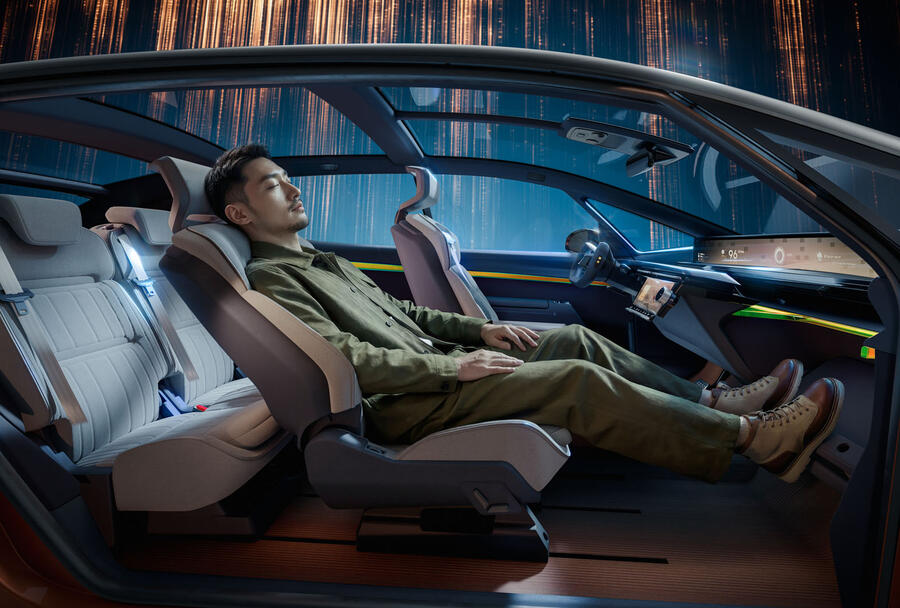
The R-Space Lab was developed by the Renault Group’s Futurama laboratory, which is tasked with developing ‘smart vehicles’ for 2030. It features a novel modular interior with a cabin that can be reconfigured based on the owner’s needs.Â
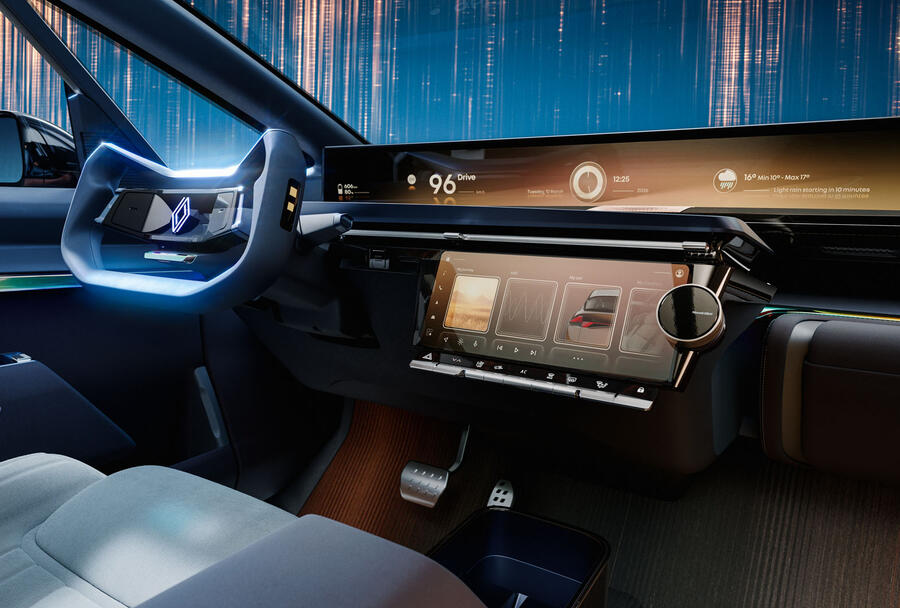
The cockpit is based around a curved panoramic screen that spreads the entire width of the dashboard, and Renault claims the key functions can be “controlled as naturally as a smartphone†from a central touchscreen. A small yoke steering wheel is paired to a steer-by-wire system, which, Renault claims, offers better vision and comfort than found in today's models.
On the passenger side, the front and curtain airbags are built into the seat, enabling a smaller dashboard that allows for a large multi-function glovebox. The passenger seat can also slide back to the second row.Â
In the back, three individual seats feature reclining backrests and flip-up seat cushions; they can also be fully flattened. The rear doors open to 90 degrees for easier cabin access.Â
Meanwhile, the concept previews some new safety technology, including a touch-based alcohol detector and a safety coach powered by in-car artificial intelligence.
Renault’s big plans for bigger cars
The 12 new models Renault is planning for Europe will be focused on the C- and D-segments for medium and large cars, and will be core to the French brand’s plans to lift global sales to two million units, with half of those in Europe. The major product offensive is part of the wider Renault Group’s new Futuready strategy.
Renault has outlined three “growth levers†for the coming years: strengthening its brand position in Europe; expanding its electrification efforts with hybrids, a new generation of EVs and new electric vans built on a software-defined architecture; and expanding its line-up in international markets with 14 new models, including a production version of the new B-segment Bridger SUV concept.
Renault’s European plans include 12 new models in the next four years. The firm’s previous Renaulution strategy, outlined in 2021, included a focus on smaller A- and B-segment cars such as the Renault 5, 4 and forthcoming Twingo – and the firm indicates those models will remain the focus of its efforts in the segments.
But Renault is “preparing a second wave of vehicles†for the larger and more profitable C- and D-segments, which, the brand says, will include both hybrid and electric models that offer “value-creating innovations†while also “improving affordabilityâ€.
Although remaining committed to hybrids, Renault insists full-electric vehicles will “remain at the very heart†of its future strategy, and its next-generation C- and D-segment vehicles will be built on a new platform developed with a focus on Europe called RGEV medium 2.0.Â
The new platform features an 800V architecture that will allow for ultra-fast charging, and Renault says it can be used for vehicles from the ‘B+’ to D segments while accommodating all bodystyles.Â
It will be offered with three configurations: 100% electric with a range of up to 466 miles, an all-wheel-drive EV with up to two tonnes of towing capability and a range extender with a total range of up to 870 miles.