The desire to get away from the conservative designs of pre-war America spawned an entirely new trade
Nowadays, concept cars are a given.
They have long been a nice way for manufacturers to stoke a bit of excitement among their fans; to show off shiny new technologies or simply to test the reception to what they've got in the pipeline.
But for the first half a century of motoring, such machines simply didn't exist. Sure, prototypes were built to test engineering developments, but something purely aesthetic? How bourgeois.
The genesis came about in the 1930s when, having recovered from the devastation of the Great Depression, Detroit began plotting a new wave of more optimistic cars. Products devised to fulfil a spiritual need, rather than a rational one: to capture a nation's appetite for individualism after so many years as a starved collective.
Out went the engine-and-boxcarriage design that had slowly evolved from the seminal 1885 Benz and in came unibodies with more organic cues.
The Chrysler Airflow of 1934 was the first car developed using a wind tunnel and, although a commercial failure, sparked a new trend in streamlining. Swooping curves and bold noses became the look of the moment, perhaps best exemplified by Graham-Paige's Model 97, better known as the Sharknose.
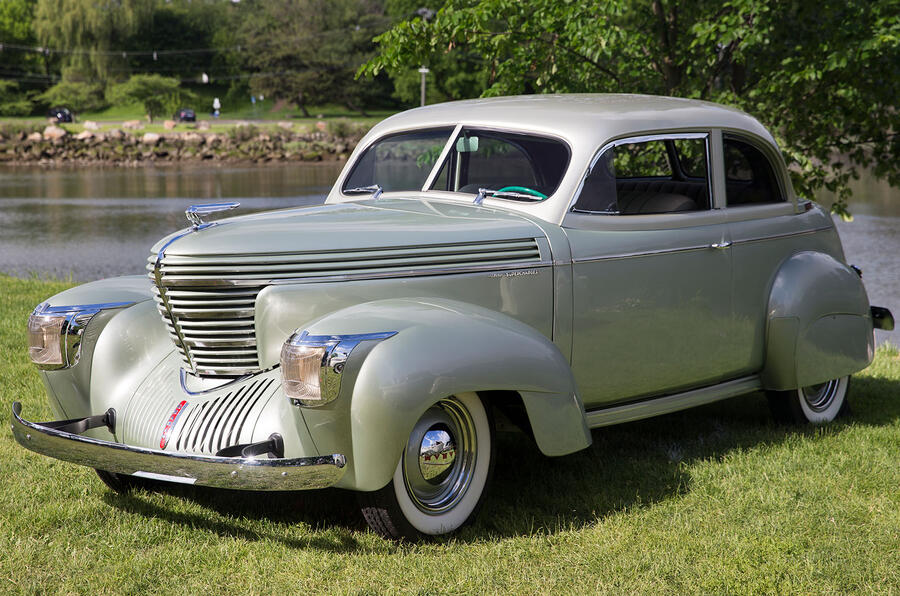
Image credit: MR Choppers
Meanwhile, Detroit bosses got into hot-rodding. Edsel Ford commissioned designer Bob Gregorie to build his own custom Model 40 speedster.
Harley Earl, head of General Motors' Art and Colour division, wanted in on the action, and so set to work on his own showboat.
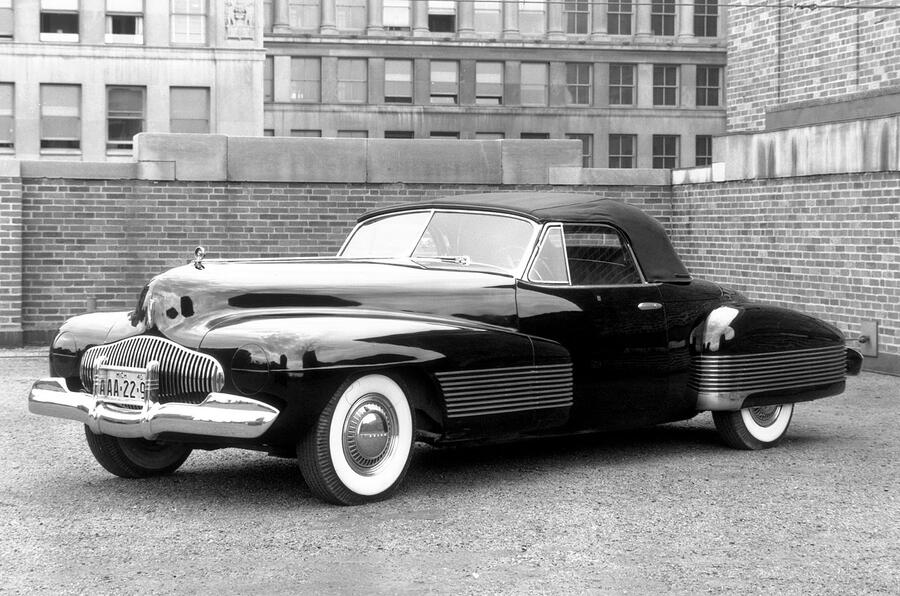
It was to be badged a Buick, and it was to be named Y-Job, because it was a step forward compared with previous experiments. X-periments – geddit?
It was never meant to be sold to the public, simply to imagine cars that could exist in the future. This must have seemed plain odd at the time, and certainly Autocar didn't foresee the importance of what we called a "laboratory": in thinking not about the next car in the Buick lineage but those beyond it and the brand's defining cues as a whole, Earl became a pioneer of car design as we know it today.
Yet it also made the task of actually creating the thing more difficult. Paper sketches can't realistically capture the way a car looks and producing full-size metal models would have been prohibitively costly.
So Earl gathered a haul of clay and began rendering his ideas in three dimensions. In doing so, he established a practice that still forms a critical part of any car designer's repertoire.
The Y-Job was finished in 1938, but it didn't see the light of day until 5 April 1940.
"The modern trend toward speedy appearance is carried to an extreme by means of body lines closely resembling those of racing cars," we reported that July.
"Most ingenious of all and interesting, however, is the automatic hood: an electrically operated mechanism controlled by a push button on the instrument panel lifts the deck lid on hinges, raises the folding top and lowers the deck lid into normal position again."
Enjoy full access to the complete Autocar archive at the magazineshop.com
We continued: "Also noteworthy is an unusual arrangement of the instrument panel, with a radio unit inset at the middle and its controls mounted on top. Speedometer and gauges are placed in front of the steering wheel with the large speedometer dial high on the panel for best visibility."
This all seems elementary now, yet we only perceive it as so because Earl looked into his crystal ball and laid the foundations for the future of motoring.
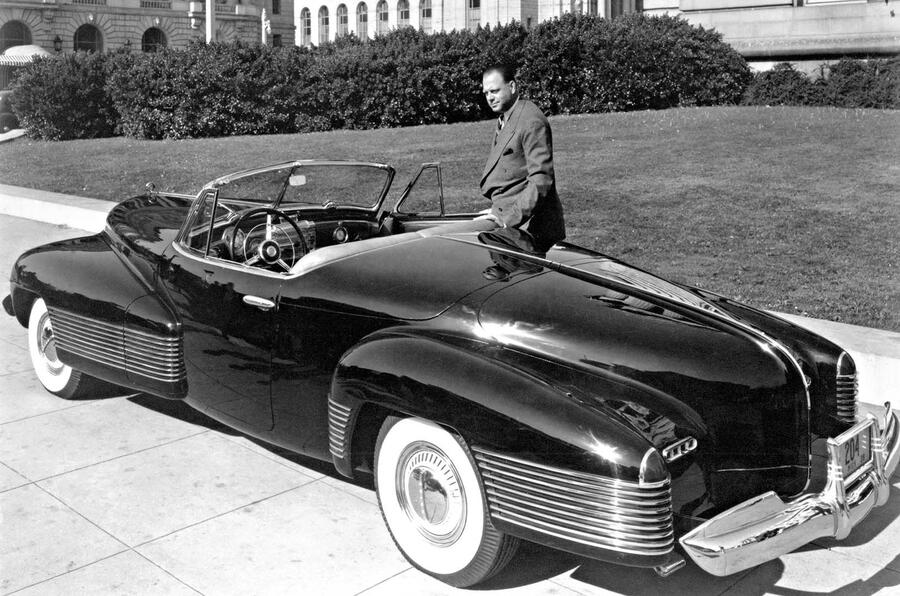
He had also succeeded in his ambition to build the ultimate company car: he drove the Y-Job daily until 1951. Earl retired seven years later, ending an illustrious career in which he had introduced Cadillac's iconic tail fins, penned the first Chevrolet Corvette and almost single-handedly turned car design into a business in its own right.
And in the decades that followed, every manufacturer came to view concepts as regular necessities.