
Recent Updates
07/03/2026 12:00 PM
50mpg and 4WD for £5k: How to buy a tough Dacia Duster
07/03/2026 12:00 PM
Guilty Pleasures: The cars we have a soft spot for
07/03/2026 12:00 PM
How much does company car tax cost?
07/03/2026 12:00 PM
Next-gen Alpine A110 EV mule to appear at Goodwood
07/03/2026 12:00 PM
How a Land Rover conquered the world's scariest jungle
07/02/2026 12:00 PM
Charging complexity risks bottlenecking EV fleets
07/02/2026 12:00 PM
Skoda Kylaq: Brand mulls bringing £6k crossover to Europe
07/02/2026 12:00 PM
First look at Polestar 4 'estate' coming this year
07/02/2026 12:00 PM
UK automotive divided over protectionism vs free trade
07/02/2026 12:00 PM
Guilty Pleasures: The cars we have a soft spot for
EV, Hybrid, Hydrogen, Solar & more 21st century mobility!
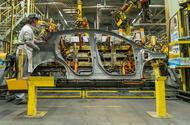
European Union has already proposed protectionist legislation – which could lock UK out of key benefitsRise of Chinese brands has prompted argument over how best to protect British and European car industries
How should a country built on free trade react when its most important trading partners start erecting barriers, as the EU and the US are doing? Or when that free trade starts benefiting the importer to the detriment of its own industry, as is happening with the Chinese?
That conundrum facing the UK was a key theme that this year’s Society of Motor Manufacturers and Traders (SMMT) Summit conference, which brought together key car makers and suppliers to discuss how to respond to rapid changes to the trade status quo.
Just the fact that erecting barriers was being discussed indicated that a seismic shift was happening.
“It’s the first time in a long time I’ve heard the word ‘protectionist’ used positively in a conference,†said Sam Lowe, partner at business advisory firm Flint, on one panel.
Protectionism as applied to the automotive industry has long been perceived as almost shameful. Putting up tariff and other barriers was the preserve of emerging countries like Brazil, Russia and India as they sought to protect an uncompetitive local automotive industry from global competition.
But now the rise of the Chinese and their global export juggernaut has brought Western car makers and the countries whose economies they support to the realisation that actually, compared with the Chinese, with their low cost-base, fast-evolving tech and state support, it’s them that might be the uncompetitive ones.Â
But what to do about it? In a survey of automotive business leaders published by the SMMT to coincide with the Summit, more than 80% said they either agreed or strongly agreed that the UK government should “take a more proactive stance to protect the UK automotive sector†from increased threats from global competitors.
That view was voiced at the Summit by Carol Rose Burke, managing director of Unipart's manufacturing, engineering and design division. She believes the UK needs to make hard decisions to create a strategy to create more high-value jobs.
“We need to be much more protectionist,"she said. "And I use that word provocatively, because we need to stop talking about why we can't do something."
Burke’s point was taken up by Paul Thomas, chief technology officer at Wrightbus, who said the company takes pride in the fact that 51% of its buses' components are sourced from the UK and the EU.
Protectionism, he said, isn't a dirty word: “It's not a new idea. There's many other countries around the world that use protectionism, like Australia and Canada, and they still have competitive markets."
Protecting a local industry and supply chain reduces risk in a volatile world, argued Stephen Bennett, UK managing director of automotive control unit supplier Kostal.
“The next Strait of Hormuz is not going to be the Manchester ship canal,†he said, adding that car makers, and by extension governments, need to recognise there’s a monetary value in having suppliers close by and not the other side of the world.
Exactly what form that protection would take, however, wasn’t voiced. The UK currently hasn’t applied its own version of the EU’s ‘countervailing’ (ie subsidy-neutralising) tariffs on Chinese EVs and is showing no willingness to do so.Â
Despite the phenomenal increase in market share of the Chinese to around 16% of the UK car market in the first five months of this year, only Vauxhall has overtly called for an investigation into “inequitiesâ€. The Vauxhall executive who made that call has since left the company.
The SMMT, which counts Chinese brands among its members, isn’t about to file a complaint needed trigger any potential investigation into unfair practices. “We don't have a clarion call from our members for any change,†CEO Mike Hawes told journalists at the Summit.Â
Even if they did, they wouldn’t find common ground with the Labour government. “Tariffs are a lose-lose,†Peter Kyle, secretary of state for business and trade, told the Summit.
The Conservatives also wouldn’t follow the EU in applying tariffs on Chinese EVs. “We don't advocate for protective tariffs or the erection of artificial non-tariff barriers,†Andrew Griffith, Kyle’s shadow, told the audience. “We'll compete on our own merits.â€
Unfortunately for the UK, it's experiencing first hand the pain of being on the receiving end of increased protectionism. The EU’s proposal to bolster its own industry via the ‘Made in Europe’ Industrial Accelerator Act as currently written would lock the UK out of a swathe of benefits given to EU-built electric cars.
The proposals “would effectively make UK automotive products uncompetitive†on the continent unless the EU agrees that our cars can be recognised as ‘assembled in the EU’, Hawes said.
Meanwhile, from 1 January 2027, new rules of origin as formalised in the original Brexit agreement between the UK and EU, designed to encourage more locally sourced parts, will trigger a 10% tariffs on many new EVs and PHEVs in both directions, mainly because of Chinese battery content. SMMT puts the UK’s potential tariff bill at £1.4 billion annually.Â
The change in the EU-UK TCA (the Brexit agreement) drags in so-called non-originating active cathode battery materials, which is the highest-value part in EVs but unfortunately also one that China excels at and Europe doesn’t.Â
That’s a particular concern of Agratas, the Tata-owned battery business that will supply JLR cells from a factory currently under construction in Somerset.
“The uncomfortable truth for UK and Europe is that this capability is just beginning to evolve,†Karthik Selvan, its chief procurement officer, told the Summit. “The active material is largely missing. It's all locked up in Asia. If you introduce the policy before it's really available, you end up putting tariffs on the very industry that you are trying to [help].â€
The UK is hoping to avoid the TCA cliff edge and be included in ‘Made in Europe’, but that will come at a price.
“We're kind of in this perpetual state of having to deal with the EU from the outside,†Lowe said. “In some areas we will be accommodated, in others we won't, but in every instance we're going have to give something back.â€Â
With around 80% of UK-built vehicles sold abroad, we need more tariffs like we need a hole in the head. The increase in US tariffs, for example, handed JLR an additional bill totalling some £500 million last year.
Every new element of friction serves to reminds the UK that free trade is best. Protectionism flies in the face of innovation, competitive pricing and global relations. It also risks narrowing the market for our vehicles.
“I don't think we can choose protectionism. The domestic market is too small to sustain the industry,†said Greg Clark, former business secretary and current advisor to the Independent Industrial Strategy Advisory Council.
Instead the focus must be on fostering innovation, he believes: “If you're going to have open markets, then you can't be uncompetitive. Otherwise you will be taken over by the competition."Â
But then the world has never faced a competitor like China, where state-directed industries have broken the natural order of the free market.